Before Elections: Saint Petersburg
27.07.2026





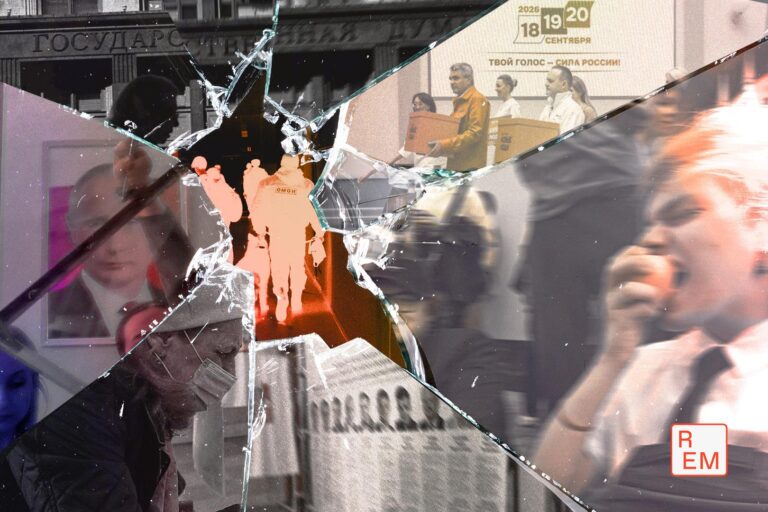
For decades, the city of Saint Petersburg has been regarded as Russia's most liberal and politically competitive metropolis. As the country heads toward the 2026 State Duma elections, this reputation is at stake. Will St. Petersburg remain Russia's most competitive electoral arena, or will it be even more absorbed into the power vertical?
The city has long occupied a unique position within Russia — not only as one of its principal political and economic centers, but also as the country's primary gateway to Europe. The war has transformed St. Petersburg less through mobilization or battlefield casualties than through changes in its economic structure, the collapse of ties with Europe, and the steady contraction of independent political life. For the Kremlin, the upcoming elections will serve as a test of whether this political transformation has been completed.
One of the clearest indicators will be the fate of Yabloko, the only liberal party that has managed to maintain parliamentary representation in St. Petersburg for more than two decades.
Everyday Life in Wartime
At first glance, St. Petersburg appears remarkably untouched by the war. Tourism has largely recovered, driven by domestic travelers and an increasing number of visitors from Asia, particularly China. Restaurants, cafés, and cultural venues continue to operate much as before. Compared to Russia's border regions or poorer parts of the country, the consequences of the war are far less visible in the daily lives of most residents.
Beneath this appearance of normalcy, however, the city's economy is undergoing profound structural change.
The model that fueled St. Petersburg's growth over the past two decades is gradually losing momentum. For years, regional authorities successfully attracted some of Russia's largest corporate taxpayers — including Gazprom, Gazprom Neft, VTB, and other state-controlled companies — to register in the city. Following Russia’s full-scale invasion in Ukraine, the imposed Western sanctions, and changes to Russia's tax legislation, that model has begun to unravel.
Gazprom's profits have fallen sharply, leading to a significant decline in corporate income tax revenues. St. Petersburg has become one of the few Russian regions where this key source of budget revenue has contracted for three consecutive years. Personal income tax receipts continue to rise as wages increase, but this reflects nationwide labor shortages and higher salaries rather than sustainable economic growth.
The effects of high interest rates and weakening domestic demand are also becoming increasingly apparent. By mid-2026, new housing sales had fallen significantly, while shopping malls continued to lose customers, tenants, and revenue.
St. Petersburg therefore remains economically resilient, but the foundations of that resilience are changing. Defense manufacturing and government spending now play an increasingly important role, while the city's traditional drivers of growth — trade with Europe, the oil and gas sector, and real estate development — are losing their importance. As a result, St. Petersburg has become more dependent on federal economic policy than at any point before the war.
The War Remains Largely Invisible
Over the past four years, the city has steadily expanded spending on benefits for servicemen and their families, including enlistment bonuses and compensation for those wounded or killed in combat. At the same time, a large-scale recruitment campaign continues to promote military service and reinforce a positive public image of those fighting in Ukraine.
A significant share of the city's recent industrial growth has come from its defense sector. Municipal authorities have reported sharp increases in the production of ships, military vehicles, aircraft, and unmanned aerial systems. Drone manufacturing has emerged as a major new industry, with some companies already generating revenues worth billions of rubles. Increasingly, defense production — not consumer demand or private investment — is driving industrial expansion in St. Petersburg. In this sense, the war is reshaping the city primarily through changes in its economic structure rather than through mass mobilization.
Despite the city's strategic importance and the rapid expansion of defense production, the human cost of the war has remained comparatively low. According to estimates by the independent outlet Mediazona, confirmed military fatalities account for just 0.06 percent of St. Petersburg's adult population — one of the lowest figures among Russian regions. By comparison, the average across Northwestern Russia stands at 0.24 percent, while in the Republic of Tuva it reaches 0.94 percent.
This helps explain why, for most residents, the war is perceived less as an immediate personal experience than as the political and economic backdrop against which everyday life unfolds.
Saint Petersburg in Russia's System of Power
Unlike most federal subjects, the city of Saint Petersburg is controlled by Moscow not only through the governor's office but also through a dense network of federal institutions, political elites, and state-owned corporations headquartered in the city.
Governor Alexander Beglov is widely seen as a politician whose authority rests primarily on his close ties to the Presidential Administration rather than on local political support. Despite spending much of his career in St. Petersburg, he has never enjoyed strong public approval. Both of his gubernatorial campaigns were marked by restricted political competition and allegations of electoral irregularities, while his election results were among the weakest across the country. Beglov’s share of the vote declined from 64.4 percent in 2019 to 59.8 percent in 2024, making continued backing from the federal center the principal source of his political stability.
Federal influence is reinforced by the continued presence of members of St. Petersburg's old political establishment who have become deeply integrated into the national leadership. The most prominent figure remains Valentina Matvienko, Speaker of the Federation Council, who continues to wield considerable influence in the city despite no longer holding regional office.
The regional elite is closely intertwined with federal institutions and organizations connected to the president's inner circle. Many senior officials have built careers through the Presidential Administration, state corporations, or politically connected organizations. One illustrative example is Lyubov Sovershayeva, currently Deputy Presidential Envoy to the Northwestern Federal District, whose career has included senior positions in the St. Petersburg administration, Bank Rossiya, and the National Media Group. Such career trajectories reinforce the federal center's grip on regional politics.
As a result, St. Petersburg's political system is considerably less autonomous than its economic weight and historical significance might suggest. Despite its reputation as Russia's most liberal metropolis, the city's key political decisions are increasingly made within the federal power vertical, while the scope for independent regional politics continues to shrink.
Shrinking Political Landscape
The future of Yabloko remains the defining question of St. Petersburg politics. The city is the only major Russian region where a liberal party has maintained consistent electoral support and parliamentary representation for many years. Whether Yabloko retains its seats after the 2026 elections therefore extends well beyond regional politics, serving as a barometer for the condition of Russia's remaining legal liberal opposition.
The party currently holds two seats in the Legislative Assembly. Yet in the run-up to the 2026 elections, the authorities have systematically reduced Yabloko’s ability to compete. Under legislation introduced since 2022, politicians designated as "foreign agents" or convicted under legislation prohibiting the display of "extremist symbols" are automatically barred from standing for office. Consequently, Yabloko has effectively lost the ability to nominate many of its best-known politicians.
Among those barred from running are former Legislative Assembly deputy Boris Vishnevsky, designated a "foreign agent" by the Russian authorities; former deputy Alexander Shishlov; Yabloko faction leader Olga Shtannikova; and party chairman Nikolai Rybakov, who began his political career in St. Petersburg.
The narrowing of the political landscape extends beyond the liberal opposition. Political pluralism in the city has diminished more broadly, as opportunities for independent political actors have contracted while alternative centers of influence within the pro-government establishment have gradually disappeared.
Perhaps the most striking example is the political legacy of Yevgeny Prigozhin. Following his death, media outlets linked to him ceased operations, his political and public initiatives were dismantled, and the Wagner Centre reverted to its original name. The disappearance of Prigozhin's political infrastructure eliminated one of the few alternative power centers within the pro-Kremlin elite, reinforcing the ongoing consolidation of authority around the governor's administration and the federal center.
These changes have also reshaped Russia's so-called systemic opposition. The most notable example is the Just Russia party. After the 2021 elections, the party secured five seats in the St. Petersburg Legislative Assembly. Within two years, however, all five deputies had left the party while retaining their mandates, effectively stripping Just Russia of its parliamentary presence well before the next election cycle.
For the 2026 elections, these former deputies are running under the banner of the Green Party, which had previously played only a marginal role in city politics.
Should the Greens clear the five-percent threshold, they will effectively occupy the political space once held by Just Russia. This reshuffling illustrates a broader feature of Russia's managed political system: the rules remain largely unchanged, but the participants are periodically replaced. For the first time, Just Russia could be left without representation in the St. Petersburg legislature, supplanted by a new party that is more acceptable to the authorities.
The City's Electoral Model
Despite the erosion of political competition, St. Petersburg remains distinct from most Russian regions. Historically, this has been reflected in weaker-than-average support for United Russia and stronger backing for liberal parties. In the 2021 State Duma elections, for example, Yabloko won 6.9 percent of the vote in St. Petersburg, compared with just 1.3 percent nationwide.
At the same time, the authorities have preserved a model of limited electoral competition in which tight control over the political process coexists with carefully managed victories by selected opposition candidates. This allows the Kremlin to project an image of political pluralism while ensuring that any beneficiaries remain parties and politicians operating within the boundaries of the officially sanctioned political system.
The cornerstone of this model is the system of single-member constituencies. These districts allow United Russia to secure a comfortable parliamentary majority even when its performance on the proportional party list is relatively modest. In the 2021 elections for the Legislative Assembly, the party won only 33.3 percent of the party-list vote but received 58 percent of the seats thanks to victories in single-member districts.
At the same time, the authorities have always allowed candidates from the systemic opposition to prevail in a limited number of constituencies. This allow them to preserve an appearance of electoral competition.
Another sign of the consolidation of power has been the political decline of Vyacheslav Makarov, former Speaker of the Legislative Assembly, and his once influential political network. After moving to the State Duma, Makarov and his allies steadily lost their influence over city politics and failed to retain control over United Russia's candidate selection process. Their decline has further strengthened Governor Alexander Beglov's position within the regional elite.
The 2026 Election Campaign
By 2026, almost no independent oversight remains. For many years, St. Petersburg stood apart from most Russian regions because of its strong community of election observers and well-developed network of independent media outlets that closely documented electoral violations. By today, however, most of these institutions have either ceased to exist or dramatically scaled back their activities under pressure from increasingly restrictive legislation.
The shrinking political space is also reflected in the declining number of candidates. During the 2024 municipal elections, roughly 4,500 candidates competed for 1,500 seats, compared with approximately 7,000 candidates in 2019. This decline reflects not only the emigration of political activists but also broader institutional barriers that have made participation in elections increasingly difficult.
Meanwhile, the authorities continue to rely on familiar administrative tools. Even during United Russia's primary elections, there were numerous reports that public-sector employees were pressured to register and vote for officially endorsed candidates. There is little reason to expect these practices to disappear during the main election campaign.
Unlike Moscow and several other Russian regions, St. Petersburg does not use remote electronic voting. Nevertheless, the three-day voting format continues to provide broad opportunities for administrative mobilization of public-sector workers, particularly on weekdays.
What defines the 2026 campaign in St. Petersburg, therefore, is not an intensification of administrative pressure, but the sharp decline in opportunities to monitor and document it. Even if the scale of electoral irregularities remains broadly comparable to previous elections, independent verification and public scrutiny are likely to be far more limited.
Conclusion
The 2026 elections are unlikely to produce major changes in St. Petersburg's political order. United Russia is expected to retain its parliamentary majority, while the federal center will preserve its control over the city's politics. The composition of the legislature, however, might change as the systemic opposition continues to lose ground.
The central question of these elections is therefore not who wins the most seats, but whether St. Petersburg's long political transformation has reached its logical conclusion.
For decades, the city was regarded as Russia's most liberal and politically competitive region. The outcome of the 2026 elections will show whether St. Petersburg still retains that distinctive status — or whether it has been fully absorbed into Russia's broader model of managed politics.