Russian expatriate voting: Generational divides, gender gap and electoral manipulations
14.05.2024





by Galina Selivanova, Researcher at the University of Bonn
VOTE ABROAD! 2024 EXIT POLL CAMPAIGN
The 2024 Russian presidential elections occurred under unprecedented pressure on the Russian opposition and civil society from Putin's regime. Against the backdrop of the full-scale invasion of Ukraine, Kremlin eliminated all avenues for expressing discontent or protest. Preparing for the re-election of Vladimir Putin to his fifth term, authorities discarded the few remaining channels for independent election oversight.
For many years, election observation had been seen by thousands of Russian citizens as a low-risk form of activism. By 2024, however, independent election monitoring became virtually unfeasible due to legal restrictions, lack of opposition candidates, and mass political emigration from Russia.
In the wake of Russia’s invasion of Ukraine in 2022, thousands of opposition-minded citizens and activists left Russia, among them numerous high-profile, experienced electoral experts and activists who had previously participated in domestic election monitoring campaigns. Some of them got engaged in monitoring Russian electoral precincts abroad. One such initiative, "Vote Abroad" (in Russian: «Голосуй за Рубежом»), emerged as a network of volunteers that monitors elections and surveys Russian citizens who vote abroad in federal-level Russian elections. Their first campaign took place during the State Duma elections in 2021, and the second was organized in 2024.
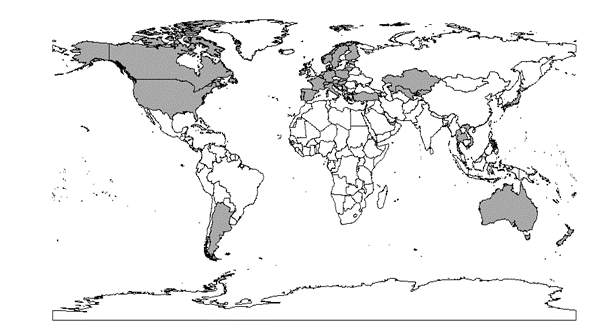
Given that Russian authorities made independent election observation just about impossible, exit polls turned into the only opportunity to control election results in the polling stations situated in Russia’s consulates. In the presidential election 2024, “Vote Abroad” volunteers collected representative data in 65 voting polls from 44 countries around the globe, where Russian citizens cast their votes. The survey results identified the most problematic polling places with a huge level of discrepancy between survey results and official voting results. Our results cast doubt on the quality of the electoral procedure and suggest that fraud occurs not only in Russia but also abroad.
The presidential campaign 2024 presented a unique opportunity to examine the attitudes of Russians currently living and voting abroad. The aim of the 2024 exit poll was broader than gauging the electoral support of candidates. It gave us an opportunity to investigate voting patterns among people with various migration backgrounds, demographic parameters and levels of trust in the Russian electoral system. These changes in voting preferences may have been influenced by the mass exodus of Russian citizens since the beginning of the full-scale invasion of Ukraine.
With four handpicked by the Russian authorities candidates on the ballot, the 2024 Presidential elections could not be considered competitive. Russian opposition offered several strategies for those who wanted to express their discontent and complicate the victory for the Kremlin. Firstly, proponents of the ‘Noon against Putin’ strategy suggested gathering at polling election commissions (PECs) around 12 PM local time on March 17, thereby causing what almost resembled a protest rally and allowing people to meet other opposition-minded Russians from their neighborhood. Secondly, Russians were encouraged to vote for the ‘least evil’ candidate, namely Vladislav Davankov. Finally, some public figures promoted the idea of the ‘fifth candidate’, calling for spoiling (invalidating) ballots to signify protest against all available candidates. This analysis pays special attention to voting for Putin and Davankov, as well as the shares of spoiled ballots.
EXIT POLL 2024: DATA AND METHOD
The 2024 exit poll covered 65 polling stations in 44 countries, organized in the premises of Russian embassies and consulates. In total, 96 260 individuals were interviewed by a team of 400 volunteers. Each team was coordinated by local activists and supported by a small management team who assisted with technical infrastructure, survey design, and volunteer training. Depending on the team size and the number of voters at a specific PEC, pollsters managed to survey between 10% and 96% of voters, providing reliable and representative data from almost all polling stations and countries[1]. Some PECs, for example #8439 in Nicosia, Cyprus, yielded data considered representative (6% of 10,403 voters) but these results should be carefully reviewed due to reports of large-scale electoral fraud at polling stations in Cyprus.
Except for three standard exit poll questions - gender, age, electoral candidate - pollsters were instructed to ask a few more questions that are not typically included in exit poll protocols. Voters were asked about their migration history (e.g., "How long have you been lived outside of Russia?"), their motivation to vote (how long it took them to get to the polling stations), and how much they trust the results of elections in Russia. Responses were recorded by pollsters (digitally or on printed forms) or administered to voters (via a QR code or printed forms to fill out). Results from most of the PECs were published immediately after voting ended in their respective countries.
“Vote Abroad 2024" was the second exit poll campaign conducted by the network of Russian activists based abroad. The first exit poll abroad took place in September 2021, when Russian citizens elected the national legislative body, the State Duma.
Figure 1. Countries covered by Exit Poll 2024
CHANGES IN PREFERENCES OF VOTERS LIVING ABROAD (2012-2024)
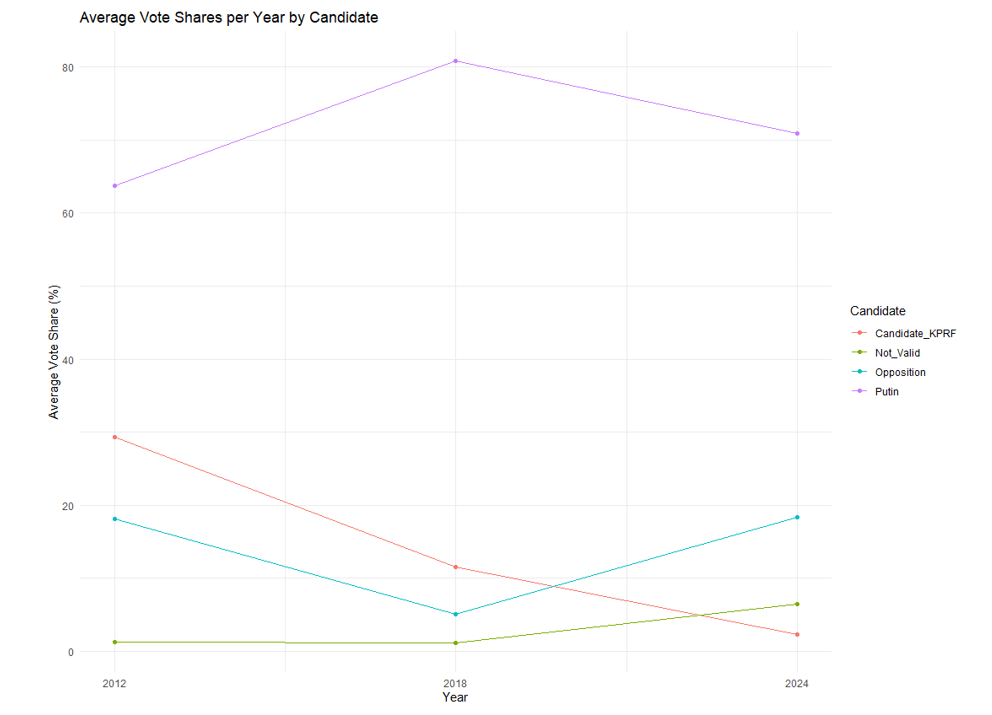
Before examining and comparing the results of the 2024 exit poll, let’s review the dynamic of the official results published by the Central Election Commission (CEC) of the Russian Federation for all PECs abroad. The official data indicates that support for Putin has declined in overseas PECs, although he still secures the majority of votes. At the same time, in the absence of genuine political competition, the "pro-democratic" candidates[2] in 2024 achieved levels of support comparable to those in March 2012, marked by massive anti-electoral fraud protests. Additionally, the share of invalid ballots increased from 1% (2021) to 6.5% (2024) of the total count, presumably indicating the growth in protest attitudes among Russians voting abroad or the gradual emigration of the regime's opponents (see Figure 2).
Figure 2. Deterioration of electoral sultanate abroad
OFFICIAL RESULTS VS. EXIT POLL 2024
While Russian CEC consistently reported high levels of support for Vladimir Putin at overseas PECs, exit poll data showed considerable discrepancies with the official information. A comparison of candidates’ preferences as reported by the exit polls with the official data at individual countries and polling stations reveals an even wider gap between the official results and the exit polls. For example, in the aggregated data, even if we assume that all non-respondents (18.7%) in the exit poll data voted for Putin, his total share of votes still does not reach the officially reported 41.5%.
Table 1. Official results and exit poll results, selected countries
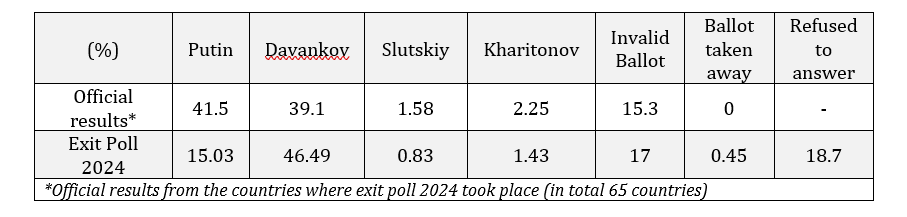
In fact, the margin of error in exit polls is a major concern for pollsters around the world. It depends on various factors, from the survey design to the luck of the interviewees[3]. As a rule of thumb, the margin of error varies between 1% and 6% in different exit polls conducted in the USA and the UK, which foreshadowed the results of candidates[4]. In some cases, the predictions of exit polls can come with up to a 10% error. The present analysis makes several assumptions about voting behavior and possible causes of the discrepancies in the official and exit polls data. Firstly, it suggests that all voters who refused to talk to the pollsters voted for Putin[5]. Secondly, it assumes higher margins of error given the context in which the exit polls took place: in addition to highly polarised and controversial public debates, many countries experienced protest events organized by Russian opposition on election day near PECs, i.e. Russian embassies and consulates. These contextual factors could have influenced overall response rates and decreased enthusiasm among voters to disclose their voting preferences, especially among Putin's supporters.
Our data indicates significant variability in the margin of error reported by pollsters in different countries. Furthermore, the accuracy of predictions of the incumbent’s results significantly increases if the share of declared support for Putin is supplemented by “no answers”. In fact, if we combine summaries of exit poll shares for Putin and no answers, extreme discrepancies between declared and official support can be observed only in countries like Cyprus, Australia, Kyrgyzstan, Thailand, Spain, Belgium, Vietnam, Armenia, and France. The difficult-to-explain gaps in these countries ranged 9% to 38% (see Table 2). The exit poll results from Turkey did not ensure the necessary representativeness and, therefore, Turkey is not considered in this analysis. In all these countries, the Russian CEC reported significantly higher shares for Putin than those indicated by the "Vote Abroad" exit polls.
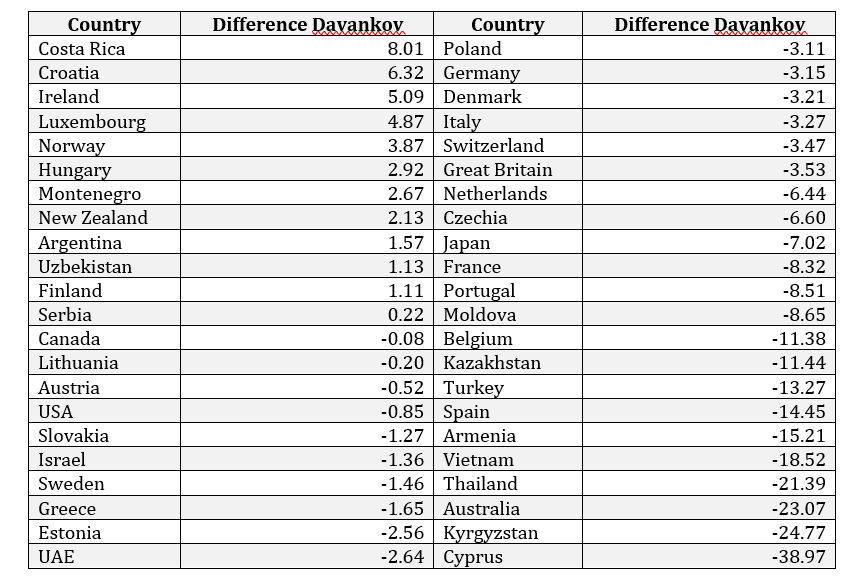
Conversely, the results for Vladislav Davankov demonstrate an opposite trend: at most of the PECs abroad, a higher share of voters reported voting for Davankov compared to the official results (Table 3 and Graph 4). Polling stations in the countries that reported higher support for Putin declared lower levels of support for Davankov, including Cyprus, Australia, Kyrgyzstan, Thailand, Spain, Belgium, Vietnam, Armenia, and Kazakhstan. This discrepancy could indicate misreporting of votes, or in simpler terms, a shift of ballots from the "opposition" candidate in favor of the incumbent.
Figure 3. Official CEC results for Putin VS exit poll results, precincts abroad
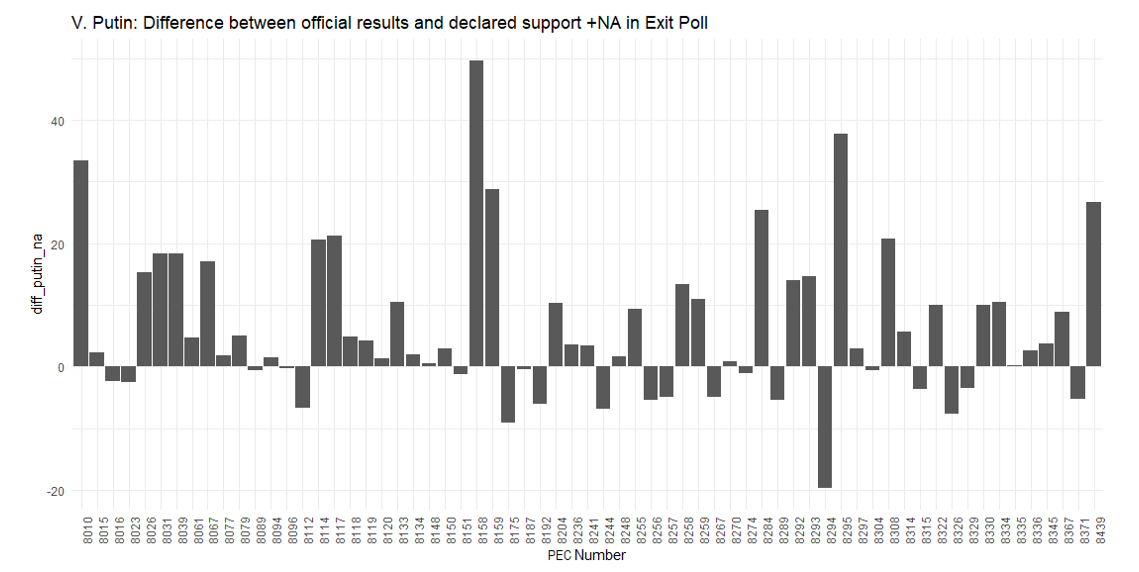
Table 2. Country differences between Putin (%) reported by CEC and Exit Poll 2024
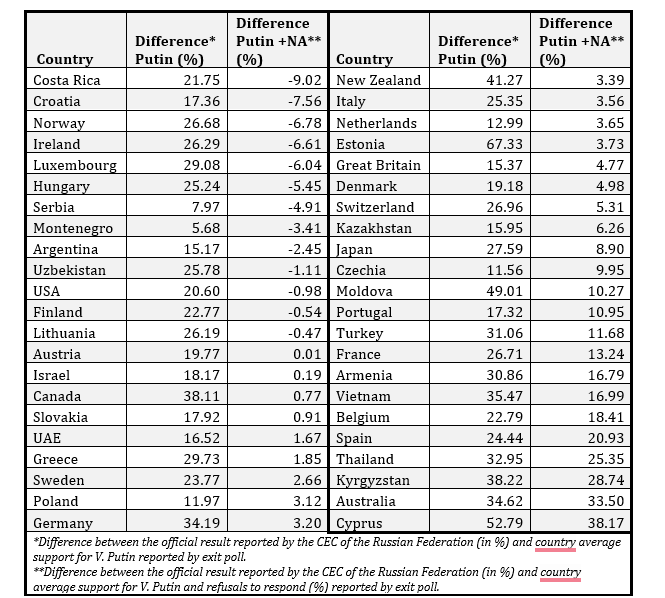
Figure 4. Official CEC results for Davankov (%) minus exit poll results (%)

Table 3. Country differences between Davankov (%) - CEC and Exit Poll 20204
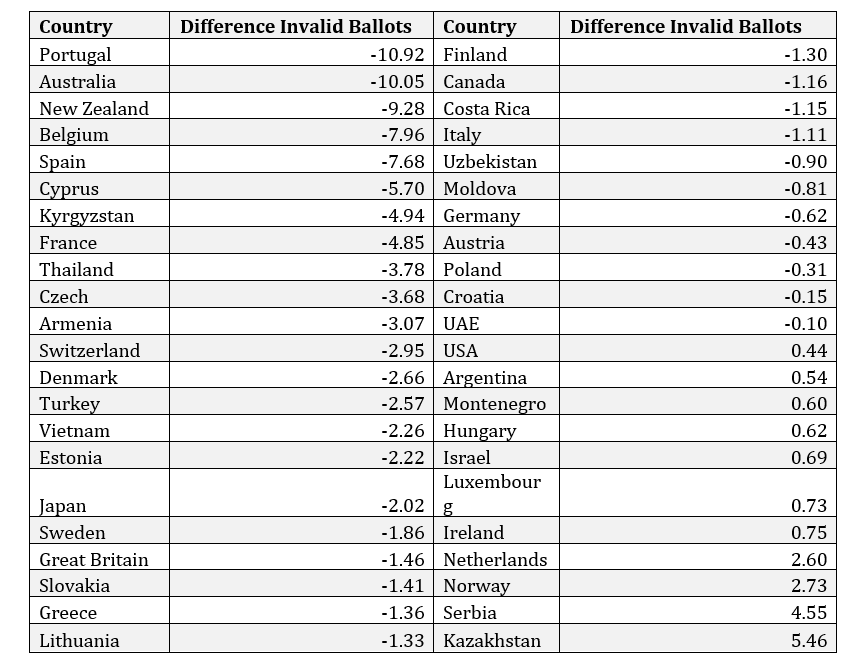
The results for invalid ballots did not vary to the same extent as those of the main competitors. However, the largest margin of error in the shares of invalid ballots reported by the CEC RF compared to declared voters' behavior reached +/- 10.5%. In most PECs, a significantly higher proportion of voters acknowledged spoiling their ballots than was "counted" by the CEC in the final voting tallies, particularly in polling stations located in Cyprus, Australia, New Zealand and Portugal. Opposite cases also appeared in our results: some PECs reported more invalid ballots than could be expected based on the exit poll data which can be explained by both errors in data and potential manipulations by PECs' commissions (Table 4 and Graph 5).
Figure 5. Invalid ballots: Difference between CEC results and exit poll results, precincts abroad
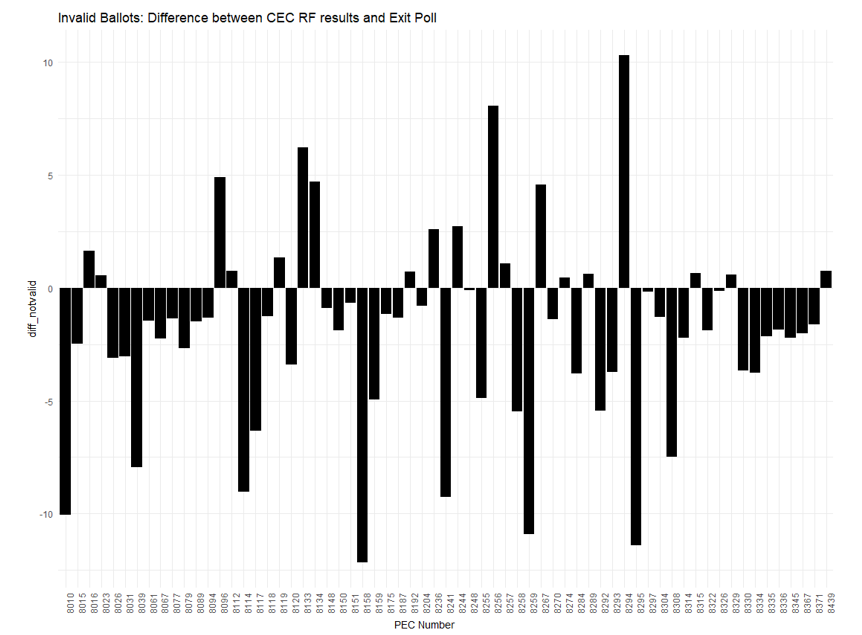
Table 4. Country differences between invalid ballots (%) - CEC and Exit Poll 20204
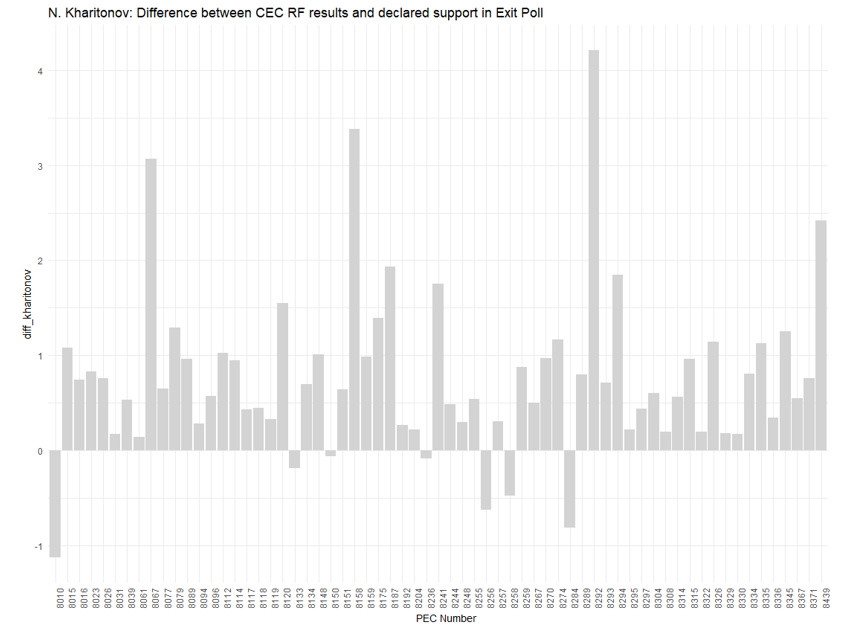
 Results for other candidates (Leonid Slutskiy, Figure 5 and Nikolay Kharitonov, Figure 6) and ballots labeled “lost” do not demonstrate huge discrepancies between the CEC data and "Vote Abroad" data. The margin of error for both candidates does not exceed 4.5% on polling stations abroad, which presumably indicates a good level of accuracy of data collected at exit polls, especially given the difficult circumstances described above.
Figure 5. Slutskiy: Difference between CEC results and exit poll results, precincts abroad
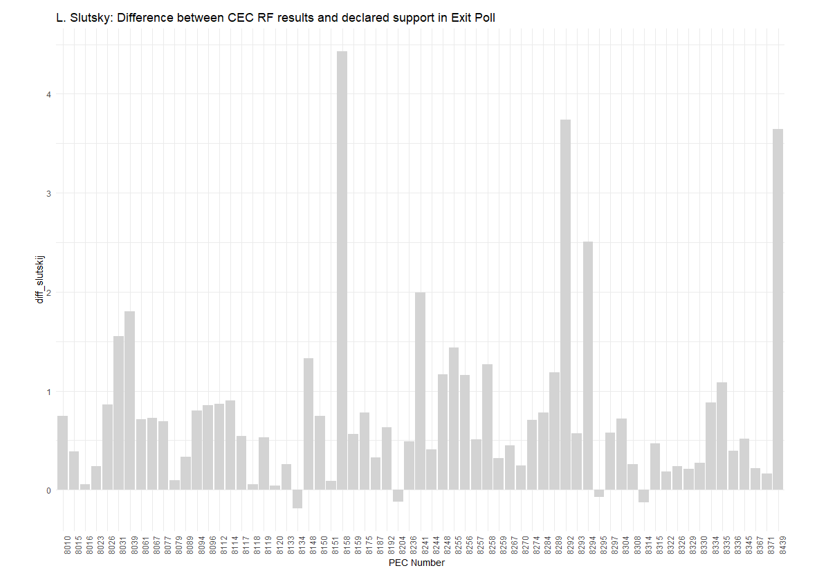
Overall, the discrepancies between the declared support for Putin and Davankov and the official results announced by the CEC cannot be solely explained by voting preferences, errors in exit poll data or pollsters’ bad luck. It is highly likely that large numbers of Russians living in Australia, Kyrgyzstan, Thailand, Spain, Belgium, Vietnam and Armenia would collectively decide to mislead pollsters. Given the well-documented electoral manipulations at all stages of Russian elections, the most plausible explanation for discrepancies is electoral fraud committed by the PEC teams abroad. This fraud was likely aimed to boost support for the incumbent while diminishing support for a candidate perceived as an “opposition”.
Figure 6. Kharitonov: Difference between CEC results and exit poll results, precincts abroad
DIFFERENCES IN VOTING PATTERNS AMONG RUSSIANS LIVING ABROAD
Time Spent Abroad
As mentioned above, the purpose of the 2024 exit poll was not only to record the voting preferences of Russians residing abroad but also to understand how these preferences are influenced by their backgrounds and demographic characteristics. Groups were categorized to reflect different migration waves of Russian citizens, distinguishing between long-term migrants and those who have migrated since the beginning of Russia’s full-scale invasion of Ukraine in February 2022. Voting patterns among people with diverse migration backgrounds demonstrate statistically significant differences.
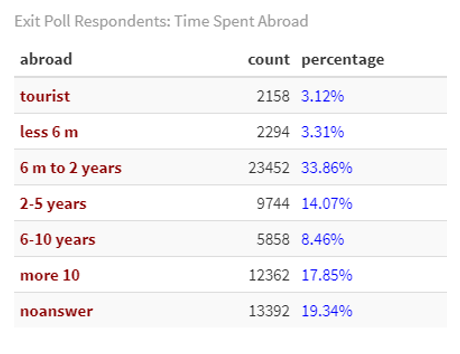
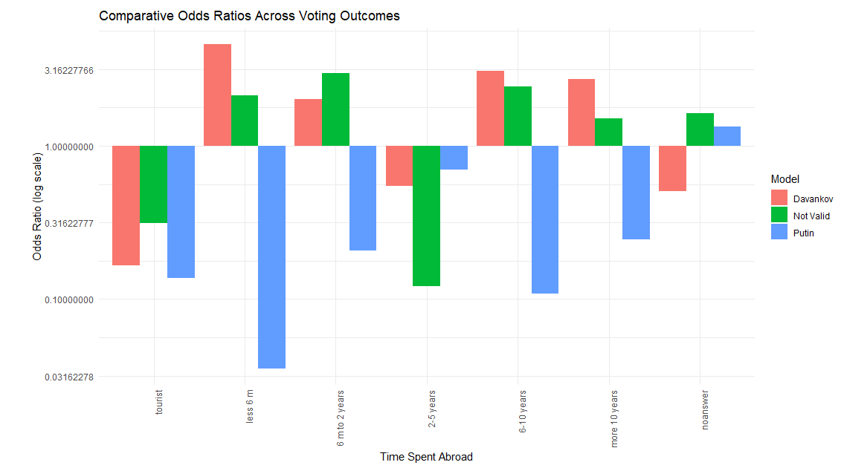
As anticipated, Russians who had been living abroad for ten years and longer demonstrated the highest propensity to vote for Putin (Figure 7). All other groups of Russian emigrants - except those who spent abroad 2 to 5 years and those who refused to answer - were prone to vote for Davankov. The lowest level of support for Putin was observed among those who left Russia in 2022 and after. The highest support for Davankov was demonstrated by Russian emigrants, who had been residing abroad between six months and two years.
The likelihood of spoiling ballots does not correlate with migration background, as it appears among different groups. Notably, those who had been living abroad for six to ten years were more likely to spoil their ballots compared to other groups. This outcome may indicate a reliance on diverse sources of information or varying levels of trust in public figures who advocate different strategies of protest voting behavior, reflecting variation in voting behavior among migrants who left Russia at different points in time.
Figure 7. Exit Poll 2024: Candidate preferences VS migration background
Trust in Elections
The question "Do you trust in Russian elections?" came last during the interviews. Despite a high share of missing data and refusals to answer, this question still provides insights into the levels of trust in Russia’s electoral system.
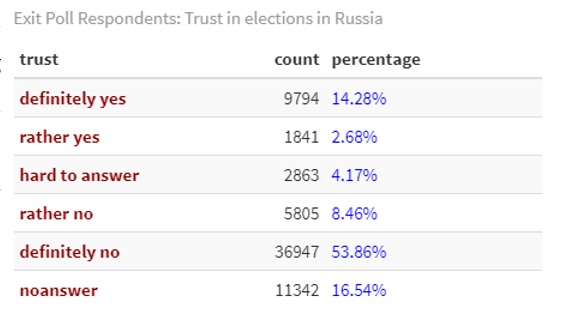
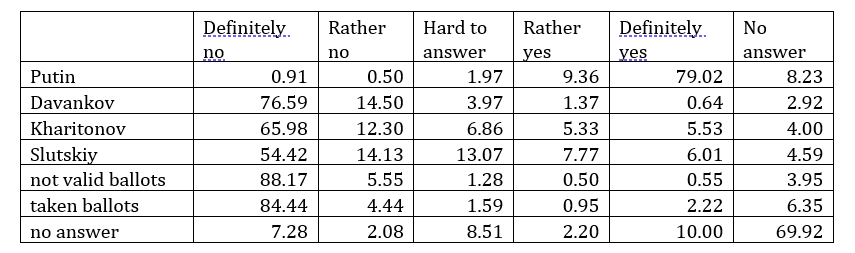
Cross-tabulation between support levels for candidates and trust in the electoral system revealed no surprising findings: those who voted for Putin were more likely to have high and very high confidence in the quality of Russia’s elections, whereas those who supported Davankov or spoiled a ballot tend to show low or very low levels of trust. Overall, almost 54% of surveyed voters expressed a high level of distrust in Russian elections (see Table 5), yet they still participated in the voting process. One explanation could be that Russian citizens use voting to express their dissatisfaction and disagreement with the current political regime.
Table 5. Trust in elections VS voting preferences
DEMOGRAPHIC DATA AND VOTING PATTERNS
Gender and Voting Patterns
Female respondents were more open to answering volunteers' questions. Volunteers were instructed to record the gender of a respondent as an “obligatory” part of the survey, resulting in relatively low counts of “non-binary” self-identifications and missing values in the overall poll results.
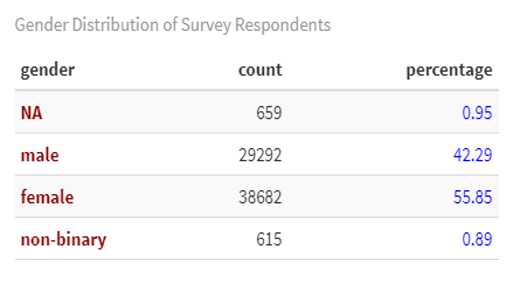
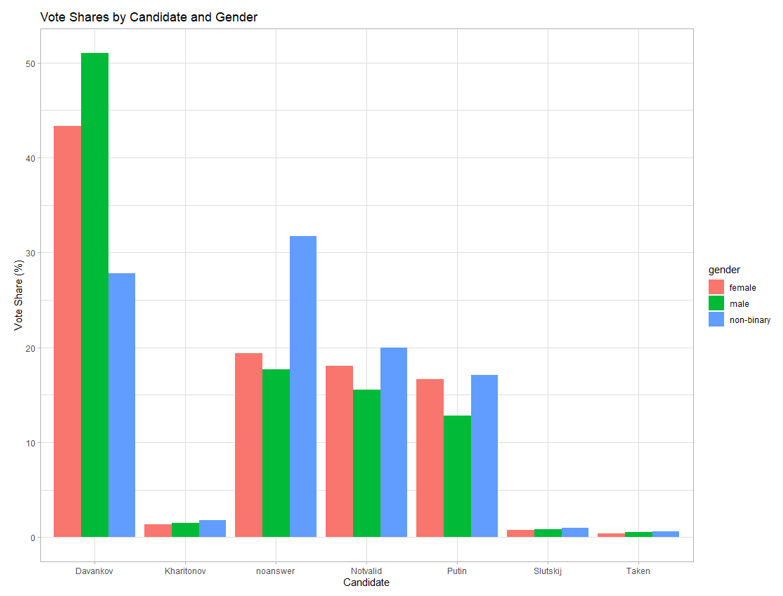
Gender differences in voting patterns generally mirror those observed among voters living in Russia[6]. Male voters were more likely to vote for Davankov than other gender groups. In contrast, female respondents were about 1.36 times more likely to cast their ballots for Putin. Additionally, non-binary and female respondents were more likely to cast invalid ballots compared to male respondents. The highest proportion of invalid ballots was among those who did not want to disclose their gender.
Figure 8. Candidate preferences VS gender
Age and Voting Patterns
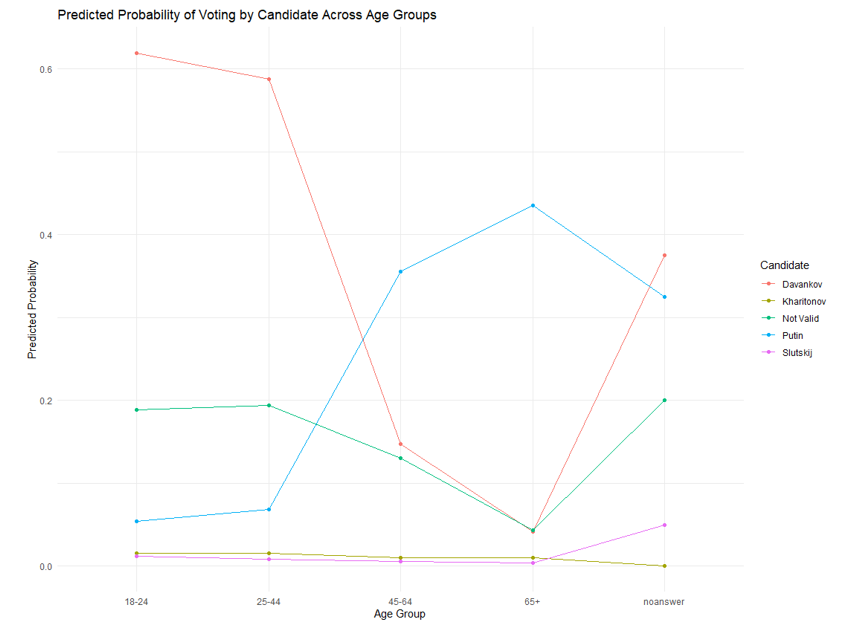
Voting patterns across different age groups also mirror those observed within Russia. The likelihood of voting for Putin confidently increases with the increase in age, with the 65+ age group showing the highest probability of voting for Putin. In contrast, younger age groups are more inclined to vote for Davankov or spoil their ballots. Those who preferred not to disclose their age were almost equally likely to vote for either Putin or Davankov. Variations in voting patterns for other candidates were minimal across age groups.
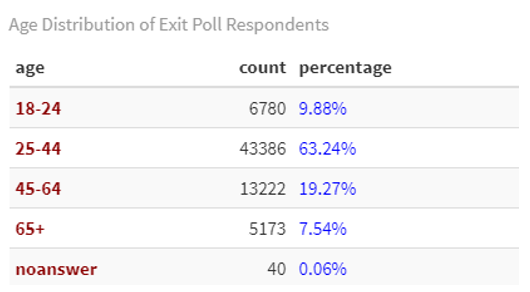
The age parameter appeared to be a significant predictor of the likelihood of a respondent refusing to answer - the older respondents were more likely to refuse to participate in the exit poll. For example, voters from the 45-64 age group were 4.5 times less likely and the 65+ age group was seven times less likely to talk to pollsters compared to the younger generation (18-24 age group).
Figure 9. Candidate preference VS age groups
CONCLUSIONS
To summarize, the 2024 Exit Poll campaign was designed both as a means of controlling voting outcomes and as an investigation into the voting behaviors of Russian citizens living abroad. Some PECs abroad exhibited significant discrepancies between the officially reported data and the results from representative surveys, casting doubt on the integrity of electoral procedures conducted by Russian consulates. Even in countries where support for Putin is traditionally high among Russian communities, such as Germany, embassies and consulates appear to have resorted to large-scale electoral manipulations.
As expected, age, gender and migration history appeared to be strong predictors of voting patterns at extraterritorial PECs. While younger generations preferred to vote for "lesser evil" a.k.a. "opposition" candidate or spoiled their ballots, older generations, particularly women, were more likely to support Putin. Further, voters who have been living abroad for a long time tend to support Putin more than recent migrants. This presents both positive and negative implications for host countries that have seen a large influx of Russian migrants since February 2022. In fact, this situation supposedly highlights flaws in early migration and integration policies, as quite a few emigrants living abroad for many years up until today prefer to support the authoritarian incumbent ruling the country they left decades ago. On the bright side, the influx of large groups of young, opposition-minded Russians could be beneficial for the receiving societies in terms of integration prospects. It's not out of the question that their presence may also alter the voting behavior of other Russians living abroad in the long run.
***
[1] Volunteers who worked at PEC #8292 and #8294 in Turkey could only survey 1.13% and 1.66% of voters. Furthermore, data from Australia and New Zealand contained only voting preferences, volunteers did not collect answers to additional questions. Therefore, Australia and New Zealand only included in the first part of the study on voting patterns and are excluded in the later in-depth analysis based on demographic and social predictors.
[2] As “opposition” were labeled Mikhail Prokhorov in 2012, Ksenia Sobchak in 2018 and Vladislav Davankov in 2018.
[3] “Exit polling explained” by the University of Warwick, Department of Statistics https://warwick.ac.uk/fac/sci/statistics/staff/academic-research/firth/exit-poll-explainer/
[4] Andrew Mercer (2016) “5 key things to know about the margin of error in election polls” https://www.pewresearch.org/short-reads/2016/09/08/understanding-the-margin-of-error-in-election-polls/
[5] This assumption indeed is very far-stretching, but has some grounds. As demonstrated below, people who more often refused to talk to the pollsters were older generations who live abroad longer i.e. similar group of Pro-Putin electorate.
[6] Narrative of higher levels of support for Putin among female voters is spread by the Russian official media, e.g. Interfax (https://www.interfax.ru/russia/4493) and RIA Novosti (https://ria.ru/20120911/747668815.html)