Kremlin’s new fake electoral observation ecosystem: From domestic mimicry to global scaling
28.04.2026





The days when election integrity could be judged by the universal benchmark of being free and fair seem to be fading. This standard is being replaced by a cynical diversity of criteria, which allows authoritarian regimes to dodge international scrutiny by creating their own self-serving rules for legitimacy. Despite significantly losing ground in Eastern Europe in recent years, Russia continues to assert itself as a primary actor of this new global order. While it still seeks to influence European elections, the Kremlin’s focus has shifted toward the Caucasus, Central Asia, and, most importantly, the Global South.
Unintentionally, the West has been playing into Moscow’s hands by decreasing global support for democracy. As the U.S., Germany, the UK and others announce cuts to development and democracy aid, Russia has moved swiftly to exploit the emerging vacuum. This erosion of Western influence, contrasted with Moscow’s expanding ambitions, sheds light on why democratic nations like Mongolia and South Africa are becoming entangled in Russia’s questionable initiatives to export "electoral sovereignty". Mongolia, trapped between the autocratic powers China and Russia and facing internal corruption, lacks the capacity to defend its democracy on its own. Meanwhile, South Africa positions itself as a leader of non-aligned nations. Both countries find themselves geopolitically and culturally distanced from core European and Anglophone democracies.
Far from abandoning its tactic of recruiting public figures from the Global South to validate its own managed elections (as documented in the 2025 EPDE report), the Kremlin is now institutionalizing this influence by constructing a global ecosystem of fake observation. This infrastructure is becoming the cornerstone of a broader, more dangerous effort to systematically dismantle electoral integrity across the globe.
The launch of the International Association of Political and Electoral Experts (IAPEE), or, as named in others sources, International Association of Independent Electoral Experts (IAIEE) in Moscow in April 2026 marks a decisive escalation in the Kremlin’s efforts to institutionalize the global production of electoral legitimacy. Moving beyond ad-hoc "political tourism", Russia has unveiled a sophisticated, state-managed ecosystem that integrates hand-picked international "experts", Kremlin-supervised NGOs, and "alternative" fact-checking networks to shield authoritarian elections from genuine international scrutiny. This strategic shift, backed by the Russia’s Presidential Administration, Foreign Ministry and the Central Election Commission, aims not only to validate Russia’s own 2026 State Duma elections but also to export a scalable model of managed observation to the Global South, fundamentally challenging established international standards of electoral integrity under the guise of a multipolar world.
The Conference in Moscow: Launch of IAPEE/IAIEE
On 14-15 April 2026, Moscow hosted the International Scientific and Practical Conference on Insuring Observation and Expertise of Electoral Processes. This large-scale event took place at the infamous Russia National Center. Organizers claimed the participation of over 150 experts from 60 countries, including representatives of electoral bodies, NGOs, parliamentarians and human rights activists.
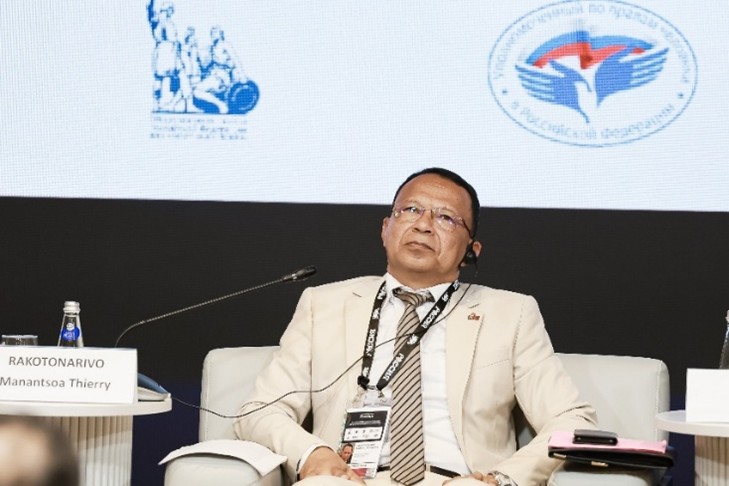
The conference featured high-profile Russian headliners, including Foreign Minister Sergey Lavrov, CEC Chair Ella Pamfilova, Ombudsman Tatyana Moskalkova, and propagandist-academic Fyodor Lukyanov. On the opening panel, they were joined by prominent figures from the Global South, such as Manantsoa Thierry Rakotonarivo, Chairman of the National Election Commission of Madagascar, David Alejandro Toro Ramírez, Member of the Chamber of Representatives of Colombia, and Vito Grittani, Founder of the so-called International Diplomatic Observatory. The latter two have a record of participating in fake observation mission. Grittani participated in "observation missions" in the occupied territories of Ukraine in 2022 and 2023, while Ramírez took part in the "observation mission" during the 2025 Belarus presidential election.
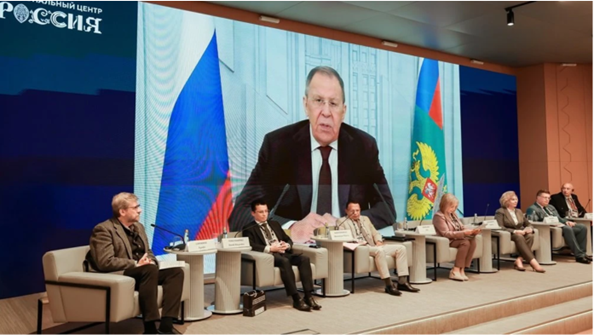
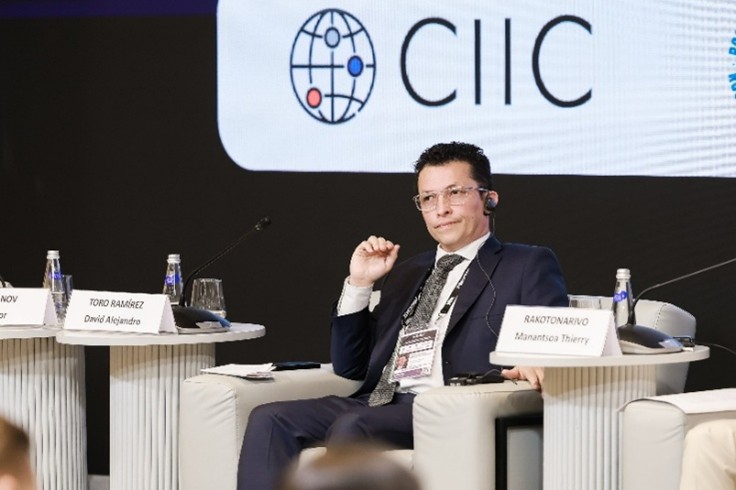
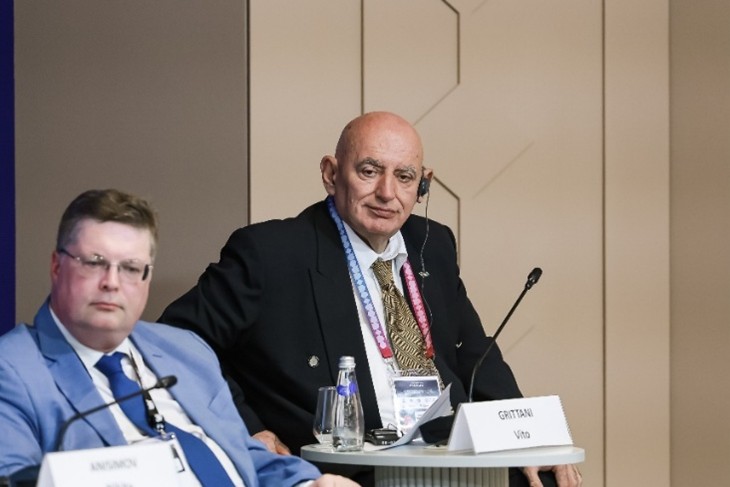
The video address by Russia's Foreign Minister Sergey Lavrov set the tone for the conference. Lavrov called on the participants to combat Western “electoral neocolonialism”, which he described as “a whole complex of mechanisms and practices aimed at distorting the free expression of citizens’ will and the resulting outcomes”.
The conference focused on strategies and tactics for applying Russian approaches to counter Western election observation. Its outcome was the formal establishment of the International Association of Independent Political and Electoral Experts (IAPEE/IAIEE). The body is designed to assess the legitimacy of elections based on the principles of national interests and sovereignty.
Building the Ecosystem: From Domestic Mimicry to Global Export
While the Association’s future charter remains non-public, multiple media reports suggest that the conference culminated in the appointment of a governing body. According to these reports, the Association boasts 80 members representing major global regions, supplemented by 30 experts from 21 countries serving as observers. This collaborative effort supposedly resulted in the approval of a draft resolution and the formal establishment of the IAPEE Executive Board.
The Board serves as the official facade for the Association’s operations. It reportedly comprises eight members who represent Asia, Africa, Latin America, Russia, and the unrecognized republic of Abkhazia. Notably, several individuals appointed to the Board are already documented in the European Platform for Democratic Elections (EPDE) Database of Fake Observers, suggesting that the new election monitoring body is less an independent group of enthusiasts than a formalization of pre-existing Kremlin-linked "observation" networks.
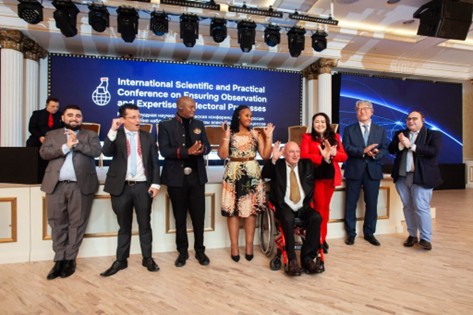
The newly established Board is led by its President, Vito Grittani (Italy/Abkhazia), founder of the so called International Diplomatic Observatory and an Ambassador-at-large for the MFA of Abkhazia. Vito Grittani has a documented history of participating in "observation missions" in the occupied territories of Ukraine. Apart from him, the Board also includes active politicians and public officials from the Global South. Reportedly, the Board members are: David Alejandro Toro Ramírez, Member of the Colombian House of Representatives; Arildiipurev Tsevelragchaa, Director of the International Cooperation Division at the Ministry of Labour and Social Protection of Mongolia; Zolani Mkiva, former South African MP from the ruling ANC party; Patricia Kishemeire, Ambassador for Uganda at the IMBRICS+ Municipal Forum; Sebastian Lopez Calendino, Deputy Director of OOEPI at the National University of La Plata (UNLP) in Argentina; and Yoon Jung Sik, a university professor representing the Republic of Korea. Rounding out the leadership is Areg Agasaryan, Director of the Russian Center for International Interaction and Cooperation, the main organizer of the conference.
While the official structure of the IAPEE has yet to be made public, there is little doubt that the Association is not a spontaneous invention but the culmination of years of domestic experimentation, in which the Kremlin refined its fake observation toolkit for the global stage.
Kremlin's ecosystem is built upon domestic foundations such as the Russian Public Institute of Electoral Law (RPIEL/ROIIP), the so-called Corpus for Fair Elections (CFE) and the Independent Public Monitoring (IPM/NOM). These three organizations serve as the primary testing grounds for the expert validation of state-managed election results. The deep integration between these "civic monitors" and the state was recently exemplified by the appointment of 31-year-old Alena Bulgakova, a leader of IPM/NOM, to the Russian Central Election Commission — a move that formalized the bridge between "the independent oversight" and the administrative machine.
To sustain this system, the Kremlin established training hubs like the Center for International Interaction and Cooperation, CIIC) that was the mail organizer of the conference. Its Director Areg Agasaryan joined the IAPEE Executive Board.
Through its founders, CIIC is closely intertwined with the Social Research Expert Institute (SREI), a high-level think tank founded in 2017 by Sergey Kiriyenko, the First Deputy Chief of Staff of the Presidential Administration. While SREI was initially tasked with developing a vision for Russia’s future and received over one billion rubles of state funding, it pivoted sharply toward overt propaganda following the full-scale invasion of Ukraine. Today, SREI experts play a central role in managing regional electoral campaigns, ensuring that the guidelines for fake observation are strictly followed.
The digital dimension of this ecosystem is managed by Dialog, a state-controlled NGO supervised directly by the Presidential Administration. With a staggering budget of 24 billion rubles earmarked through the Ministry of Digital Development, Dialog coordinates social media activities and disinformation campaigns across Russia and the occupied territories of Ukraine. Through its subdivision, Dialog Regions, it builds sophisticated systems for political exploitation of social networks, ensuring that the narratives produced by "independent experts" are amplified and protected from dissenting voices.
The most recent laboratory for this global rollout were the occupied territories of Ukraine. The illegal "referendums" and so-called local elections there served as a critical testing ground for international agents of influence. While local candidates were often recruited from the ranks of cleaners and janitors to create an illusion of participation, the presence of figures like Enrique Refoyo Acedo (Spain), Sonja van den Ende (Netherlands; also member of GFCN, see next section, which makes a direct connection between GFCN and fake observation), and Erna Oldudottir (Iceland) was utilized to provide a veneer of international legitimacy.
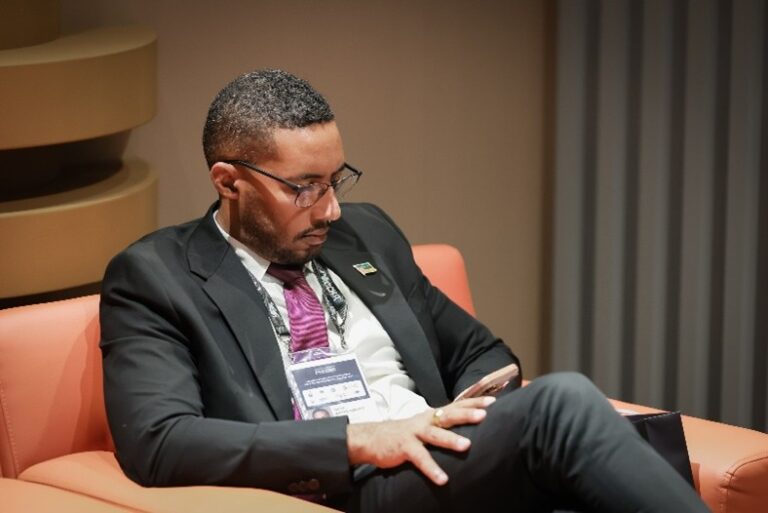
Investigations into the 2023 Kherson "elections" reveal that the Kremlin used some of the conference participants, like Dário Abdula Camal, Secretary-General and Mozambique Representative at the African Youth Development Commission, and Enrique Domingues, Deputy Head of the BRICS International Municipal Forum, as observers to provide the appearance of compliance with international standards in an election that was anything but this.
The Synergy of Deception: When "Observation" Meets "Fact-Checking"
The new Association is not an isolated initiative. It is a critical component of a broader, integrated ecosystem designed to manufacture legitimacy. Central to this strategy is the Global Fact-Checking Network (GFCN), established in 2025 by the Kremlin-aligned NGO ANO Dialog Regions, the state news agency TASS, and the Workshop of New Media. While the GFCN markets itself as a "multipolar alternative" to the International Fact-Checking Network (IFCN), some Western journalists and experts characterize it as a tool for laundering state propaganda under the guise of independent journalism [1].
The deep integration between the GFCN and the new electoral Association was on full display during the April 2026 conference in Moscow. The GFCN hosted two roundtable discussions, "New Technologies Serving Electoral Observation" and "Foreign Interference in Elections as a Threat to State Sovereignty", on how digital tools are changing the nature of electoral monitoring. Among the participants, both experts from the West and the Global South are listed: Anna Andersen (researcher from Belgium), Lily Ong (analyst from Singapore), Dr. Alexandre Guerreiro (legal expert from Portugal), Ishtiaq Hamdani (journalist and analyst from Pakistan) and Christopher Helali (USA).
This synergy between GFCN and the new Association is embodied by Vladimir Tabak (listed on U.S. sanctions lists), who serves as both the acting President of the GFCN and the CEO of ANO Dialog. Tabak’s organization ANO Dialog specializes on digital management for federal and regional election campaigns and is a notorious contractor for the Russian Presidential Administration. The role of ANO Dialog was exposed by REM in 2025 in this acticle on electoral manipulation in the Irkutsk region: Operation “Legitimacy”: Inside Russia’s Governor Elections.
As reported by the European Digital Media Observatory and the RMIT Information Integrity Hub, the GFCN operates as an "information shield". Its primary function is to preemptively label genuine international criticism of Russian elections as "Western fakes", while simultaneously using its 113-member network across 53 countries to amplify the positive "verdicts" issued by the Association’s observers. By mimicking the terminology and visual style of legitimate fact-checking institutions, the GFCN aims to create a parallel reality in which state-managed narratives are validated by a closed loop of supposedly independent international specialists.
Recruitment and the "Diplomatic Shield"
The Kremlin uses BRICS and other international fora, as well as its diplomatic networks, to recruit high-ranking officials and public figures from the Global South to legitimize its bogus election observation ecosystem. Although the conference participant list was not published, official photos suggest that several notable attendees may form part of a broader pool of future "independent" observers. Among them are Paul Nsapu Mukulu (DRC), President of the National Human Rights Commission (CNDH), Elspeth Nomahlubi Berlinda Khwinana (South Africa), Commissioner of the South African Human Rights Commission (SAHRC), Manantsoa Thierry Rakotonarivo, Chairman of the National Election Commission of Madagascar, Ayesha Hamid (Pakistan), Ombudsperson of Punjab Province and VP of the International Ombudsman Institute, Omar Mwinyi (Kenya), MP, Julio Faravelli (Uruguay), President of the National Commission of Social Organizations of Uruguay (CONOSUR), Purnima Anand (India), President the of BRICS International Forum, and Dragana Trifković (Serbia), Director General of the Center for Geostrategic Studies.
“The involvement of CEC representatives and Human Rights ombudsmen should be singled out as part of a new and worrisome trend as it targets the very core of elections. Election observers are according to UN and other international resolutions to be considered as human rights defenders. The involvement of human rights ombudsmen in the fake election observation ecosystem would deprive genuine election observers the legal protection that they deserve and need in their countries. Moreover, if the Kremlin will manage to install fake observers, corrupt antidemocrats, in national CECs, we have a huge problem”, – Stefanie Schiffer, Chair of the Board of the EPDE, said to REM.
Conclusion
The Russian State Duma elections in September 2026 will become a major testing ground for the Kremlin’s new institutionalized strategy of international observation. However, it seems that the ultimate goal is not the Duma elections as such, but the creation of a permanent, scalable model of authoritarian legitimation. By exporting these practices to the Global South, Moscow seeks to erode international democratic standards and replace them with a system in which the observers are as managed as the elections they monitor.
[1] See, for example: European Digital Media Observatory, Putin’s new plan to undermine fact-checking; Deutsche Welle, Fact check: Is Russia's new fact-checking platform credible?; RMIT University, The Repost: July 2025.