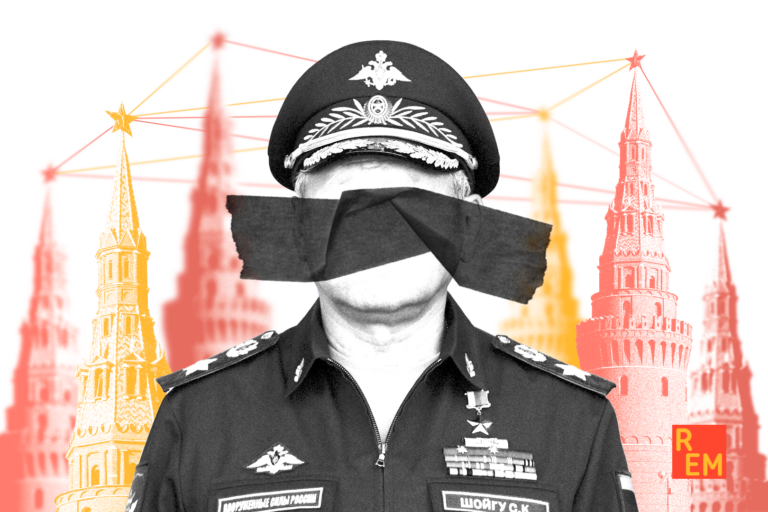
Serfs of the State
25.10.2022





Every election, we raise these questions. Who are budgetniki? What is their role in Putin’s regime? How can we eliminate the influence of administrative resources on the outcome of the elections? Is it specific to Russian political life, or is this phenomenon more universal?
Though citizens of Russia have practical knowledge of this class of their compatriots and meet them multiple times a day, they have hardly made any effort to give them precise scientific definition and place them into abstract socio-political concepts.
That’s why REM considers this article by Natasha Kondrashova for the newsletter Signal, a subsidiary of Meduza, worth of highest commends. Moreover, this relic of the soviet past should be interesting, even indispensable, for a true expert on modern Russia and its internal electoral mechanics.
By Natasha Kondrashova for Signal newsletter
Today we will talk about budgetary workers and the role they play in Putin's regime. Tell your family and friends about The Signal, and don't forget to subscribe if this is the first Signal newsletter you are reading!
September 11 was a single day of voting in Russia. The country held elections - gubernatorial and regional parliamentary elections see this text for the meaning of these terms in times of war ). In particular, the leaders of the Vladimir, Tambov, Yaroslavl, and Kirov regions were elected.
The Golos movement* has put into operation the web service "Map of Violations", where one can lodge complaints about the elections. Over the week of August 30-September 5, the organization published 100 reports of violations of electoral law from 28 regions. Almost a third of them concerned abuse of administrative resources. Put simply, the coercion of state employees to vote for one candidate or another (mostly for candidates of the United Russia party).
Over the next three years, there is a plan to increase the salaries of Russian budgetary employees by more than a trillion rubles. This is no mere coincidence. Since the start of the full-scale war against Ukraine, public sector employees have been used as pawns to show ostensible massive support for Putin’s "special military operation".
In mid-March, state employees were pressured to attend concerts marking the anniversary of the annexation of Crimea - in many cases, they were forced to attend such events by their employers. A month later, a flash mob in support of Vladimir Putin and the invasion of Ukraine was exhibited on social media, with participants posting photos with white armbands on their upper arms.
In addition to creating the appearance of unconditional support for the regime, Russian state employees were asked to fork over money to aid the residents of the self-proclaimed Lugansk People's Republic and the Donetsk People's Republic.
It may seem deceptively simple: they are those who receive a salary from a federal, regional or municipal budget. But this is not quite so. As a rule, public sector workers are understood to be employees of budget-funded educational institutions (schools), the healthcare system (hospitals), cultural institutions (theatres) and so on.
Officials, police officers, military personnel and other security services, even though they are paid from the budget, are not considered to be public employees. Their work is regulated by special federal laws: on state and municipal service (one, two, three), as well as on police, federal security service, military service, and so on.
Civil servants receive long-service pensions (i.e. related to the number of years in service), and they also receive additional days of paid leave. But, most importantly, they are able to get jobs under special procedures, not on the free labour market like teachers, doctors, actors in state theatres, and other state employees.
There is also a common practice of usually jokingly calling employees of state corporations, state and municipal unitary enterprises (those engaged in rubbish collection or extra-departmental security, for example) "budgetniks". However, they are not budgetary employees in the strict sense of the word, as they work in commercial enterprises created by government authorities, and their salaries are paid from the authorities' funds, not from the budget.
Vladimir Gimpelson, director of the Labour Research Centre at the National Research University Higher School of Economics, estimates that there are about 15 million state employees in Russia - about 21 percent of the able-bodied population.
Of course not. But when you hear that "state employees are being driven to the rally," you can't help but imagine them walking there obediently. They seem to be an obedient mass. This is very unfair, but the stereotype has not emerged based on nothing.
Dmitriy Dubrovsky*, a researcher at the Centre for Academic Freedom Studies at Central European University, offers a socio-psychological explanation for the conformity of public sector workers. State organizations, including schools and hospitals, retain a hierarchical management structure left over from the Soviet era (described in its worst form by the aphorism "I'm the boss, you're a fool"). Having worked this way for a long time, one begins to accept the rules by which this hierarchy functions.
The initial postulate is that the 'system' is always a unified one: there are no independent organisations. A school principal is not an employer for the teachers, but a supervisor; and for the principal, in turn, officials of the city education department are also supervisors; those then have their own supervisors at the regional level, and so on.
Some supervisors (ostensibly "respected people" give orders, for example, that a particular local politician should get a certain number of votes or that turnout should be high. This order gets passed down the hierarchy, getting more and more details, reservations, clarifications and so on. This is “the Vertical of Power”. And the opportunity to pass on orders and wishes along this Vertical is an administrative resource. This is a specific form of political corruption.
In principle, the Vertical and administrative resources can also exist in private commercial structures (large corporations, for example). But researchers say that this relationship is most common in state or municipal budget-financed institutions.
According to Dubrovsky, for public-sector employees, meekly following the instructions of their bosses is the fulfilment of their social contract: "I don't touch you and you don't touch me" (not doing what your bosses tell you means that you are "touching" them, in the sense of bothering them). This contract, of course, is unequal: "bosses" can revise it more or less unilaterally at any time, and no one (or nearly no one) opposes it.
The relationship between "supervisors" and budgetary employees is, in fact, a patron-client relationship, that is, a relationship of patronage rather than of formal subordination. "The bosses demand loyalty and, among other things, the “right” percentages of returns in elections. In exchange, they promise favours. This is a peculiar exchange of services which from the outside seems like a bureaucratic structure.
The main 'favour' given by a 'boss' to a budgetary employee is not even a bonus or a promotion - it's simply keeping their job. Budgetary employees comply with the requirements of "bosses" not because they will be rewarded for them (for instance, getting a day off), but primarily because if they do no comply, they will be punished (e.g. fired or fined half of their salaries for trumped-up reasons).
Dubrovsky also explains the obedience of budgetary employees by the fact that Russian society as a whole is depoliticized: it does not regard elections and rallies as a way of expressing its position. This is a well-known mechanism to which authorities resort in authoritarian regimes (we wrote about this in detail in The Signal about people who are "out of politics").
"Since the Russian population has been convinced that elections are absolute nonsense, a sham, the situation where you just have to show up to check off a box - for the “right” candidate - becomes normal. Many budgetary employees believe that “politics is a dirty business”, so it is better not to get involved," Dubrovsky said.
Moreover, state employees know that, for example, in most cases, they are not punished for vote rigging in elections, but if they disobey the orders of their bosses, the consequences can be unpleasant. For example, loss of employment. In 2019, in Ivanteevka near Moscow, school principal Tatyana Kucherenko was fired a after she refused to take part in election fraud in the town's council of deputies. This is certainly not the only case.
In Russia, state employees are mostly women, people over 45 years of age with higher or specialized secondary education, residents of small communities (under 50 thousand people) and urban-type settlements, as well as those who live in regions located outside of central or north-western Russia. And these are very important indicators.
In post-Soviet Russia, it is harder for women to find work than for men (because they face discrimination and perceive work in the public sector as a way to avoid it). It is much harder for people of pre-retirement and retirement age than for younger people. In poor regions, it is more difficult to find a job for obvious reasons. To be unemployed in the public sector in such circumstances means to be unemployed for good.
But the paradox is that where there is no choice of work (e.g. in small and poor urban settlements), the "bosses" have less leverage. Through a comparison of urban and rural residents, researchers have concluded that it is the latter who find it easier to change political preferences. If a rural doctor is fired, there is simply no one to replace him, and he is - suddenly - not so easily intimidated.
Budgetary employees are likely to be very conservative in their assessment of economic risks. On the one hand, they will face an uncertain future with the potential loss of their jobs, but they will have stood up for their moral principles. On the other hand, there is a stable income, a settled life and predictability: state agencies always need specialists. "There is no need to demonise these people. They just don't understand for the most part for what and for whom to revolt," explains Dubrovsky. The behaviour of state employees is generally similar to that of other apolitical people working in private structures. The only difference is that the authorities use them as a tool to achieve their goals.
This is a complicated question to answer.
Last year the Levada Centre conducted a poll after the Duma elections. Only 31% of public sector workers voted for United Russia, while 25% voted for the CPRF (in the private sector, these figures were 32% and 26%, respectively). Meanwhile, in July 2019, 23% of budgetary employees said that they "want change".
Politicians can get votes not only through administrative resources. Simply put, some budgetary employees may not need to be forced to vote for United Russia. But the "bosses" have no time to understand such subtleties - and if they coerce, they coerce indiscriminately. As a result, it is virtually impossible to distinguish between votes "from the heart" and "by order".
The Russian authorities are not alone in using administrative resources to manipulate election results. Researchers write that the phenomenon has been observed in Central Asia and the Caucasus, as well as in Eastern Europe, since around the 2000s.
Researcher Lukan Way attributed the widespread use of administrative resources in authoritarian regimes to a lack of the rule of law, a weak market economy and an underdeveloped civil society. Way cited Ukraine as an example, but his word was published in 2004, and Ukraine has since ceased to be classified as an authoritarian country. All of these features can be found in Russia, but also in other countries around the world (you can read about "authoritarian diffusion" in this issue of The Signal).
According to Way, two factors helped to create the environment in which the use of administrative resources became possible. Firstly, the social geography inherited from the Soviet system: in some areas, everything is concentrated simultaneously (capital, labour, infrastructure and administrative capacity), while in other areas, there is virtually nothing - hence no social mobility and few jobs, and therefore greater dependence on the state. Secondly, the growth of social inequality after the collapse of the USSR.
Since it is difficult to solve the problem of poverty and change the conditions of social geography, there is no guarantee that administrative resources will not be used in the future - even if the regime changes. And leaders of any political persuasion could use it as an instrument of manipulation. To prevent this, restrictions on executive power and political and economic decentralisation are necessary.
Given that budget holders are already telling pollsters that they 'want change', and given a general understanding of how they live, it is conceivable that their position may at some point no longer suit them. In Russia's current climate, however, relying on state employees as a group capable of changing the regime from within is clearly not a good idea. Radical regime changes do not occur simply because a certain segment of the population becomes poorer and more politicized.
People whose livelihoods allow them to act relatively independently of state institutions are more likely to engage in passive resistance. In the case of Ukraine, this led to the Orange Revolution. But even after a regime changes (if this ever happens), there needs to be massive resistance against the use of administrative resources. Otherwise, it will be difficult to achieve free and fair elections.
The Ukrainian publication Suspilne has published the 2019 series Budgetary Employees, which comically depicts budgetary employees and the situations they find themselves in. It can be seen on YouTube.
"Referendums" on the incorporation of occupied Ukrainian territories into Russia could take place this autumn. And although the regions where they will take place, as well as the dates of the "vote", are not exactly known, Ukrainians are being strongly prepared for it. Read how it is happening in seized Melitopol (Zaporizhzhia region) and how local guerrillas are resisting Russian troops – read the Meduza text.
We have sent you The Signal, and now it's your turn. Share this letter with your family and friends! Knowledge is power. The future is in your hands.
Would you like us to research and explain a phenomenon or concept that you yourself have noticed in the news? Write to us at: signal@meduza.io.
* Declared "foreign agents" in Russia. We indicate this at the request of the authorities.