Approval ratings do not predict change or Why we should stop gazing at political polls from Russia
31.07.2023





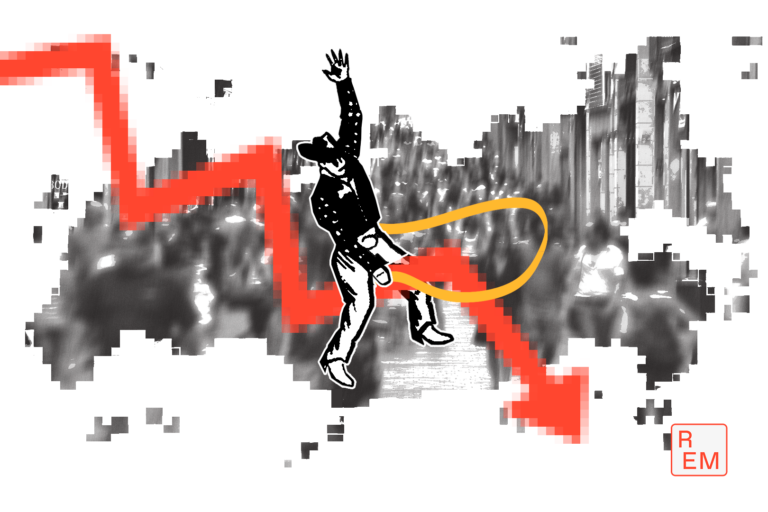
Prigozhin's failed mutiny on June 24th sparked various speculations concerning his political support and popularity among the Russian population. According to a report by the Open Minds Institute published before the mutiny, more than 20% of respondents believed Prigozhin was capable of leading the country. However, this percentage sank by half in the aftermath of the revolt, to slightly over 11%. Similarly, discussions have arisen about the political ratings of Vladimir Putin, which experienced a drop before bouncing back. The state-run pollster WCIOM (All-Russian Centre for Public Opinion Research) did not report any significant changes in Putin's personal ratings.
Amidst the recent months of the exhausting war in Ukraine, quite a few analysts embraced wishful thinking and ceaselessly sought signs of Putin's regime collapse. Political polls became a potential source of hope, reminiscent of a year ago when Russian polls indicating near-unanimous approval of the war had led to the condemnation of the entire Russian society. The poll results highlighted that the invasion of Ukraine was not just Putin's war but a war supported by Russians as a whole.
The bleakness of Russian political reality makes observers turn their attention to the approval ratings of secondary political players, such as governors or satellite parties, in search of alternative figures and scenarios. These ratings, at times, receive undue attention fueled by the hope for an alternative political path.
Disseminating Ratings Means Assisting Kremlin’s Propaganda
Why should not one succumb to the false hope in these ratings? The answer is simple – because the Russian regime benefits from them. Approval ratings in autocracies suffer from the same diseases as any other opinion polls.
First, uncritical perception of ratings and polls serves as ‘evidence’ for the massive support of the Russian regime and its legitimacy in the public eye. While they are by no means indicators of Putin’s or other political actors' popularity. Second, polling is seen by respondents as a dialogue with the state rather than an inquiry of individual opinions on certain matters. Blindly relying on ratings, experts tend to ignore that some responses are driven by fear, compliance, and risk aversion. Third, the dissemination of survey results has cumulative effects of its own facilitating the formation of an illusory majority or minority. Thus, surveys are seen as an autocrat’s weapon. They give a sense of ‘objectivity’ to the data originating from deeply distorted political realities. What is worse is that the more one disseminates or quotes these numbers, the more one rejoins with the Kremlin’s efforts to demonstrate its invincibility. Not to mention that disseminating Putin’s cosmic ratings and dismal numbers in support of the opposition – to the extent it is covered by the pollsters – pays lip service to the Russian civil society trapped inside the regime.
Polls in Autocracies Reflect Stability but Do Not Foresee Change
Russia is frequently described as a personalist dictatorship, whose citizens lack exposure to competing worldviews and are constrained to view political landscapes solely through the lens of state propaganda. This limited perspective offers them a narrow view of political actors and predictable strategies. The purpose of propaganda is to promote predictability and restrict political alternatives, making it ineffective in handling unforeseen events. Consequently, any responses based on this distorted reality become outdated when unexpected events occur. As a result, deriving predictions from ratings produced in Russia (or any dictatorial regime) is meaningless and unreliable.
Indeed, the responses to politically sensitive questions obtained from individuals in such regimes are not genuine opinions but rather a collection of expected answers. Some respondents tend to be risk-averse and provide socially approved answers, but what is often ignored is that the majority are deeply depoliticized, disengaged from politics and simply replicate the default opinion without a genuine conviction (and without fear).
Those who are fearful might be hesitant to express their genuine views, choosing to echo the narratives propagated by the unfree media or their social environment instead. What is even more crucial is that individuals who are deeply disengaged from politics might lack any personal opinions on the matter and, therefore, mindlessly repeat what they hear around without genuinely caring about the issue. Both fear and depoliticization can coexist in respondents, leading to a situation where the regime artificially amplifies its official discourse through the interplay of manipulated media, skewed survey results, widespread depoliticization, and an atmosphere of fear. This reinforces the regime's control over the narrative and hinders the possibility of obtaining accurate and meaningful data through surveys in such political contexts.
The Russian case offers an intriguing aspect as the regime tolerates independent pollsters, namely Levada Center, Russian Field, or Chronicles. Although Levada's political ratings often align with WCIOM or FOM (Public Opinion Foundation, another state-run pollster), its researchers vigorously assert the reliability of their numbers, even amidst wartime conditions and domestic repression. For instance, Levada claims that Russian respondents do not fear but rather do not care. The response rates seem satisfactory, showing no anomalies in dealing with sensitive questions. Russia Field takes a bolder approach, experimenting with wording to provide more nuanced estimates, particularly for those with no strong opinions or who remain undecided. These experiments vividly illustrate that the overall approval of Putin is detached from specific policies, a phenomenon uncommon in democratic systems. Thus, without adaptation to the authoritarian context, surveys run the risk of capturing only formalized scripts from individuals whose voices have no real political impact.
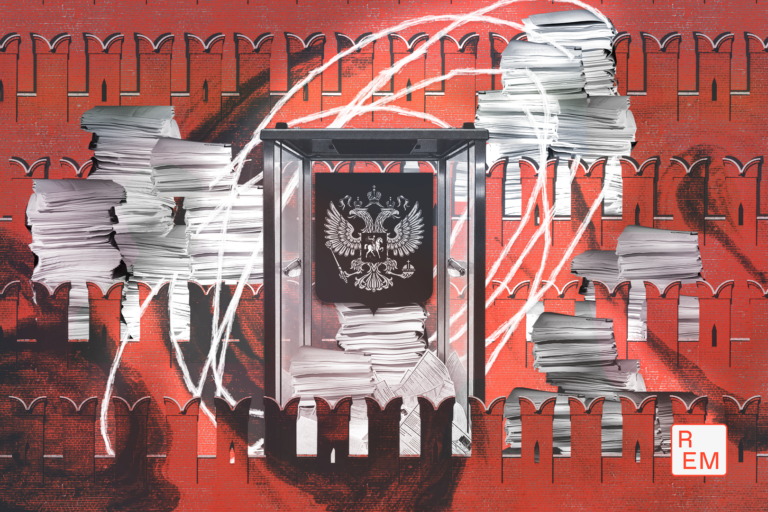
Summing up, the term "public opinion" poses challenges as it aims to approximate the will of the people, an idea stemming from the Enlightenment era. Opinion polls were initially considered helpful in predicting electoral outcomes, but even in democracies their capacity to predict has often disappointed spin doctors and politicians. Even though polls are used as a barometer or snapshot of the opinion landscape in democratic societies, why do we put so much trust in survey results originating from an outright dictatorship at war? An absolute prerequisite for a profound analysis of Russian public opinion is a public sphere where opinions are freely expressed and circulated. Only free and fair elections can truly translate opinions and preferences into real-life political outcomes. Surveys cannot replace elections or serve as proxies for the free expression of political will. In Russia, citizens' support holds little significance in shaping political decisions, as autocracies operate differently from democracies. Approval ratings of Russian leaders or marginal figures become secondary in times of radical political turbulence when established actors quickly become irrelevant. In the coup d'états context, this kind of statistic loses its relevance altogether.
Author: Margarita Zavadskaya, Senior Research Fellow at the Finnish Institute of International Affairs