"Cheaters always leave traces"
15.03.2026





Each new election in Russia is remembered for increasingly blatant manipulations and falsifications. In September 2026, Russia will hold parliamentary elections for deputies of the State Duma. Unsurprisingly, the campaign's outset was marked by pressure on independent candidates.
How will the Kremlin act in the upcoming vote? Will it promote military figures? Is it even worth voting if the outcome is known in advance? These questions were addressed by Roman Udot, electoral expert and former co-chair of the election watchdog Golos, in his interview for 7x7 (in Russian). REM presents an abridged summary of the interview in English.
7x7: What goal does the Kremlin pursue in the 2026 State Duma elections?
Udot: They need to survive, remain in power, and continue their insane course. At the same time, they want to suffer as few losses as possible. This will be very difficult, given the “brilliant” achievements of the current leadership.
7x7: Why do you think it will be difficult, given that the authorities control all elements of the electoral system?
Udot: To retain a constitutional majority in the State Duma, the Kremlin will have to cheat. In the last Duma elections, which took place before the full-scale war, everything was also under full control, yet they still lost a number of seats in the Duma (in 2021, United Russia received 324 seats, losing 19 mandates — REM). The presidential elections 2024 were also fully controlled, yet they still managed to mess things up; those were the most falsified elections in the country's history.
In 2026, I do not see any economic or social achievements that could attract voters. Therefore, they will have to resort to fraud. Cheaters always leave traces. Sooner or later, the fraudsters get caught.
7x7: The spoiler party New People was created for the previous State Duma elections. Did it help the authorities accomplish their goals?
Udot: New People is a project of Sergei Kiriyenko, the First Deputy Head of the Presidential Administration. Kiriyenko has built up significant political muscle. The New People candidate Vladislav Davankov came second in the presidential election in 2024. He led in those precinct commissions that were considered fair. He was young, came from nowhere, and advocated either for peace or for a truce. Nevertheless, he gained strong support, especially after Boris Nadezhdin was denied registration as a presidential candidate.
Thanks to New People, the Kremlin covers the right-liberal flank. If they need to adjust the “peacefulness” of their rhetoric, the authorities can easily do so. But they are unlikely to, because that would attract the votes of those who support peace to New People. And that is potentially dangerous for the Kremlin, since the ruling party advocates continuing the war.
The problem with an autocracy is also that, like a crocodile, its teeth grow only in one direction. It must keep swallowing more and more; it cannot show weakness or a decline in support. Otherwise, heads will roll — and nobody wants to be punished. At the same time, it is unclear how to demonstrate growing support. They cannot hold fair elections and just accept the results — that would mean defeat. So, they will have to cheat even more this time to achieve the desired outcome.
7x7: How are the authorities promoting military figures (“veterans of the special military operation (SMO”) to elected positions?
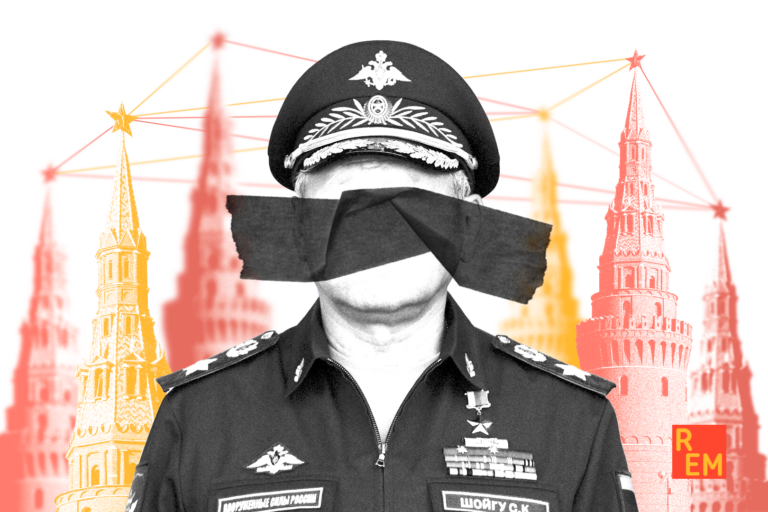
Udot: The promotion of “SMO veterans” is purely a PR campaign. If you look at the ruling party’s election results, “ordinary” candidates are typically given 70–80% of the vote. The “heroes of the SMO” were given only about 50%. This suggests that not only do voters not vote for them, but they are not even respected within the system itself. Many are not allowed to run by local election commissions under various pretexts, because local officials do not want to replace their usual candidates with new, unfamiliar ones. Therefore, they carry out Kremlin directives reluctantly.
In the previous regional elections, only five graduates of the federal program for “SMO veterans” called Time of Heroes won significant seats. Among them was Maria Kostyuk, who had led that very program and later became the acting governor of the Jewish Autonomous Region. She has no connection to the war. Yes, her son was killed in the war in 2022, but she herself did not fight.
Another participant in the Time of Heroes program, Yevgeny Pervyshov, became the head of the Tambov region. He did travel to the war zone several times, serving in the Kaskad unit, where representatives of the elite can serve away from the front lines. He was then given a year to become governor. He won — probably thanks to falsifications.
Two others, Stanislav Kochev and Yevgeny Vyltsan, were elected deputies of the State Council of the Komi Republic and the Bryansk regional Duma, respectively. Konstantin Kuteynikov became a deputy of the Tambov city Duma. Frankly, this is a rather modest representation.
Many other “SMO veterans” who ran independently of the ruling party were not allowed to win at all, also through falsifications. Black PR campaigns were used against many of them, using the same schemes that had previously been used against the Yabloko party.
7x7: Is Putin personally promoting participants of the war in Ukraine into the State Duma?
Udot: Currently, there are only about 9 or 10 “SMO participants” in the Federation Council (some of them are professional politicians rather than soldiers and were not actually at the front lines). That is about 5% of the total membership — clearly a drop in the ocean. Putin has the right to appoint 30 senators to the upper chamber of parliament. He could easily recruit military figures and create a personal army in the Federation Council. But he does not. All the military figures must go through elections.
A vivid example is Svetlana Kirillova, the widow of Lieutenant General Igor Kirillov. The general did not die in the war but from an explosive device attached to an electric scooter in Moscow. His widow became a senator from the Kostroma region (she is originally from there). But not directly through Putin’s quota. First, she had to win elections to the regional Duma. To do this, a respected deputy who previously held the region’s Senate seat had to be pushed out. She went through United Russia’s primaries, was placed on the regional list, and was elected. At the very first session of the new Duma, Kirillova was chosen as senator and sent back to Moscow with shouts of “Hooray!” (literally). Putin could have appointed her directly. In any case, even this example is not about “SMO heroes” in power. She herself had nothing to do with the war.
7x7: What will turnout look like?
Udot: The turnout will be rigged to meet the target. Before that, there will be efforts to suppress turnout and to mobilize administrative resources so that only those who will vote “the right way” come to the polls.
Therefore, everyone in Russia who chooses to lie on the couch on voting day is essentially part of United Russia’s reserve. Ballots that are not placed in the ballot boxes will be stuffed in favor of the ruling party. People should not stay at home and make the authorities’ job easier. All independent candidates are interested in this: Boris Nadezhdin, the Rassvet party, the Yabloko party, and even the Communist Party. The more people come to polling stations, the harder it will be to fabricate the results.
7x7: What awaits representatives of the Yabloko and Rassvet parties in these elections?
Udot: They will be worn down with a “death by a thousand cuts” strategy — small attacks on individuals. Yabloko and Rassvet can act as catalysts for public discontent and can prevent fraud at polling stations. After all, what is a candidate from a non-loyal party? It is an opportunity to appoint independent observers at polling stations and obtain clean data for analysis. This prevents ballot stuffing — and when that option disappears, election commissions start rewriting protocols, and that is when they get caught. And we catch them doing it.