Dissent of the loyal: Women’s protest on the eve of the presidential campaign in Russia
21.12.2023





After 600 days of genocidal war in Ukraine, dozens of women - mothers, wives and sisters - attempted to rally demanding the return of their loved ones home. Any manifestation of dissent is an unlikely event these days in Russia due to the highly repressive environment and immediate crackdown on any instance of public discontent.
The most noticeable rally took place in Moscow on 7 November, when relatives of drafted men tagged along with the CPRF (Communist Party of the Russian Federation) rally dedicated to the 106th anniversary of the October Revolution. Citing COVID-19 restrictions, Moscow authorities rejected the women's request to hold a separate rally, so the women joined a demonstration by communists on the Teatralnaya Square. The women's rally lasted for about five minutes before police cordoned them off and ordered them to halt the action. After that, dozens of groups and chat rooms sprang up on social networks, where relatives of the military tried to organize rallies across the country on 19 November. Only one rally was agreed upon - in Novosibirsk, and it ultimately was held in the format of a closed meeting in the local ‘palace of culture’, to which the media were not allowed, though animators for kids were invited.
After desperate attempts to reach out to regional, military and federal authorities, submitting endless requests to return their close ones back, women have decided to take more public action. Some of them put stickers on their car’s windshields or back windows stating ‘I want my husband back. I'm f****d’ (in Russian the word starts with the letter Z, a symbol of ‘the special military operation’, which is used here in a reversed context: Верните мужа. Я Zаебалась). Authorities reply to the women that their husbands will only return when the SVO (‘special military operation’) is over. However, there are no such naive Russians who genuinely believe that the war will be over anytime soon.
As some protest organizers claim "Our goal is demobilization. The requirements are: commissioning of all the wounded, the stay of the mobilized on the SVO not more than one year and expansion of the list of diseases". In other words, protesters do not demand ending the war and are extremely cautious not to violate the existing wartime censorship legislature. On the contrary, they often demonstrate and emphasize their patriotism and political loyalty. We cannot say whether it is sincere or instrumental for the sake of being able to negotiate and reach their ultimate goal, but the rhetoric remains moderate. In the online chat-rooms, participants agree not to discuss politics in general and request women to respect the existing legislature.
Given the fact that this group is a novice to public protest activities, they seek to avoid being associated with the opposition not to be blamed for ‘treason’ and ‘cooperation with the West’. It does not mean that all these women support the war, according to journalists' accounts, there are those who never supported the cause or changed their mind. However, they prefer to stay in the shadow.
Despite all such precautions, women have already been attacked by the Russian TV propagandists, including the infamously known Vladimir Solovyov. For example, women from St. Petersburg said they have been threatened for communicating with so-called ‘foreign agents’ and in the Telegram channels of "war reporters" (voenkory) they have already been called "enemies of the people”. Movement activists face threats and receive calls and home visits from law enforcement agencies. Women were warned of "responsibility for extremism", some even had their phones checked by the police.
At the same time, it seems that authorities cannot organize a full-scale crackdown on this emerging movement as they would with Navalny’s supporters. Beating up soldiers’ wives and torturing them at the police stations would have sent a signal to those in the frontline that an ephemeral threat from ‘Ukrainian nazis’ is less worth fighting against, when real enemies are those who are holed up in the rear. Such public attacks would have been especially unfortunate given the launch of the presidential campaign in Russia. Even autocrats slow down on repression when they face elections.
Appeasement is another strategy how Russian authorities attempt to handle the inconvenient dissent. Allegedly, vice-governors of Russian regions have been tasked to closely monitor the sentiments of wives and other relatives of the deployed. According to the insider media outlet, within the framework of closed seminars for regional administrations, the governors are expected to cajole protesters "at any cost" to avoid massive rallies: "Persuade, promise, pay. Anything to keep it away from the streets, in any number, even 50 people". In Novosibirsk, at a closed meeting in the local ‘palace of culture’, women were offered additional benefits while also forced to provide the original certificate of mobilization of a relative and confirmation of their kinship with him. Officials threatened women that they would be prosecuted for uncoordinated public events. Attempts at appeasement are also mixed with more subtle threats.
Dealing with pressure and threats is not the only obstacle that prevents women from getting broader support. Indeed, their fellow mothers and wives as they believe that public protests may backfire, and their husbands and sons could face revenge and punishment in the frontline. This fear prevents women from expanding the social base of protest. Finally, protesters do not demand the end of the SVO but a rotation of the mobilized, thereby potentially jeopardizing other families in Russia that are unlikely to be keen on sending their husbands and fathers to the battlefields. The slogans they use – ‘If you've served yourself, let others serve’, ‘No to endless mobilization’ or ‘It's not just the mobilized who have a homeland’ – potentially split the support for protesters, scare broader society away and undermine solidarity. From the coalition-building viewpoint, such framing strategy is not the most efficient way to find allies within the society.
According to a recent poll conducted by Russian Field, 48% of respondents support the protesters’ claim, while 32% do not support the rally with 18% who are undecided and 3% who refused to answer.
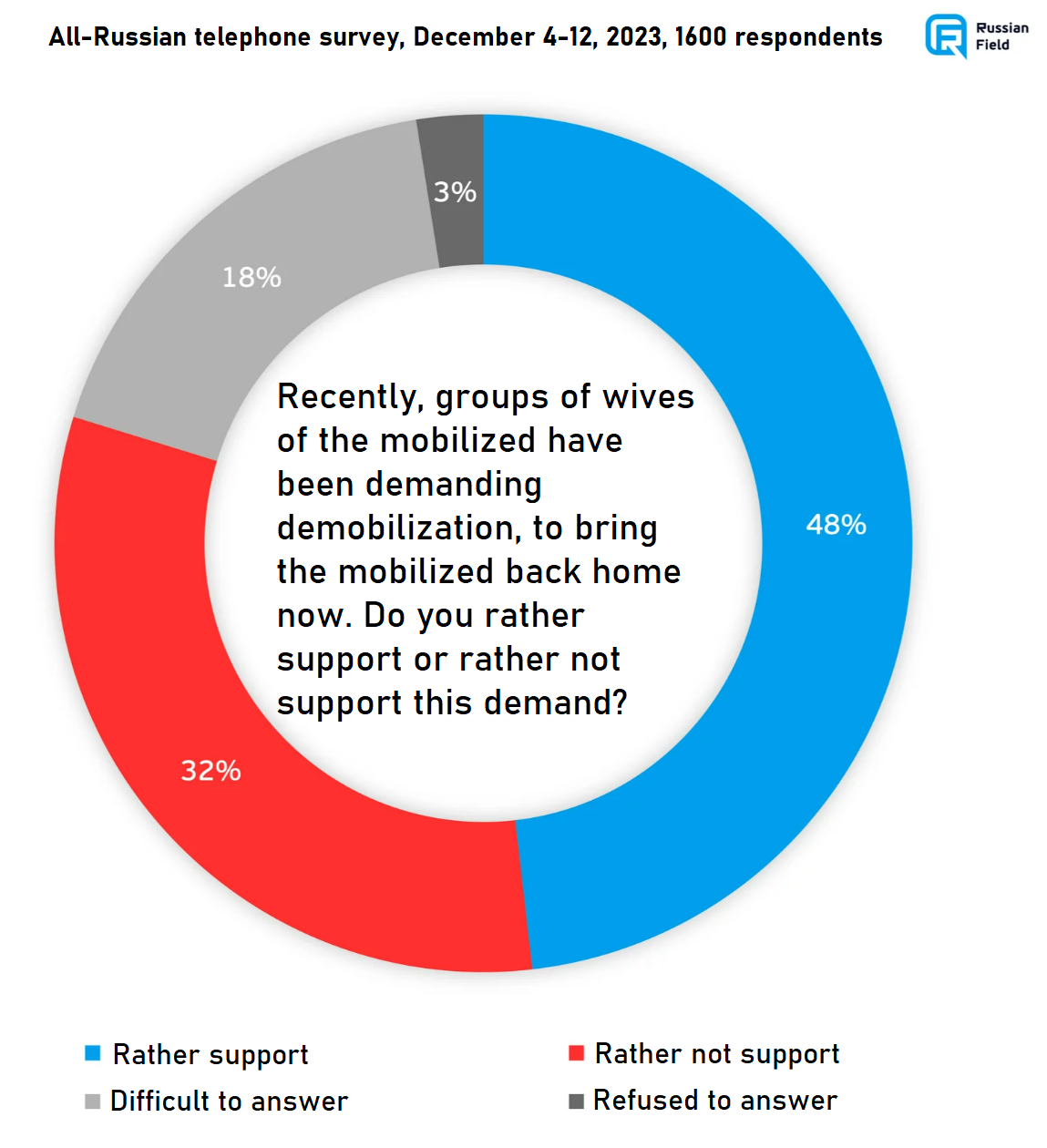 Chart 1. Popular support toward demands for demobilization. Source: Russian Field
Unsurprisingly, women are more likely to support the cause vis-a-vis men. Younger respondents are more likely to support demobilization compared to older ones: 69% among 18–29-year-olds vs. 32% among those older than 60.
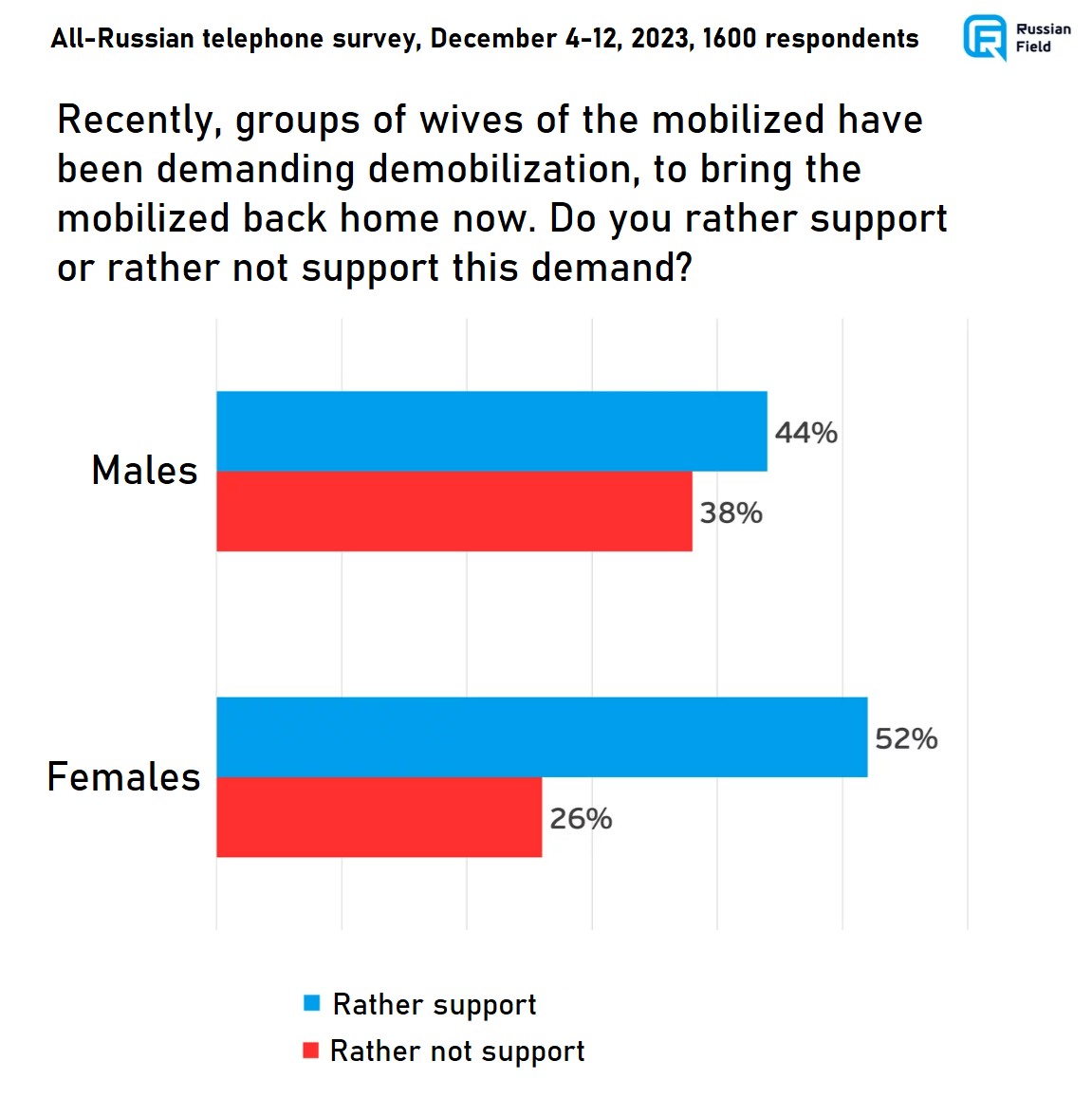 Chart 2. Breakdown by gender. Source: Russian Field
Thus, on the one hand, women have potentially more appeal and legitimacy in the eyes of the Russian population. They may take advantage of the moment and gain more leverage as they are more protected against blatant state violence, especially on the eve of presidential elections. On the other hand, probably these women do not seek to communicate their demands to the rest of the Russian population but only to those who can save their loved ones.
In essence, these protests are a continuation of individualized and atomized strategies of solving acute problems that Russian citizens encounter. Collective action is threatened by such divisive rhetoric aiming at ‘those above’. The very genre of rallies is still partially confined within the format of chalice rather than a more robust platform. But in the case of overcoming potentially divisive slogans, those emerging movements may have strong chances to gain more support and legitimacy.
by Margarita Zavadskaya, Senior Research Fellow, Finnish Institute of International Affairs