If there is Putin, there are no debates
07.09.2023





On September 10th, gubernatorial elections are set to take place in 21 Russian regions. The Republic of Khakassia, located in Southern Siberia with a population of 530,000, stands out as the sole region where a competitive race is anticipated. Khakassia emerged as the sole region where its governor, communist Valentin Konovalov, invited his primary adversary, Sergey Sokol from United Russia, to a debate. While the audience hoped for a substantive political exchange, the discourse was dominated by accusations of mudslinging and chasing hype. Nevertheless, many found the debate to be compelling.
This analysis explores how debates in modern Russia have changed, why gubernatorial candidates avoid open discussions with opponents, and what the future holds for debates.
Nemtsov vs. Zhirinovsky
In the 1990s, TV debates in Russia were very popular. They weren't part of election campaigns but covered a wide range of topics, as there was no open censorship, even on state TV channels.
One of the most memorable debates in Russian TV history featured Boris Nemtsov, then-governor of the Nizhny Novgorod region, and leader of the Liberal Democratic Party of Russia (LDPR) Vladimir Zhirinovsky (the picture to this article refers to an episode from this debate). Initially, the opponents discussed Zhirinovsky's visit to Budennovsk, a town in southern Russia, where on 14 June 1995 Chechen separatists made a raid and took hostages, killing 129. However, Zhirinovsky strategically steered the conversation to a topic he deemed favorable, highlighting an increase in venereal diseases in the Nizhny Novgorod region. Nemtsov quickly countered, suggesting his opponent seek medical treatment. He then presented an interview from Playboy magazine where the LDPR leader claimed to have “slept” with 200 women. In response, Zhirinovsky splashed juice from his glass onto Nemtsov. This incident remains a standout moment in the history of Russian TV debates.
While the debate between Boris Nemtsov and Vladimir Zhirinovsky occurred just six months prior to the State Duma elections, it wasn't directly associated with their respective political campaigns. Instead, it was an experimental initiative by the VID TV company to introduce fresh formats to Russian viewers. The “One on One” program subsequently transformed into a talk show, featuring politicians, journalists, and public figures engaging in debates in front of a live audience. This format persisted into the 2020s, but with a twist: it's now used by Russian TV propagandists, and the opponents of the hosts and pro-Kremlin speakers are often blatantly caricatured characters.
In the 1990s, architects of the Russian political system sought to emulate the candidate debates seen in American and European models. Yet, a significant barrier to adopting this practice was the reluctance of Russian presidents to participate. Boris Yeltsin in 1996, followed by Vladimir Putin in 2000, 2004, 2012, and 2018, and Dmitry Medvedev in 2008, all declined direct confrontations with their opponents. Their common justification was preoccupations with duty-bound trips to various regions. This avoidance strategy was later adopted by incumbent governors and those favored by the Kremlin, often designated as "acting governors".
The Only Significant Pre-Election Debates
However, before the entrenched system of elections without political debates became the norm, meaningful discussions between candidates took place and even swayed election results.
Probably the most telling instance of such debates occurred on May 31, 1996. On that day, St. Petersburg's governor (St. Petersburg, being a federal city, has a governor as its leader instead of a mayor, reflecting its special status within Russia), Anatoly Sobchak, and his first deputy, Vladimir Yakovlev, faced off in a television studio, both having advanced to the second round of voting.
In the first ballot, Sobchak got 29.02% while Yakovlev scored 21.58% of votes. Following the debate, Yakovlev rose to 47.49% and Sobchak reached 45.76%.
Experts recall that Sobchak seemed unprepared for a political dialogue with Yakovlev during the debates. While Sobchak highlighted the region's accomplishments, Yakovlev emphasized reviving industry and transport, addressing challenges, and ensuring press freedom. Yakovlev, then relatively unknown, successfully crafted a favorable image by “contrasting himself against the negative perceptions accumulated towards Sobchak over many years.”
According to experts' memories, Sobchak was not prepared for a political dialogue with Yakovlev. In the debates, he spoke about the region's achievements, while Yakovlev discussed the need to revive industry and transport, his readiness to face problems, and his intention to make the press free. The then-little-known Yakovlev managed to create a positive image for himself by contrasting with the negativity accumulated towards Sobchak over many years.
Yakovlev later remarked that the debates had indeed played a pivotal role in his election triumph. He acknowledged that “such a format had not previously existed in the country, and there was no clear blueprint for how debates should unfold”.
No Elections, No Debates
In 2004, Vladimir Putin put an end to the direct election of governors, and until their return in 2012, debates at the regional level were irrelevant.
Between 2012 and 2014, gubernatorial elections unfolded across 13 regions, Moscow included. While contenders against incumbent governors engaged in televised debates, the regional leaders themselves opted to abstain from such discussions. For instance, in 2014, Alexey Gordeev, the governor of the Voronezh region (located 500 km south of Moscow, with around 2.2 million people), expressed his reluctance to partake in what he deemed "chatter and populism." Similarly, Andrey Turchak of the Pskov region (located on the border of Russia with Latvia and Estonia, with around 580 thousand residents) justified the absence of debates by his preference for a direct communication with voters. Moreover, Moscow's mayor, Sergey Sobyanin, declined to participate in public dialogues, believing his presence could inadvertently boost his adversaries' popularity. Alexey Navalny, Sobyanin's primary rival in 2013, also refrained from further debates after the initial two rounds. He attributed his decision to the debate organizers scheduling them during unpopular morning broadcasts on TV channel "Moskva Doverie" and the radio stations "Moscow FM" and "Moscow Speaking". The politician remarked, "It seems more like a tactic to burn the candidates' time".
Even with the introduction of mandatory participation in TV debates for candidates in 2016 (though the only penalty was the allocation of airtime from non-participating candidates to their opponents), this regulation applied to elections at all levels except the presidential.
Nonetheless, sitting governors were not eager to engage in debates, choosing instead to allocate airtime to their opponents. The rejections from regional leaders to interact with rivals were pretty straightforward: as per Russian laws, covering the daily duties of governors was not categorized as pre-election campaigning, and media under local administration control consistently and thoroughly documented the activities and “duty-bound trips” of the heads of the regions. Amidst promotional content and debates among competitors, incumbent officials projected an image of adept administrators, eliminating the need for them to justify their stances in public.
Towards the end of the 2010s, Alexey Navalny stood as one of the few advocates for the political debate style in Russia. He extended challenges for public debates to Viktor Zolotov, the leader of the National Guard, and Maria Zakharova, the official spokesperson of the Ministry of Foreign Affairs. Yet, in line with the typical tactic of ignoring the opposition politician, both turned down his invitations.
War – Not a Time for Discussions
Following the outbreak of a full-fledged war in Ukraine and the escalation of suppressive measures within Russia, competitive elections became impossible. The electoral season of 2022 unfolded with predictability and absence of enthusiasm. The legislation outright prohibited any criticism of the "special military operation", rendering debates on the sole significant subject unlawful. Consequently, debates transformed into a mere "exchange of courtesies" rather than a substantive political discourse addressing regional issues and the road ahead¹.
Even before the full-scale invasion started, only "non-systemic" Russian politicians were open to discussing the topic of war. These are politicians who refuse to follow the informal rules of the political system, which is controlled by the president's office. For instance, in 2017, figures like Alexey Navalny and ultranationalist Igor Strelkov, a key ideologue and active participant in the separatist movement in Donbass in 2014, engaged in a debate over the circumstances and aftermath of the Donbass conflict. Strelkov's perspectives proved too radical for the Kremlin's official narrative. By the summer of 2023, he had even become a defendant in an extremism-related criminal case due to his social media posts criticizing Vladimir Putin for insufficient military efforts in Russia's aggression against Ukraine.
In the 2023 election race, a region surfaced where the results of the gubernatorial elections remain uncertain: Khakassia. In this region, the incumbent leader, communist Valentin Konovalov, who secured victory through the protest vote of 2018, clashes with United Russia's Sergey Sokol. Sokol, who has returned from the combat zone and received the Order of Courage, criticizes the Communist Party representative for ineffective management at the regional level.
In early August, Konovalov publicly challenged Sokol to a debate, and Sokol agreed. This marked the first instance in a considerable time where an incumbent governor personally extended an invitation to an opponent for a public discussion. Such a move sparked hope for engaging debates among the public in Khakassia, which follows the elections.
Upon accepting the challenge, Sokol promptly accused Konovalov of pursuing hype, while his campaign staff promptly released a video inviting voters to engage in a debate with the Khakassia leader. This video was edited using segments from the movie 8 Mile and clips of the United Russia candidate's interactions with voters, all set to a captivating song by rapper Eminem.
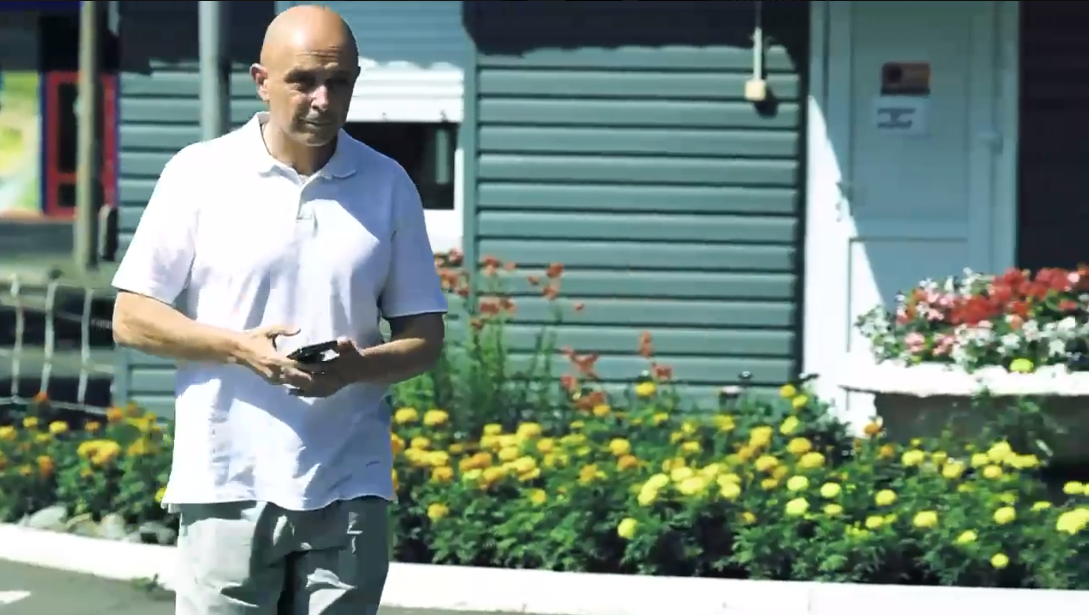
Sergey Sokol, United Russia's candidate in Khakassia, was challenged to debate by the incumbent leader, communist Valentin Konovalov
Based on the viewing statistics, it seems viewers had missed the debates, even those that were insubstantial or scandalous (or perhaps those were the very things that drew them in). The video discussion attracted 30,000 views and garnered more than 2,300 comments.
On August 15th, the first round of debates took place, with the economy of Khakassia as the intended subject. However, the candidates spent 45 minutes accusing each other of mudslinging and indulging in dirty campaign tactics. During the initial five minutes meant for opening statements, Valentin Konovalov avoided discussing the region's future economic prospects, instead delving into issues from half a decade ago. Mikhail Molchanov of the LDPR presented Konovalov with a gas mask, symbolizing environmental concerns. Vladimir Grudinin, representing the Communists of Russia, blamed the decline of the regional Communist Party (CPRF) branch on its current leader.
Expert: Debates Will Reignite with Increased Competition
According to Stanislav Andreychuk, co-chair of the Golos movement, the popularity of debates among candidates and voters primarily depends on the level of competitiveness and unpredictability of the elections. "In Khakassia, there's a highly competitive campaign, which is why the interest in debates is understandable. Essentially, this is the only reason why people might watch debates", he explained. If the election outcome is predetermined, candidates have no reason to use expensive broadcast time for such a form of campaigning.
Currently, debates are subject to stringent time constraints and rigorous regulations, often leaving participants with no opportunity to pose questions to one another. According to Andreychuk, candidates typically have two main objectives: upholding their own image and trying to damage that of their competitors.
Andreychuk believes that political debates will naturally resurface once genuine competition in elections makes a comeback. The nature of these public discussions will shift, focusing not on candidates' images but on their political agendas. "This demand has persisted over time, and from 2017 to 2022 it saw steady growth. While international policy events temporarily sidetracked this trajectory, the trend is gradually returning", the expert asserts.
¹ Another type of pre-election competition, visual political campaigning, has become equally lackluster and uninspiring, much like the debates. Read this REM review to see how most candidates and parties in 2022 and 2023 chose to abstain from addressing significant issues in their campaign materials.