Resilience without renewal: How the Kremlin manages discontent
20.11.2026





by Dr. Ilya Matveev, Public Sociology Laboratory
As 2026 draws to a close, the Russian regime finds itself in a difficult situation entirely of its own making.
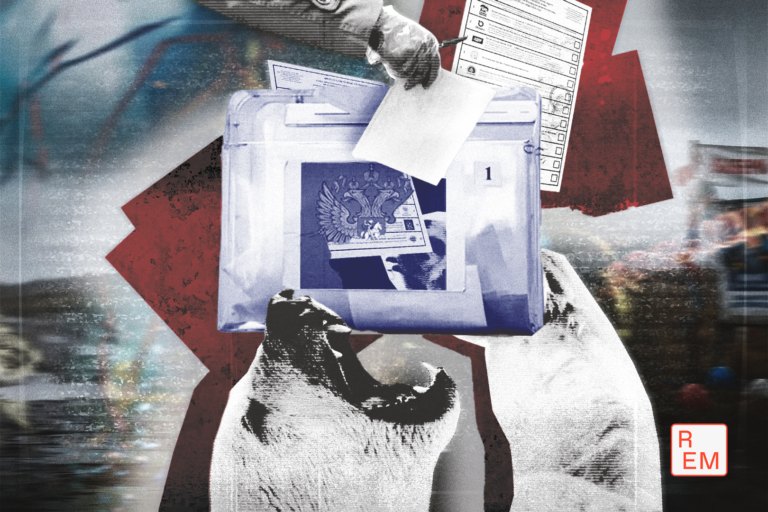
On the one hand, there is growing societal discontent. A combination of economic problems, a destructive war with no end in sight and multiple disruptions to daily life have produced anger and frustration towards the authorities, as reflected in recent polling data. The discontent manifested itself in the September Duma elections. By all measures, these elections should have been a non-event: the Duma occupies a lowly, insignificant position within the Russian authoritarian system, and the elections themselves were, as usual, tightly controlled by the regime’s political apparatus. Nevertheless, for many people – possibly for hundreds of thousands or even millions – these “filler” elections turned out to be a politicizing event. Firstly, many of those who were discontented had invested their hopes in the Yabloko party, which was subsequently banned from participating. Secondly, they protested against electoral fraud despite the limited range of candidates and parties on the ballot paper. Instagram was flooded with angry expressions of dissent, attracting millions of views, and applications for street rallies were filed with the authorities in several dozen cities across Russia. Most of these were denied. However, the rallies did take place in a few places, including Tyumen, a regional center. The discontent surrounding the elections suggests that the model of regime-society relations established during wartime is in crisis.
On the other hand, the regime’s self-imposed constraints do not allow to reduce dissatisfaction through economic measures. The government plans to spend an astonishing 17 trillion roubles ($212 billion) on defense in 2027. This year’s military expenditure, while planned at 12 trillion roubles, will also eventually reach around 17 trillion roubles. As a result, non-military budget outlays will be subjected to severe austerity measures. The most recent budget proposal shows that federal spending on welfare benefits and healthcare in 2027 will be smaller in nominal terms than the planned spending in 2026, while education spending will remain roughly the same. In real terms (adjusted for inflation), this equates to a sharp decline. In effect, the Kremlin will not be able to quell dissent through new welfare measures. Instead, some sensitive spending will probably have to be cut, further increasing discontent. This will exacerbate the regime’s situation.
Nevertheless, the Russian regime has proven highly resilient and capable of adapting to various challenges. Following Adam Przeworski’s dictum that “authoritarian equilibrium rests mainly on lies, fear, or economic prosperity”, I will explore the Kremlin’s most recent attempts at adaptation in three areas: 1) economic modernization projects, 2) propaganda and ideology, and 3) repression.
Economic modernization
Despite facing unprecedented challenges, the Russian economy has adapted to the new reality, achieving growth of over 4% in both 2023 and 2024. However, the wartime economic model appears to be exhausted. In 2025, the economy grew by just 1% and projected growth for 2026 is only 0,5%. The government understands that a shrinking economic pie combined with extremely high and constantly growing military expenditure can only lead to austerity and the resulting political backlash. Conversely, if economic growth is restarted, there will potentially be enough money to finance both the military and expanded social commitments – both guns and butter.
Discussions around restarting growth focus on the concept of the “new investment cycle”, first introduced by Putin in August 2026. However, the government itself admits that it is unclear where new investment will come from. According to Deputy Prime Minister Alexander Novak, “Both public and private resources are limited. We are not counting on new money; rather, we are counting on spending what we already have more effectively”. The government is trying to find an institutional solution to unlock long-term private sector investment, e.g., through the newly proposed “deferred investment-based tax break”. In many ways, this is a return to pre-war discussions focusing on measures such as the Agreement on the Protection and Encouragement of Capital Investments. Nevertheless, the private sector represented by the Russian Union of Industrialists and Entrepreneurs (RUIE) is highly skeptical, and even the government itself is uncertain about the success of the proposed measures. And even if they succeed, investment-led growth will materialize with a significant lag, probably from 2028 onwards. In effect, possible future growth has little to do with current legitimacy issues.
Propaganda and ideology
The machinery of ideological indoctrination is steadily expanding, particularly within the education system. Since September 2026, new forms of education focused on “the traditional spiritual and moral values” are being introduced in the kindergartens. Alongside the “Dialogues on Important Things”, schools will now offer another ideological subject called “Spiritual and Moral Culture of Russia”. Military training will also constitute a distinct compulsory course within the school curriculum. Furthermore, several universities have launched MA programs in “social architecture”, essentially schools for propagandists. What began as a giant expo in Moscow has now become the “National Center Russia”, a network of thirteen branches in various Russian regions offering an ideologized spectacle of Russian identity.
There is little evidence, however, that the ideological machinery produces ideological subjects loyal to the Russian regime. In fact, it may have the opposite effect, forcing a retreat into cynicism and private non-conformist beliefs. For the regime itself, expanding the ideological machinery is not a pragmatic, flexible adaptation strategy. Rather, it is an ideological goal in and of itself, born of the desire to “re-educate” the Russian people. This high-level goal is now being driven forward by narrow bureaucratic interests; for example, the desire of the First Deputy Head of the Presidential Administration, Sergei Kirienko, to expand his administrative domain. Even if the ideologization is eventually successful, it will take decades for the first “new Russians” to emerge – a generation indoctrinated from kindergarten to university. In other words, expanding the ideological apparatus does not solve the regime’s short- and medium-term legitimacy problems.
In that regard, propaganda could be helpful. However, it is likely that the Kremlin recognizes that expanding the media propaganda machine brings diminishing (and even negative) returns. The planned federal spending on the media is 146 billion rubles, which is less than the 148 billion rubles allocated for 2026 and significantly less in real (inflation-adjusted) terms. In effect, the regime itself does not intend to bolster support through new large-scale media campaigns.
Repression
Repression remains the regime’s most effective tool, bringing immediate results. For example, post-election protests were swiftly quashed through the targeted persecution of several key activists and intellectuals. The regime still avoids indiscriminate mass repression, employing a moderate-scale strategy that provides enough incentive to avoid openly protesting against the authorities, but not enough public outrage to become counterproductive. Walking this fine line allows the Kremlin to effectively control the domestic situation.
Furthermore, the government is actively working to enhance the effectiveness of repressive measures through the wider use of digital tools. In May 2026, for example, the Ministry for Digital Development required internet providers to collect more data on internet users. The repressive apparatus is expanding its use of banking data to identify new targets for persecution (e.g., individuals who donated to Alexey Navalny’s Anti-Corruption Foundation). Finally, a recently uncovered government document from 2025 urges all relevant agencies to suggest ways of using AI and big data to punish dissent. In effect, the Kremlin is steadily bringing about the new infrastructure of digital authoritarianism.
Conclusion
In the Russian authoritarian equilibrium, repression remains a key pillar, while the other two components – economic modernization and ideology/propaganda – are relegated to a secondary role. Relative economic stability certainly plays a part, enabling the population to rationalize their frustrations with the response that “at least the economy is not crashing”. Propaganda and ideology provide ready-made tropes for this process of internal rationalization. However, without an effective repressive strategy, the Kremlin would be unable to extinguish constantly erupting fires of dissent. Conversely, the effectiveness of repression allows the regime to maintain control even when the economy worsens or propaganda becomes less effective.
However, overreliance on repression hollows out the regime’s societal foundation. At present, the situation seems entirely manageable for the Kremlin. Yet there is a scenario in which political change could happen suddenly and rapidly, precisely because regime support has been eroded to such an extent. Predicting such a scenario, however, would be an entirely speculative endeavor.
Added at the author’s request: This article is based on research funded by the Research Council of Norway through the WARPUT project (Ideological Production, Policy Outcomes and Practices of Wartime Putinism), project number 356315.