Election update IV. Russia's presidential campaign is gathering pace
10.12.2023





In its regular Electoral Bulletin [1], a digest with news about Russian elections (you can find all articles in Russian here), the Movement in Defense of Voter’s Rights “Golos” describes how the Russian authorities are preparing for the 2024 presidential election.
Last week, the Council of Federation set the date of the Russian presidential election 2024. The election will be held over three days - from 15 March to 17 March 2024. For the first time in the history of modern Russia, presidential election will be multi-day.
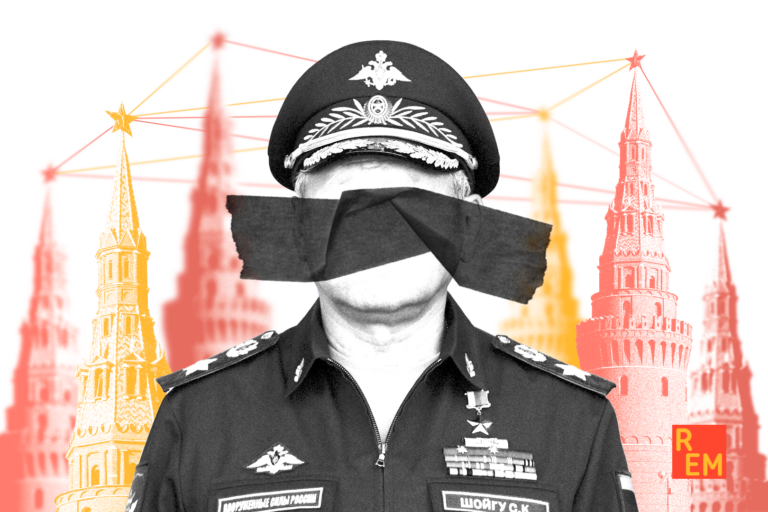
On Friday night, 8 December, after maintaining the intrigue for several months, Vladimir Putin officially announced his plans to run for another term. The announcement, which was widely expected, was made during an award ceremony for army personnel at the Kremlin. His re-election for a fifth term would keep Putin, who turned 71 this year, in power until 2030.
At the same time, several independent politicians have declared their determination to run for president. Meanwhile, the electoral landscape cleansing process of disloyal candidates and parties has started in the regions.
In this digest, REM reports on the most significant events of November 2023.
1. Several politicians unaffiliated with Kremlin have announced their bids to run for president
The first of them was Boris Nadezhdin, a former deputy of the State Duma (1999-2003) from the liberal party Union of Right Forces, now a deputy of the local council of Dolgoprudny, Moscow Region. He launched his campaign website and began collecting donations.
The second "candidate for candidate" is Ekaterina Duntsova, a journalist and activist from the city of Rzhev in the Tver region. She hopes to participate in the presidential election with the support of the "Nash Shtab" initiative formed by Russian opposition abroad. Because of the anti-war content of her election manifesto, Duntsova has already been summoned to the prosecutor's office. Here we published a detailed profile of Ekaterina Duntsova.
Igor Strelkov (Girkin) became the third self-proclaimed candidate. The ex-"minister" of the so-called Donetsk People's Republic announced his bid from a detention facility where he is being held on charges of extremism.
Apart from that, the Yabloko party continues collecting signatures in support of its leader, Grigory Yavlinsky, as a presidential candidate. Earlier, Yavlinsky announced that he would be ready to run for election if 10 million signatures were collected in his favor.
2. Russia tested its online voting system
It is an open secret that Remote electronic voting (DEG in Russian) is being used by the authorities to falsify the voting results. That is why they are trying to get as many voters as possible accustomed to the Remote electronic voting system. The first evidence of people being forced to use this procedure is already there. Voters in several regions - Udmurtia, Tatarstan, St. Petersburg, Altai Krai, etc. - have reported being forced to participate in the so-called “practice drill”. Mostly employees of budgetary organizations - from school and kindergarten employees to members of local administrations and election commissions - are forced to participate in the “practice drill”. Several persons were fired because they refused to take part in the testing of the Remote electronic voting system.
At last count, 2.8 million voters got involved in the “practice drill”, which is 2.5% of the total number.
According to the Russian Central Election Commission, in the presidential election of 2024, DEG will be used in 30 regions where almost 50 million voters live (that is, almost 45% of the total number of voters). At the same time, e-voting remains a "black box" for voters, observers, and even election organizers themselves.
It is worth mentioning that in November 2023, the first lawsuit was filed in a Russian court demanding the annulment of the voting results received via the DEG system in the September 2023 elections. The lawsuit was filed by Viktor Tolstoguzov, Head of the Department of E-voting Systems at the Moscow State Technical University, who observed the online voting on behalf of the Communist Party of the Russian Federation (CPRF). In his lawsuit, Tolstoguzov notes that the Russian CEC did not publish some key data on the technical parameters of DEG, which presumably constitutes a violation of the rights of voters who want to be sure of the integrity of the election results. Moreover, Tolstoguzov discovered evidence that the results of online voting in the Moscow region had been altered. A detailed report from the courtroom is available here (in Russian).
Earlier this year, Russian Election Monitor published an analysis of the remote electronic voting system – 'Online Elections in Russia. What to Expect from Them?'.
3. Amendments to the legislation on presidential elections come into force
In particular, the articles regulating elections under martial law and in military units were amended.
The law provides that in remote military units precinct electoral commissions shall be formed without party representation - from among servicemen, their family members and other voters living in the military unit. Secondly, it’s going to be practically forbidden to take photos and videos at such precinct electoral commissions. Observers and commission members won’t be entitled to it in military units at all, and media representatives won’t have this right “by agreement” with the unit commander. Needless to say, it is especially important to be able to record violations in such “closed” communities. However, it is unclear how electoral fraud can now be proved at all.
In addition, the amendments suggest that only media representatives who have an official employment contract (as opposed to a fee contract, which is a common form of employment for reporters in the Russian media) will be allowed to go to the polling stations. Only “persons who have the right to do so by law” will be allowed to take photos and videos; in regions under martial law, the elections will be held based on the results of consultations between the Central Electoral Commission and the FSB, the Defence Ministry as well as heads of regions under martial law; any election campaigning on blocked Internet resources, including global social networks, will be prohibited.
4. In potentially problematic regions that are not fully loyal to the Kremlin, the “cleansing” of the electoral field is beginning
In Altai Krai, there are attempts to crush the CPRF faction in the regional parliament. This is one of the strongest party branches in the country. Out of 24 deputies elected in 2021, the Communists have already lost five by various reasons.
In Krasnoyarsk Krai, Alexander Gliskov, the leader of the Liberal Democratic Party (LDPR) and deputy of the regional legislative assembly, was arrested. He is accused of having taken a bribe in 2016. In recent years, the LDPR under Gliskov's leadership has run several striking election campaigns in the region. In 2018, the LDPR won the elections to the Krasnoyarsk City Council by lists, and in 2023 the party landed in the second place. Gliskov himself ran for governor and came second gaining over 11% of votes.
“This proves the lack of a real boundary between 'systemic' and 'non-systemic' opposition in modern Russia. Among political prisoners of today, one may find civic activists, Navalny supporters, liberals, nationalists, members of the CPRF, LDPR and other structures. Any standout politician who is even slightly out of the mainstream runs the risk of ending up in prison. Therefore, this year we should not be surprised about the lowest number of those willing to run for office in many years,” experts say.
In addition, the Ministry of Justice wants to liquidate the Party of Business. This party has never shown any splendid results in elections and did not enjoy the federal “party privilege” which would allow it to nominate candidates to the State Duma in 2026 without collecting signatures. However, experts do not consider it a “bogus party”. Political scientist Alexander Kynev recalls that in the past election commissions have often refused to register lists of the Party of Business in various elections. Instead, the party put up single-mandate candidates, including former officials who had a grudge against the authorities, and they were quite successful. This was probably the reason for the Central Electoral Commission’s desire to impede the party's work.
[1] All Electoral Bulletin issues are available on the following website (in Russian): https://www.bulleten.org/