Slippery AstroTurf of the Kremlin war
14.02.2023





We at REM are honoured to publish the second part of a unique media monitoring project. The first part, "Propaganda Setbacks and Appropriation of Anti-war language", was published in August 2022.
The final part of this study by PhD. M. Alyukov, PhD. M. Kunilovskaya, and PhD A. Semenov1, titled Getting Messages Across: War Propaganda in Russian Press and Social Media, focuses, as its name suggests, on the internet community of Russia and its reaction to traditional news sources.
Several findings in the study should be of interest to Russian election researchers.
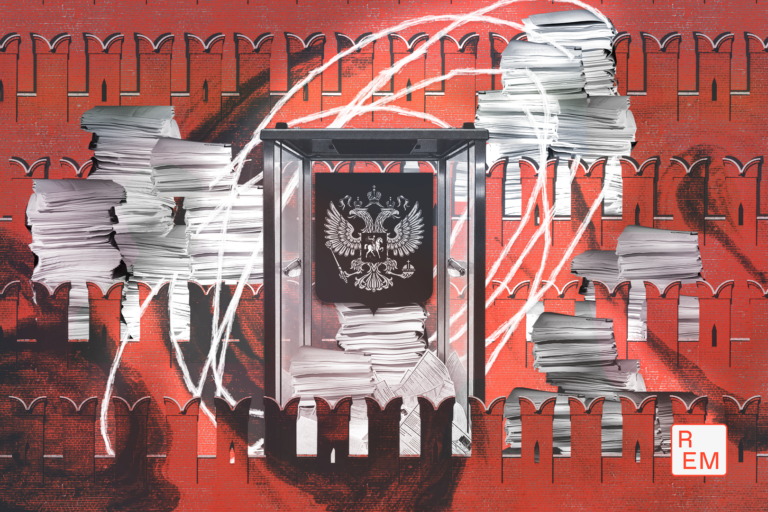
The true success of this study is the exact quantitive estimation of the sheer scale of artificial pseudo-public support the Kremlin fabricated to justify its war against Ukraine. This imitation of genuine public activities was long ago named 'AstroTurfing', implying the artificial nature of this substitution of true grassroots initiatives.
The first thing that drew our attention was the sheer scale of this fabricated support.
Namely, the authors found that half (47.98%) of prowar posts are groups of duplicates with 20 or more common words among items of each group. In other words, they have an artificial astroturf nature. Or, as the authors put it, "identical messages are unlikely to be attributed to anything else rather than artificial content".
It was abundantly shown in the paper that artificial duplicates are exclusively related to pro-governmental, prowar content.
For an electoral observer, this discovery strikingly resembles the findings of project Peresmotr from the article of Meduza we wrote about earlier (see The ruling Russian Party of Dead Souls).
That article demonstrated that only one method, turnout verification by official video records, revealed that half of the polling stations in the sample falsified their results over the years.
And it is only half of the story. The new study warns, "identical messages are a conservative estimate which does not detect all Kremlin-related astroturfing". By the way, the Peresmotr project participants have the same caveat. Their method doesn't detect all electoral manipulations. For example, multiple voting and misrecording are undetectable via turnout verification. In both cases, fraudsters use the same general approach: they add an unnatural component to the "expression of the public will". It is either a pack of ballots stuffed into a ballot box or a pack of identical messages "stuffed" into an online public thread, forum or group.
So, only by very conservative estimation, the fabrication of popular support by "stuffing", elections and discussions alike, is no less than 50%. |
The second aspect we want to foreground for electoral observers is the inefficacy of state propaganda we observed in the elections.
The following diagram illustrates how government-paid influencers do their best to monger war and hatred.
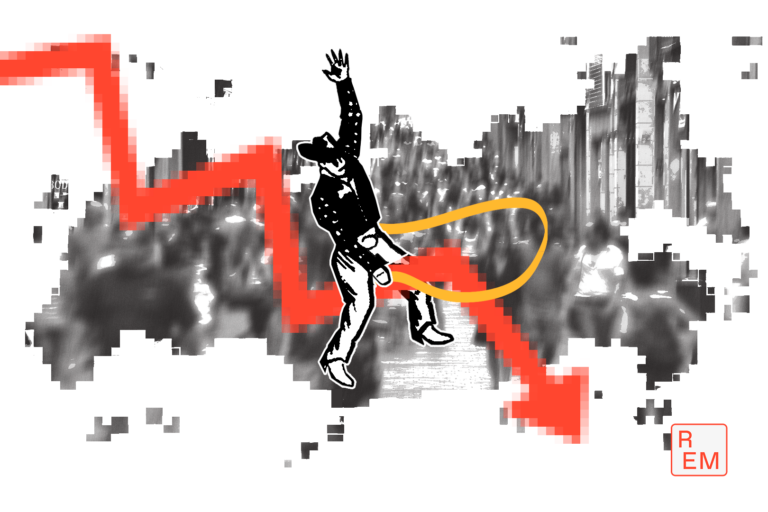
But the general public doesn't even notice it. In the diagram, you may see that any wave of massive attempts to ignite the hate passes unnoticed over the unperturbed baseline of regular users' tone of communication. The next graph shows that the attention of the netizens is drawn by more or less calm and balanced messages.
We may suggest that this impotence of the propaganda machine is one of the reasons for the panic among election organisers who took unprecedented measures to suppress and eliminate any antiwar candidate from the ballot.
A poll watcher can find another similarity with the electoral field in the study's original methodology of 'Top-1000 most popular posts analysis'.
The authors observe, "Bots, trolls, and cyborgs in social media make an analysis of real users' attitudes to war difficult. Censorship and risks of legal prosecution for those Russians who are against the special military operation aggravate this situation. People could be reluctant to show their positions in the public sphere. At the same time, they are ready to support those who talk with likes, comments, and other reactions under posts with a position that there is close to their own."
We had already observed this type of behaviour in the wartime elections when people were afraid to run for office, thus publicly exposing their antiwar views. However, under the secrecy of the vote, they would gladly support candidates who took risks in doing so.
Moreover, the research showed that "In the top 50 most popular posts, we found only two posts by prowar authors. On the other hand, the first 38 posts by the level of engagement and 48 posts in total (out of 50) were written by antiwar authors. As a result, the level of involvement for posts by antiwar authors is 1.5 times higher than for posts by prowar authors (8.5 mln reactions vs 5.7 mln reactions)."
For illustrative purposes, you can apply these results to the electoral area. Were the posts considered as candidates' campaigning programs, under the first-past-the-post system, there would be a landslide victory for these antiwar candidates with a ratio of 48:2. Under a proportional system, the antiwar candidates would still win with a balance of 3:2.
Were the posts considered as candidates' campaigning programs, there would be a landslide victory for these antiwar candidates |
That's why the authorities spared no effort to remove antiwar candidates from the 2022 elections. As a result, we observed their strange behaviour in the 2022 elections. The crackdown on "unpopular", "maverick", "outsiders", and "marginal" pacifists from the opposition candidates seemed quite inexplicable to an untrained eye. Here, another IT contraption newly fangled to the same end – the infamous Distant Electronic Voting - comes into play and complements the overall picture.
Trolls, bots, cyborgs and e-voting. All the blurred features of a painstakingly hacked democracy come into focus. But we still can see how real Russia, brutally suppressed, lies grimly silent below the murky world teeming with bombast but unconvincing astroturf warriors and the evasive ghostly online electorate.
All in all, the study has much more information than we touched upon in our short review.
The 30-page work is worth the special attention of sociologists, political scientists and the general public interested in the intricacies of the first Russo-Ukraininan war.
You can download it in English and Russian.
1 Authors:
Maxim Alyukov, PhD in Social Science, Research Fellow, King's Russia Institute (King's College London, UK), and a researcher at the Public Sociology Laboratory (St. Petersburg, Russia).
Maria Kunilovskaya, PhD in Linguistics, Research Fellow, Research Group in Computational Linguistics (University of Wolverhampton, UK)
Andrei Semenov, PhD in Political Science, Senior Researcher, the Center for Comparative Historical and Political Studies (Perm, Russia)