"The current government is not going anywhere". On political changes in Russia
07.08.2023





Yevgeny Prigozhin's mutiny showed how weak President Putin's support base is – no one came out to "throw themselves under the tanks" of the private military company Wagner, which managed to come almost as far as Moscow within a day. However, no real political changes followed. Are they even possible in modern Russia, and could elections - an instrument specially invented by the democratic world for this purpose - contribute to the changes?
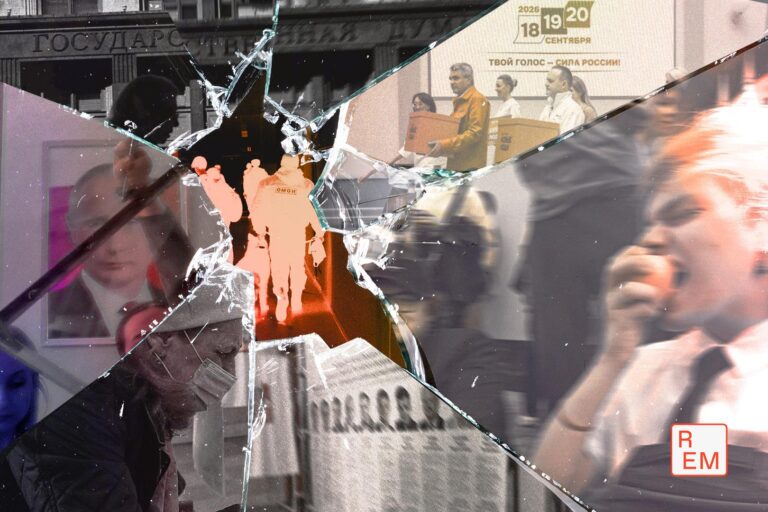
On 10 September 2023, on the single voting day, the country will hold by-elections of deputies to the State Duma, elections of heads of 26 subjects of the Russian Federation as well as elections of deputies to legislative assemblies in 16 subjects of the Russian Federation. Next year, in March, presidential elections will be held, and there is no reason to assume that Vladimir Putin will not participate in them - for the fifth time already.
REM publishes a translation of the interview with Alexander Kynev, a political scientist and expert on elections who continues to observe the political process from inside Russia. The original interview in Russian is published on the Sever.Realii website: here.
“To survive means to keep a low profile”
– How would you describe the modern Russian society, what kind of society is it?
– The society remains the same as before. It's just that some people freaked out and left – because of their moral and emotional reactions, and out of stress. There are actually very few of those who were really pushed out of the country, maybe a few hundred people, no more; the rest left out of the general mood of panic. Many have already returned. Apart from that, people keep on living. People get used to everything, get used to inflation, economic crisis, social crisis, you name it. You cannot blame them for not sprinkling their heads with ashes; otherwise people would not have survived to modern times if they reacted to every crisis with self-destruction. Acceptance takes place. People live in a new reality, try to survive, find new ways of self-realization, ways of struggle. This is absolutely normal; it is the law of human survival. So there is nothing wrong with the society, it is just adapting. Adaptation takes time.
– Observing from the outside, one sees first and foremost a non-resistance to war. Is this an endorsement or a Stockholm syndrome situation?
– No one has to fight anything. Nobody owes anybody anything. A human has one life. And a normal person wants to devote it to themselves. Those people who look at us from abroad saying "Why don't you do anything?" – are they devoting their lives not to themselves, but to someone else? No one owes anything to anyone.
– Where is the state in this mood of "living your own life"?
– Nowhere. The state is present as a force with which people have to interact; and they minimize this interaction as best they can. They try to get what they can from the state: some kind of subsidies, implementation of infrastructure projects - build us a subway, build us a hospital, give us medicine. But you can hardly find a person who is happy to pay taxes. According to Russian anecdotes and sayings, cheating on the state is always considered to be good. "Take every nail from the plant; you are the owner here, not a guest". According to the public mind, it is normal to cheat on the state.
– So there is no mass support for the "Special Military Operation" (SMO) as well?
– There is no support for it – and there has never been. There were no queues at the military enlistment offices. This topic is taboo. People realize that it is unpleasant, it is delicate; they do not want to spoil the existing relationships. That is why it is present just as an element of state propaganda. They pay us money – we put up a poster supporting the SMO, they don’t pay – we take it down.
– Sounds like a weak-willed mass which can be formed literally to anything one wants...
– There is a parallel life - follow orders and mind your own business. And there is a real life. When it comes to everyday values, the Russian society is absolutely pro-European, bourgeois. At the mundane level, the Russians defend freedom of movement, inviolability of their home and private property. Do we want to have a fair legal system? Yes, we do! Do we want to live without corruption? We do! Do we want to have low taxes? We do. If you translate European values into a simple, understandable language and ask questions that can be answered with “yes” or “no”, the answer will almost always be “yes”.
– Is there a way to somehow convert this European attitude in the political field?
– Everything takes time. It would be strange to expect that after decades of totalitarianism, the society would suddenly become different overnight. It doesn't work that way. It's a very long story. Even in Eastern Europe – which has experienced the same totalitarianism, but twice as short and in a milder form (there were alternative parties in Poland and Bulgaria in the era of people's democracy, there was no such hardcore as here) – they still haven’t completely gotten rid of all this, 30 years later. We see periodic excesses. Just have a look at the political regime in Poland: emotions run high there when it comes to the freedom of press, courts, abortion. Did they get far from the Soviet past? Well, in my opinion, not really. Even though they had it all on much softer terms.
“Who are you? Are you the government or the opposition?”
– Let's talk about elections. Strange as it may seem, they still exist.
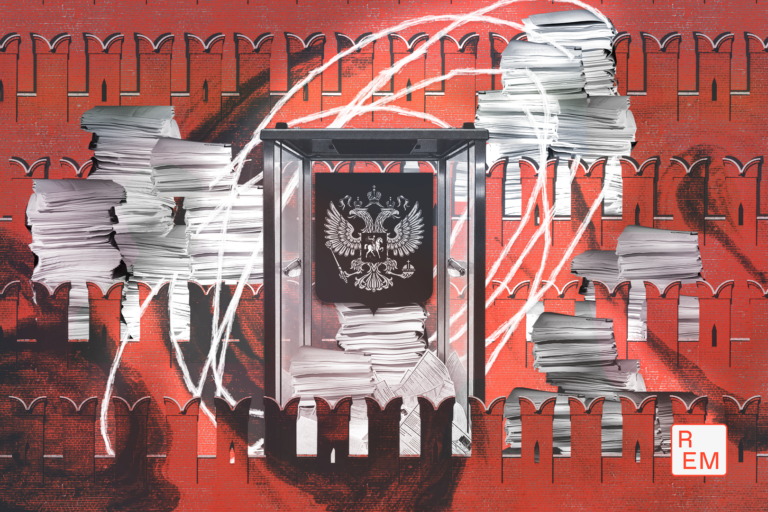
– They are not going anywhere, because the authorities have no other legitimacy. Therefore, the procedure in the form of elections will always exist, according to the law.
– Why does a Russian citizen go to elections [whereas, as you said earlier, a typical citizen tries to minimize their interaction with the state as best they can]?
– Well, the question is – If they go to the elections at all: In an atomized society, elections are held with a rather low level of voter turnout. If we look at regional elections, the turnout there is low – around 30%. The turnout gets more or less high only during the federal elections. And that is due to administrative overreach: local bosses are fighting for a high level of voter turnout, because the worst ones – the ones with a low turnout in their region – get fired. And they drive people in by all available means. As soon as there are no rigid requirements handed down, the turnout dwindles immediately. There are around 30% of active citizens; about half of them are conventionalists – those who vote simply because they are supposed to, such as public sector employees and military servants. And the remaining part, which is quite small, includes active people – those who are not forced, but who feel the urge to go and vote.
The state has basically been working on achieving a low level of voter turnout for many years because it does not need overactive citizens. It’s quite common that the state runs down the election clock: talk less about the elections, provide less time for advertising, so that nothing interesting happens. If there are strong candidates capable of increasing voter participation, the voters are simply not allowed to the polls. Remember 2018, for example, when there were elections to the legislative assembly of the Zabaykalsky Krai, and there was a flood, and the city of Chita was struck by it. Some people from the districts hit by the flood protested, and there was no campaign at all; no one was called or brought to the polling stations, whoever comes - comes. That’s the ideology of the authorities. The authorities don’t need an active, independent citizen at the elections. Those who self-organize through some other channels, who are campaigned by candidates and citizens themselves, come. The rest are occupied with their own lives.
The power is to a large extent hostage to those who have taken the key positions in the country. All other officials are as conventional as the citizens. They too follow orders – not because they sincerely believe, but because otherwise they would lose their job and get no money. If, for whatever reason, we suddenly get a new president tomorrow who would proclaim: "That's it, let's stop, we should be friends, mistakes have been made!" - everyone will just say: "Yes, sure, we’ve been understanding it for a long time, we’re eager to and warmly approve". Every time the discourse changed in the Russian history, everyone turned coat in a blink - and the next time it’s going to be exactly the same.
– Quite significant campaigns are going to happen in the short term - Moscow mayoral elections, gubernatorial and parliamentary elections in some regions, and presidential elections in a year's time. How, in your opinion, will the system get through these campaigns?
– The gubernatorial elections, in my opinion, are the least interesting ones, because they are strictly regulated and with managed competition. The municipal filter makes it impossible to register candidates without the consent of authorities. In gubernatorial elections there are minimum protest chances. There was a period in 2018 when the system was shocked by the pension reform and confused. But since then, lessons have been learned; the candidates are now selected even stricter than before. Should a protest vote have taken shape somewhere, a political “landing party” has been sent to the region in advance, and the region has been “tamped down” in the best possible way. Both by administrative instruments and direct falsifications. It’s going to be the same this year, so we should not expect anything interesting from the gubernatorial elections, except for Khakassia. The most thrilling part will happen in the legislative assemblies. Re-elections take place in 16 regions this year; plus in four territories that Russia has declared annexed. Frankly speaking, I am not interested in these territories at all, there is nothing independent there; it’s a war zone. They will just declare whatever they want.
Most of the 16 regions holding elections to the legislative assemblies are quite competitive; they belong to the so-called protest group. There are only two regions with “abnormal” voting – Bashkortostan and the Kemerovo Region. The Rostov region is considered to be “semi-abnormal”: there is competition in Rostov itself, in Taganrog, in Novocherkassk, but in other districts everything is quite tough; so in general it turns out to be fifty-fifty. As for the other 13 regions, they are very competitive, with highly complex elites and strong large parties. Even local election commissions there behave quite independently. With different people in the commissions you can't falsify much. Mass falsifications are not typical for these regions in general. There have been some incidents due to individual factors, but there have never been mass falsifications. Irkutsk Region, Zabaykalsky Krai, Buryat Republic, Khakassia, Yakutia – these are regions with quite competitive elections. And a lot will depend on political activity there: whether people want to come to the polls or not, whether the opposition can do something or not. It’s going to be intriguing there; we’ll see how the numbers look like in these regions.
For example, last year there was almost no election campaign because everyone was in a state of shock. In fact, the elections were limited to bringing in administratively dependent groups, plus few activists from different parties came to the polls. The Communists came up short, very short; they suddenly started to suffer an identity crisis when it turned out that the authorities implemented their foreign policy program by launching the special military operation and annexing new territories. Suddenly people started asking: “Who are you? Are you the government or the opposition?”. Many people voted for the CPRF as the strongest opposition, believing that everything else was a buffoonery. Now the true believers left them for the party of power, while the protest voters – who were not ideological communists, but voted depending on the situation – turned away from them either not voting at all or distributing their votes among the other parties. Much depends on individual candidates in every single region. If there is a bright leader or if elites are consolidated around the party, a good result might be achieved. If not, the results will be average. Comparing to the results of the last year, average now means a decrease of 50% compared to the State Duma elections in 2021. Let’s take the Sakhalin Region as an example: the Communists had 28%, now they have 14%.
As for the parties “Just Russia” and LDPR, they also show worse results compared to 2021, but the dynamics are less dramatic as by CPRF. In some regions, the “New People” caught up with them and even overtook them, for example, in Sakhalin. This year we see a very difficult situation for the “Just Russia” because of the recent rebellion; their public affiliation with Prigozhin has left its mark. As a result, some active members decided to leave the party. The most famous example is when the full faction of “Just Russia” decided to withdraw from the St. Petersburg legislative assembly. Symbolic figures start leaving the party in the regions – for example, Oleg Shein from Astrakhan. Everything starts falling apart. Moreover, the party itself is playing at giveaway – apparently trying to make amends for messing around with Prigozhin. Half of the regions won’t have gubernatorial candidates from the “Just Russia”. This has a very strong impact on the overall image of the “Just Russia” which has always been the party of second choice. When asked “Who else you might vote for?”, many people named “Just Russia”. It doesn’t have a lot of fans, but as the number two party it was acceptable to many voters. "Who are you for? - For the Communists. - And if there are none? - Well, maybe for the “Just Russia””. Votes flowed to them because the party had no anti-rating, because the party was for everything good and against everything bad. For fair housing and utilities, for fair pensions, for the environment, for everything in the world. And now there are more and more negative emotions accumulated around this party. It’s basically a dead end situation now. Any candidate from “Just Russia” will be asked one and the same question: “What about Prigozhin?”. And they will have to answer.
So, strangely enough, I think that this year “New People” have a very good chance – they have no anti-rating, they are not involved in anything bad. Everyone else being in trouble currently plays to their advantage. Moreover, the regions holding legislative elections this year voted in favor of “New People” in the State Duma elections – for example, in Yakutia, Buryat Republic and Kalmykia “New People” have achieved their best results in Russia. If they decide to campaign (and I don't know whether they decide to or not), they have pretty good starting conditions. The opposition-protest electorate functions more or less as communicating vessels; people can vote for both “New People” and the LDPR simply “by contradiction”. So the problems of “Just Russia” can really help the “New People”. And the LDPR too, by the way. Although Zhirinovsky is gone, no one new came up; there is no one to vote for anyway, so by force of habit... In this election having an anti-rating will mean more than having any rating.
– And what about the rating of the ruling party? "United Russia" and Putin have always been about stability, but when their efforts lead to a war, it can’t be called stability any longer.
– “United Russia” is a purely corporate party. Its members are chief general managers, university presidents, school principals, chief doctors. And each of them is responsible for mobilizing his professional sector as a boss. That’s what is called corporate mobilization. Whole industrial branches vote for “United Russia” based on the loyalty to the boss. “United Russia” has practically no other votes than these.
– But that’s enough to win.
– “United Russia” has been winning for many years because of the low turnout; everyone else just doesn't go to the polling stations. That's why I mentioned the importance of a high turnout and active position of the voters. Should other voters be persuaded to come to the polls, the situation will become more intriguing. The mobilization campaigns have been the same all these years. Only in 2018-19 did they fail to have an effect: people followed the orders, came to the polls but voted out of spite. The pension reform contributed to that. Now the situation is more difficult, because someone must first present this idea to a voter in order for him to vote out of spite.
– And “out of spite” would mean “against the war”, but, if I am not mistaken, no one is speaking up against the war right now.
– Well, of course not a single party would officially announce "We are the party standing for the end of the SMO". Nobody is going to say that. But the intensity of support is quite different. That is, for some parties supporting the Special Military Operation is the number one issue, and people understand them as hawks; and some parties say: "Look, we are helping to protect you, if you are illegally drafted into the military", and so on. They are quietly trying to help people, and people see it. I would say that in terms of intensity of SMO support the parties are quite different.
– “Yabloko” has been proclaiming itself as the “party of peace” for years.
– “Yabloko” does not exist as a subject this year, it is impossible to talk about this party as a subject of elections; to find it in the elections, you have to try very hard. The party's network in the regions has long since collapsed; there are individual activists with a party stamp. As a rule, they do nothing, there is no agitation, no articles about them, no interviews, no visual agitation from them, nothing. There is some kind of life inside, but 99% of ordinary people have no idea about it. That's why we see their voting ratings falling, there are no candidates. And if there are no candidates, no campaign, what is there to discuss?
There are single regions where "Yabloko" is more or less "alive" - Karelia, Moscow, St. Petersburg, the Pskov and Novgorod regions. But these regions do not hold elections to the legislative assemblies this year. “Yabloko” does nothing in the context of gubernatorial elections – no single candidate in Moscow, no single candidate in the Pskov region. And that's it; there is no such subject as “Yabloko” in terms of electoral behavior.
“Nothing hawkish on the horizon”
– You said that the parties showed different levels of support for SMO. Which party has the least level of support?
– "New People". If you go to the party's website and try to find something about “SMO”, there is nothing there. It's mostly about defending business, and how to revive the economy in new circumstances... A kind of constructive campaign full of smaller-scale stories. Nothing “hawkish” on the horizon. By the way, strangely enough, even the LDPR has nothing “hawkish”. It turned out that the Communists are our main hawks. Well, and “Just Russia” with Prigozhin (and Prilepin before him).
– Will the “New People” even be allowed to participate in the elections then? What if the authorities see through this strategy?
– Parliamentary parties are usually allowed everywhere. Of course, the devil is in the detail: it’s the local authorities who are given a free hand to decide who may and who may not act in the region. Therefore, despite the parliamentary status, some parties may be excluded from the elections due to local specific conditions. For example, there are regions where Communists are iced-out – as in Primorsky Krai. And they are now boycotting the gubernatorial elections there, by the way. In some regions the “New People” are iced-out, as in Pskov last year and in Krasnodar before that.
– No one would dare state an anti-war position out loud?
– No, of course not. They'd get their heads ripped off.
– Elections are always a point of discomfort for the authorities. Will this discomfort be handled as a threat?
– I don't know. I don't do fantasies. We’ll see when we get there. The situation is unpredictable; the public mood can shift rapidly. I would take a business-as-usual-scenario as a premise, i.e. without any dramatic events. But should something happen somewhere, it might get interesting.
– What do you think, have the preparations for the presidential election already begun?
– Vladimir Putin personally got more active – from this point of view, the preparations have begun. I also see an attempt to negate the consequences of the [Prigozhin’s] rebellion. But that’s basically it, because all other politicians do not consider this election as a serious option. They realize that they’ve got no chance here. Everyone else is only interested in ratings.
– Do you have any doubts that Putin is going to nominate for the presidency?
– Not at the moment, no. If another decision is on the table at all, it will be made by Putin and part of the top political elite. Everyone else on the lower levels is just following orders. At the moment the system works according to the existing order, in other words – it’s a status quo.
– Are the Turbopatriots – pretty loudly present in the media today – a political force or not?
– Well, how should I put it? Everyone is a political force – just to a different extent. I think it’s going to be very hard for the patriots, because the authorities have realized that they’ve gone too far in encouraging this segment. I think they’re going to pull back this story. In terms of money, media coverage, and encouragement to participate in elections, the process will be the opposite of what we have seen in this segment over the past two or three years. I think the patriots already feel the change, because Prigozhin as a media and financial resource has already disappeared. He has financed regional campaigns in St. Petersburg and, for example, in Komi for several years, in 2020 he was also actively involved. This year it won’t happen, of course.
– Will there be dramatic changes in the way of agitation and propaganda without Prigozhin and his media empire?
– Not everywhere. But he did play a significant role in St. Petersburg and its premises, so there the picture will change.
– Are the politicians who have left the country completely missing this election cycle? What is your opinion on that?
– I think they're missing everything. The fact is - they have no strategy at all. Writing plans is not a strategy. There is no understanding of how to achieve the transition from Russia of today to Russia of tomorrow. When this question comes up, they’ve got nothing to say. The reality is that the current government is not going anywhere. No single politician can explain where people currently at power will go. Trying to imagine that someone will conquer Russia and reach Moscow (I mean not Prigozhin, but someone else) – well, this is a pure fiction. People at power will change from within. It’s going to be an evolutionary process. This means that all scenarios of “building something from scratch” can be thrown to the garbage bin.
The future will be a compromise. Once the head of state changes, of course, there will be a revision of the concept. It has always happened with every next full-functioning head of state. Because there is a certain dialectic – negation of negation. People at power must demonstrate that they are special to be perceived by people as real, to be respected. The next government will most certainly revise a lot of decisions taken earlier. There will probably be a reform of institutions, which inevitably implies a new constitutional reform, perhaps even a new Constitution. But it’s not going to be something completely new, rather a modification of the old one through compromises, hybrids; a way of adjusting it to specific people. But there will be change. It’s almost impossible to influence this process while being physically abroad, not being integral part of the change.
– Who do you consider to be agent of change today? Or is he not there yet? Who inside the circle at power can contribute to the evolution you are talking about?
– Power is not a monolith. There are different people, with different concepts and views. In the past and present, well in the future. I am not going to engage in public denunciations.
Some people “write for the drawer” trying to preserve themselves. However, no public projects can be lobbied today – because it's not their time, there is nothing to attach them to. As long as you are not making a new movie, for there is nothing connected with it - you cannot look for an actor for a role that doesn't exist yet. I think that as soon as the power changes, there will be a tremendous wave of social enthusiasm. You know, like when the spring comes after winter – and people wake up. There will be a phase of progress; it's just an inevitable cycle. Then there will be time and reason to discuss it all, but right now one has rather to write for the drawer.