The legacy of Russia’s outgoing State Duma
10.08.2026





Russia is due to hold elections to the State Duma in September 2026. The Russian parliament has traditionally played a limited role, a weakness embedded in the 1993 Constitution, which became the foundation of the president's near-absolute power. Since 2003, the United Russia party has maintained a parliamentary majority. Even so, the Duma’s various factions continue to reflect the competing interests of different groups within Russia’s ruling elite.
How was the pre-war State Duma elected in 2021 assembled? How has Russia’s full-scale invasion of Ukraine reshaped the legislative process? And was there any room in the outgoing Duma for genuine debate or criticism of initiatives originating in the Kremlin?
These questions are examined in an exclusive essay for REM by a former member of one of Russia’s regional legislatures, who has chosen to remain anonymous.
The 2021 Election
The 2021 parliamentary election differed from previous campaigns.
First, United Russia's party list was headed by Defence Minister Sergei Shoigu. In hindsight, the move appears highly symbolic. At the time, however, it was largely overlooked and widely interpreted as little more than a display of military-themed messaging.
Second, the 2021 election marked the emergence of an unprecedented level of political micromanagement. The Presidential Administration began dictating overall party tallies down to a precise margin of two or three seats. It was also effectively determining the personal composition of parliamentary factions, including those belonging to the parliamentary opposition.
In the case of Just Russia, for example, roughly a quarter of the party's seats were effectively reserved for individuals placed there by the Presidential Administration, despite having had no previous ties to the party. The Communist Party (CPRF) was largely spared this form of direct intervention, although court rulings were used to remove from its electoral lists those candidates regarded by the Kremlin as the least acceptable.
Third, amendments adopted in June 2021 barred members of organisations designated as extremist from standing for election — even if they had left those organisations before they were officially declared extremist. The legislation was widely understood as targeting Alexei Navalny’s Anti-Corruption Foundation (FBK).
Finally, in the summer of 2021, parliament passed a federal law allowing foreign states, or parts of them, to be incorporated into the Russian Federation. Behind the scenes in the State Duma, lawmakers speculated that the newly elected parliament might itself prove short-lived. According to discussions circulating at the time, the Kremlin envisaged the creation of a large Union State comprising Russia, Belarus, South Ossetia, Abkhazia, the self-proclaimed Donetsk People's Republic (DPR), and Luhansk People's Republic (LPR), with a single parliament, government and budget. New elections to this new united legislature were therefore expected to follow.
All of this unfolded against the backdrop of Vladimir Putin's programmatic essay, published in the summer of 2021, "On the Historical Unity of Russians and Ukrainians". Grigory Yavlinsky proved remarkably prescient when he argued that such rhetoric pointed to only one likely outcome: an impending war against Ukraine.
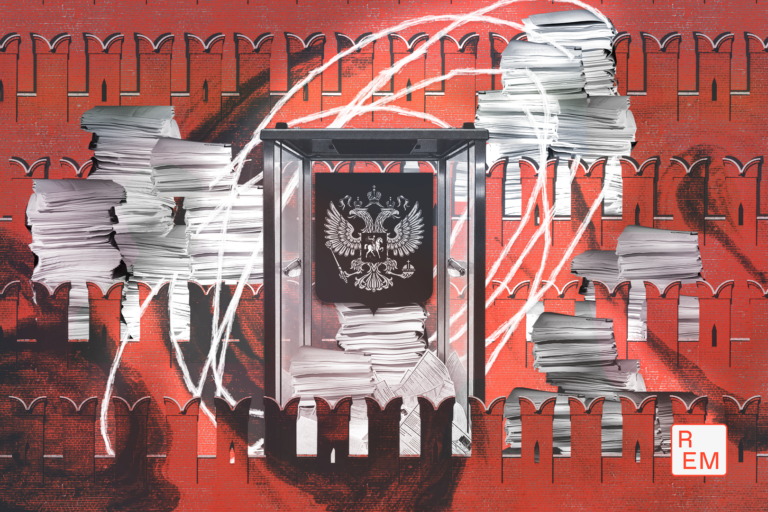
The election itself ultimately eliminated virtually every possibility of an outcome that might have proved inconvenient for the Kremlin. Live video streaming from polling stations was discontinued. Voting was extended over three days, creating opportunities for ballot substitution during the overnight intervals. In seven regions, including Moscow, electronic voting via smartphones was introduced, effectively removing the possibility of independent public oversight. According to independent experts' estimates, up to 14 million ballots were stuffed, and United Russia actually received around 32% of the vote. Officially, United Russia secured 324 out of 450 seats, forming a constitutional majority.
Lawmaking 2021–2026: Repression and Beyond
The Russian parliament's routine legislative rhythm — typically dominated by debates over the annual budget and an endless stream of amendments to existing laws — was abruptly shattered in February 2022.
The State Duma's transformation into a wartime legislative machine focused on repression took no more than a week.
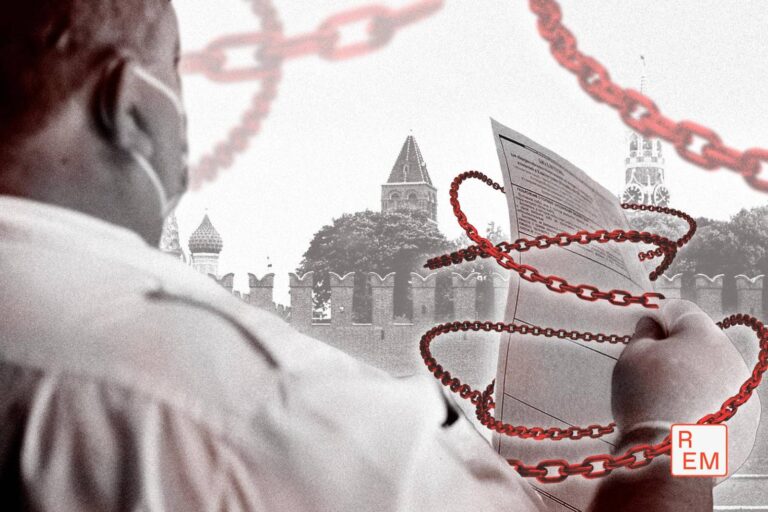
The speed with which these measures were adopted strongly suggested that they had been prepared by the Kremlin well before the full-scale invasion began. Within ten days after the invasion of Ukraine, three new offenses were introduced: "dissemination of knowingly false information about the use of the armed forces" (the so-called "fake news" on the military), "discrediting military actions", and "public calls for sanctions against Russia". The legislation provided for substantial fines and, in the event of repeated violations, prison sentences of up to 15 years. A year later, the same penalties were extended to the "discrediting" of private military companies.
In the summer of 2022, the State Duma granted prosecutors the authority to shut down undesirable media outlets out of court.
At the end of 2022, lawmakers radically overhauled "foreign agents" law. Under the new provisions, this status could be assigned even without foreign funding or the proven fact of communication with foreigners.
Around the same time, the State Duma adopted a new statutory definition of "torture". The Criminal Code now states that the infliction of physical or psychological suffering does not constitute torture if it has been "lawfully" carried out by a public official — or by "another" (!) person.
The Criminal Code also introduced the offence of "confidential cooperation with a foreign state". As broadly drafted, the provision became the basis for numerous criminal prosecutions not only against human rights defenders and academics, but also against Russian citizens living abroad who later returned to Russia. Treason was likewise expanded to include "defection to the enemy", a formulation so vague that, if investigators chose to interpret it expansively, it could even be applied to a soldier's capture by enemy forces.
The Duma played little part in establishing the massive payouts for contract soldiers; those decrees came directly from Putin. Parliament did, however, exempt participants of the 'Special Military Operation' (SMO) from the obligation to repay outstanding debts, including debts owed to private individuals. Bureaucratic details were not overlooked either: these benefits were also extended to individuals who had 'worked in the occupied territories for at least six months, or who had left them earlier under official orders'.
Later, in 2023, the State Duma passed legislation granting full exemption from criminal liability to military personnel who had committed offences classified as minor or medium gravity. A year later, lawmakers went further, adopting a law exempting from criminal prosecution individuals who signed military contracts during mobilisation or under martial law, even where they had been accused of causing grievous bodily harm, committing rape, murder, or acts of cannibalism. Under the new legislation, defendants could be released from criminal prosecution directly from the courtroom.
The State Duma also passed legislation paving the way for the creation of numerous heavily armed paramilitary formations across the country. In 2023, the National Guard (Rosgvardia) was granted the authority to deploy tanks, heavy long-range artillery and combat helicopters. The same powers were extended to the armed units loyal to Chechen leader Ramzan Kadyrov. Private military companies were legalised, along with as many as forty separate armed formations ranging from ultra-nationalist groups to corporate security forces.
At the same time, the Duma introduced draconian penalties for those unwilling to fight. Evading mobilisation, surrendering to the enemy or desertion became punishable by up to ten years' imprisonment, while refusing to participate in combat operations carried a sentence of up to fifteen years. Citizens were also barred from leaving the country from the moment an electronic draft notice was issued to them.
Criminal liability was introduced — carrying up to eight years in prison — for company executives who refuse to sign defense contracts under the terms set by the Ministry of Defense. The same sentence was imposed for failing to meet defense procurement orders, which opened up broad opportunities for corrupt officials to redistribute property and seize enterprises.
Expanding opportunities for corruption
In 2022, the State Duma abolished the public disclosure of information identifying the owners of real estate. Until then, open access to property ownership records had served as a cornerstone of anti-corruption investigations.
In 2023, a law was passed that canceled the public disclosure of income and asset declarations for lawmakers and state officials. By 2025, these declarations were abolished even as an internal document.
The military had already been granted the authority in 2017 to expropriate land from private citizens and businesses for defence purposes. In 2026, that authority was extended to include Russia's protected nature reserves. Nor was the power limited to the military, or even to military purposes. The new legislation authorised the construction of permanent buildings and other infrastructure deemed to be of 'national importance' and conducive to the country's 'socio-economic development'.
Finally, in the summer of 2026, Federation Council Speaker Valentina Matviyenko submitted a bill to the State Duma proposing the abolition of competitive bidding procedures in public procurement.
Total dehumanisation
Before the full-scale war, Russia's ban on so-called 'LGBT propaganda' formally applied only to content aimed at minors. The current State Duma extended those restrictions to the entire population. Any positive or even neutral statement about LGBTQ+ people could now result in fines of up to 400,000 roubles for individuals and up to 5 million roubles for organisations. The legislation also put even classical literature at risk, forcing publishers and libraries to overhaul their operations completely.
In 2024, the State Duma approved legislation banning the 'promotion of the ideology of voluntary childlessness' (commonly referred to as the 'childfree movement'). Under the new law, so-called 'childfree propaganda' became punishable by substantial fines. At the same time, the concept of 'promoting voluntary childlessness' was deliberately blurred, that it could encompass virtually any public statement suggesting, for example, that people may be unable to raise children because of poverty or the lack of available childcare facilities.
Far-right hatred was increasingly directed at migrant workers. In addition to introducing deportation as a penalty for low income or participation in strikes, lawmakers effectively deprived the children of labour migrants of access to Russian schools. Rather than establishing integration classes, parliament introduced preliminary Russian-language proficiency tests, and failing them means a ban on receiving an education.
A mechanism for banning foreigners from certain professions was established. Initially, the lists of restricted occupations were compiled by the Ministry of Labour, but in the summer of 2026 responsibility for maintaining the register was transferred to the police. State Duma Speaker Vyacheslav Volodin stated that the education and healthcare sectors should be included among the prohibited professions.
Finally, despite the Constitution's explicit prohibition on the deprivation of citizenship, the Duma passed legislation allowing people who had acquired Russian citizenship other than by birthright, to be stripped of it for failing to register for military service.
There was, however, one notable exception. As early as 2022, Russia significantly simplified the naturalisation process for foreign nationals who signed military contracts. They and their family members were exempted from the usual requirements to demonstrate proficiency in the Russian language or knowledge of Russian history and the country's legal system when applying for temporary residence permits or permanent residence.
One of the last pockets of resistance to the ideology of hatred and violence came from Russia's animal welfare movement. In earlier years, campaigners had secured a number of legislative victories, including a ban on the killing of stray animals, restrictions on travelling animal circuses, and prison sentences for aggravated animal cruelty. Against the backdrop of a legal system, these achievements stood out like a patch of green grass in a field scorched by napalm.
As early as 2023, amendments to the legislation were adopted, allowing regions to pass local laws on killing homeless animals. Within a year, such legislation came into force in eight regions, applying not only to stray dogs but also to cats, including lost pets. Animal welfare advocates mounted determined resistance through public rallies in various cities across the country and mass petition campaigns directed at the Presidential Administration. Their efforts, however, achieved only limited success.
Social Legislation
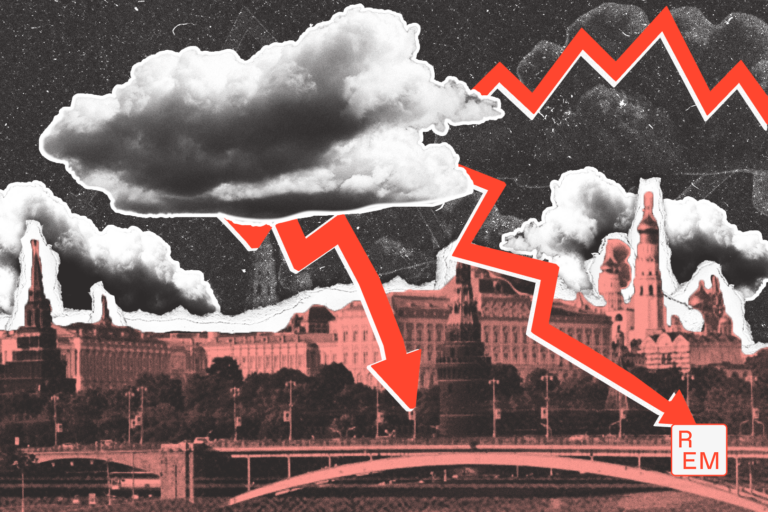
The Kremlin generally avoided making changes to Russia's social welfare legislation, but it did reduce social spending. Over the four years of the full-scale war, inflation-adjusted federal spending on healthcare fell by 14 per cent, transfers to the regions declined by 20 per cent, and expenditure on social policy — including pensions — was cut by 25 per cent.
In effect, the State Duma presided over a decline in the real value of pensions and public-sector wages, as annual indexation consistently lagged behind actual inflation.
In addition, since the beginning of the war, an assault on labor legislation has resumed. For instance, in 2022, the Duma granted the government the right to suspend the right to leave and the 8-hour workday at defence-industrial enterprises. In 2023, lawmakers made it easier to employ children aged 14 and over.
In 2025, parliament passed a law on the digital economy that classified couriers, drivers and other platform workers as falling outside the scope of Russia's labour legislation.
In 2026, lawmakers doubled the maximum amount of permitted overtime — from 120 to 240 hours per year — simplified the procedures for changing employment conditions, including reducing wages, and broadened the legal grounds for dismissal. Effectively, this opens up the possibility of introducing a 9-hour workday.
Well-Drilled Conformism
Russia's undeclared war against Ukraine — officially presented by Vladimir Putin as a "Special Military Operation" (SMO) — initially left some members of the State Duma bewildered about its objectives. A handful of lawmakers, who at the time still retained a willingness to speak publicly on controversial issues, argued that the fighting in Ukraine should be brought to an end as quickly as possible. Others said they had expected only the formal deployment of Russian troops into the self-proclaimed Donetsk and Luhansk People's Republics (DPR and LPR), rather than a full-scale advance into Ukraine itself.
Those initial doubts, however, were rapidly extinguished.
The space for criticism by the parliamentary opposition also narrowed dramatically. After Yabloko disappeared from the State Duma, lawmakers ceased publicly questioning Vladimir Putin's decisions. Soon, criticism of the federal government and regional governors also became effectively off-limits. In practice, the Central Bank remained virtually the only institution whose policies could still be criticised openly.
When it came to the core legislation, only the New People party and the Communist Party (CPRF) occasionally displayed mild dissent. In practice, this amounted largely to proposing amendments at the bill's second reading and mere verbal interventions.
Voting took place in a completely disciplined, orchestrated manner. Laws on fines for childfree propaganda, Stalin- era prison sentences for war critics, and to say nothing of the annexation of Ukrainian territories to Russia, were supported unanimously by all factions.
None of this necessarily means that there are no deputies within the State Duma who privately disagree with the direction the country has taken. Should circumstances emerge in which the presidential power vertical begins to fracture and a genuine political opening appears, those differences could become visible. In East Germany (the GDR), it was the satellite parties that became focal points for the emergence of a new political order after the fall of the Berlin Wall.
For today's Russia, however, no such prospects are yet in sight. If anything, the trend has moved in the opposite direction. The State Duma has increasingly become a driving force behind new repressive initiatives, at times making even the Russian government appear comparatively more moderate.
Conclusions
In retrospect, the 2021–2026 State Duma can be said to have:
- dramatically expanded the legal framework for political repression, codified provisions that effectively legalised torture, and introduced new criminal offences and administrative penalties defined in deliberately vague terms;
- broadened opportunities for the misappropriation of public funds and the seizure of both state-owned and private property;
- reduced inflation-adjusted spending on pensions, healthcare, education and housing and communal services, relegating them to secondary status behind military and security expenditure.
The next State Duma is likely to retain its formal five-party structure. United Russia's currently weak approval ratings are unlikely to translate into stronger electoral performances by the parliamentary opposition, as the artificial nature of the competition is obvious to the public. However, opinion polls are prompting the ruling party to take away some of the district mandates from its satellites, due to fears of securing worse positions through party lists.
The forthcoming parliamentary elections are also expected to bring dozens of veterans of Russia's war against Ukraine into the State Duma. Their presence is likely to make any future return to a more peaceful political process in the post-Putin era considerably more difficult.