When they came for the Communist Party: Arrests, sieges, and pressure on supporters after the State Duma elections
21.10.2021





Author: Alexandr Litoi, for OVD-Info
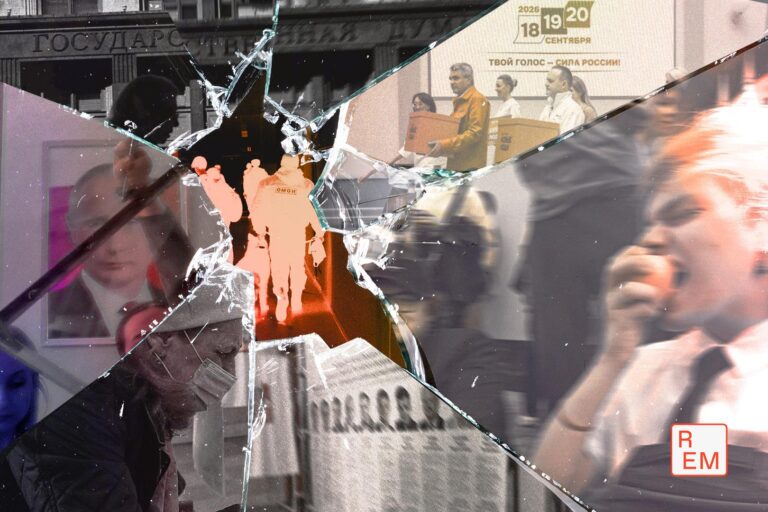
The Communist Party of the Russian Federation (CPRF) received 19% of the votes in the last elections to the State Duma. After that, the party's supporters faced unprecedented pressure for the 'systemic opposition.' They were detained, fined, sentenced to administrative arrests, and blocked in the party premises. CPRF continues to challenge the election results and demand an investigation by the Ministry of Internal Affairs.
The miracle of the last percent
Since the collapse of the USSR, the heiress of the Communist Party of the Soviet Union has consistently ranked second in parliamentary and presidential elections. In the September elections to the State Duma, the CPRF turned out to be one of the most promising parties to enter the Parliament. It secured the status of the so-called 'systemic opposition,' being largely loyal to the Kremlin. In the State Duma, the Communist Party often votes for most of the laws aimed at reducing democratic freedoms.
At the same time, the CPRF is willing to support the population in local protests with no direct political demands: the protest against the construction of a landfill at Shies station, Arkhangelsk region, and in the project for the renovation and construction of the South-East highway in Moscow.
The communists also opposed the pension reform of 2018, having organized a large rally in Moscow. Valery Rashkin, the leader of the Moscow branch of the Communist Party, is widely known for supporting protest initiatives in the capital and legalizing many protest actions in Moscow through 'meetings with MPs,' which have been banned since the beginning of the pandemic.
The regional deputy of the Communist Party and Saratov resident, Nikolai Bondarenko, has more than 1.5 million subscribers on his YouTube channel. One of the most successful campaigns of opposition candidates in these elections was conducted by the head of the independent trade union, representing Moscow state university employees, Mikhail Lobanov, who also ran for the Communist Party. The personal popularity of politicians from the Communist Party, as well as recommendations via the protest Smart Voting1, contributed to the success of the communists in these elections.
In most of the Moscow constituencies, candidates from the Communist Party were winning by a significant margin. After counting 99% of the ballots, rivals from United Russia and candidates close to the Moscow mayor's office seemed to have lost.
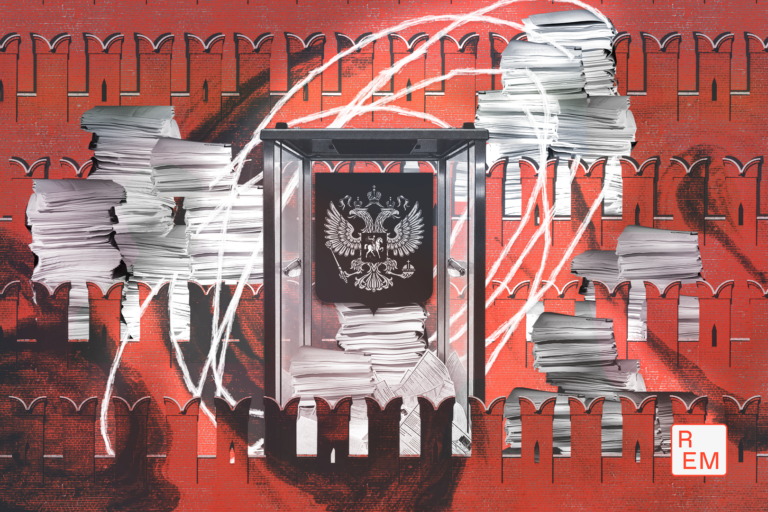
However, the situation changed. The pro-government candidates won thanks to online voting, which, as an experiment, was conducted in several regions of Russia during these parliamentary elections. It is worth noting that the results of the online voting in Moscow were not published for a long time with no official explanation. Moreover, independent observers are less experienced in overseeing the transparency of vote counting and casting over the Internet than observing voting at the physical polling stations.
After the announcement of the results by the Central Election Commission, the Communist Party suddenly found its candidates losing in all Moscow constituencies. In total, the party won a little less than 19% of the votes and gained 57 seats in the State Duma. In the last convocation, the communists had gained 43 seats, having received 14% of the votes in the elections.
'In some regions, the Communist Party ranked first. There is a number of regions where the CPRF came second; however, it still had a great result (about 30% of votes). There were regions where the votes were so largely falsified that it's difficult to talk about the actual percentage gained by the party. If we do not take into account online voting, in Moscow alone, the Communist Party was first, having overcome United Russia by a small margin. In genuine elections [not taking into account the online voting results], the party got the shocking percentage for the Kremlin. The fact that the CPRF is still trying to insist on rendering these results official forces the government to take extraordinary measures', tells Ilya Budraitskis, board member of the Sakharov center, to OVD-Info. In these elections, Budraitskis took part in the campaign of the communist Mikhail Lobanov.
He believes that the new voters expect genuine opposition behavior from the Communist Party, whereas the party leadership wants to show that it will not accept the falsifications quietly.
'There are people inside the CPRF who want the party to be consistently oppositional. It is they who attract new voters. As a result, Zyuganov should ''shield'' these people, at least for the time being. The main thing that the Communist Party does not want is for the situation to look as if "Zyuganov has just let it go nowhere, again." On the one hand, the Communist Party depends on the Kremlin; on the other hand, the party's influence depends on the opposition-oriented people', Budraitskis said.
Inconvenient 'systemic opposition'
Cases of pressure on the Communist Party began even before the elections. For example, popular politician Pavel Grudinin was expunged from the party's candidate list. In Barnaul, people were detained for posting leaflets. In Kostroma, the police shut down a children's fest associated with the Communist Party. In Moscow, Asker Heydarov, a proxy of the State Duma deputy Valery Rashkin, was arrested for three days due to his disobeying the police. During the elections in Khabarovsk, Svetlana Izotova, a candidate for State Duma deputy from the Communist Party, was expelled from the polling station.
After the announcement of the election results, supporters of the Communist Party protested against falsifications in different Russian cities, among which: Magadan, Yekaterinburg, Vologda, Rostov-on-Don, Barnaul.
In Khabarovsk, the local leader of the Communist Party, Pyotr Perevezentsev, was detained for holding an 'open-air press conference.' In Belgorod, a member of the Communist Party, Andrei Borzykh, was handed a warning not to hold protests. Roskomnadzor2 threatened to block the website of the Communist Party due to the announcement of the all-Russian protest rally scheduled for September 25.
Yet, the main pressure on the supporters of the Communist Party of the Russian Federation unfolded in Moscow. In the capital, the party was refused permission to organize anti-election results protests (on September 20, 21, and 25). On September 20 and September 25, the Communist Party organized meetings with MPs on Pushkin Square in the city center. The party claims that more than a hundred of their supporters and party officers have been detained in late September and early October, and thus, during and on the eve of the protests.
'We were expecting counteractions during the counting of the votes, and this is what happened, in part. There was a CCTV shutdown, groundless and harsh removal of PEC [Precinct Election Commission] members and observers, denying access to problematic stations. Everything that followed was not so much unexpected as completely inadequate. No uncoordinated mass rallies were organized - those were meetings with members of Parliament. I consider the authorities' reaction to those legal meetings as something very neurotic and counterproductive', told to OVD-Info Elena Yanchuk, a Moscow city Duma deputy from the Communist Party, who was detained by the police for participation in meetings with State Duma deputies.
Thirty-two lawsuits have been filed against the results of online voting in Moscow, including 15 from the Communist Party and 15 from Communist Party candidates.
'We disagree with the falsified election results; we disagree with electronic voting, we'll continue to defend our point of view. They are trying to intimidate us. We see that in these elections, the authorities have abandoned all legal frameworks. Standard falsification schemes no longer work; electoral "sultanates"3 do not provide the desired result. Thus, the technology of online voting and voter bribery were used. [Payments of] 10 and 15 thousand [roubles] (approx. 120-180 Euro - REM), coercion of all state employees to vote under the surveillance of CCTVs from 10 to 12 AM on a Friday is nothing but political intimidation', Sergei Obukhov, Secretary of the Communist Party Central Committee and State Duma deputy told OVD-Info.
Sieges and detentions
Detentions affected not only party members. A publicist and a teacher at the Moscow school of social and economic sciences, Boris Kagarlitsky, was detained for ten days for calls to participate in meetings with MPs. The same was applied to Sergei Udaltsov, the leader of the 'Left front'. Activist of the 'Left front' Leonid Bogomolov was sentenced to 20 days of arrest for calling to participate in the meeting with MPs.
'As I understand it, the order was given to shut down the protest to the extent possible; even peaceful, legal manifestations have already become a trigger. The reception of the vice-speaker [of the State Duma from the Communist Party, Ivan Melnikov] was blocked when the CPRF lawyers were preparing lawsuits following elections in Moscow', said Elena Yanchuk, a Moscow City Duma deputy from the Communist Party. 'A disproportionately harsh punishment (a 10-day arrest) was imposed on Magomed Bidzhev, the legal adviser of the Moscow City Committee of the Communist Party, who had not previously been brought to administrative responsibility and has small children. The reason for the punishment was a repost of the announcement about the meeting with a deputy'.
A municipal deputy from the Communist Party, Sergei Tsukasov, was arrested for ten days. He was detained while jogging in the morning.
Exceeding their powers (a special procedure has been developed for detaining parliamentarians), Moscow police demanded that Sergei Obukhov, a deputy of the last convocation to the State Duma, proceed to the subway police checkpoint.
'As far as I understand, the face recognition system [notified the police]. Obukhov turned out to be a terrible criminal. The police followed me through the subway carriages. Three persons were waiting for me at the Partizanskaya metro station. They took me to the police checkpoint, and I had to explain the basics... I called Zyuganov (Chair of the Communist Party, State Duma member - REM). Apparently, it worked, as well as the fact that I am an elected deputy of the State Duma. I was let go, but in the evening of the same day, police officers came to visit my daughter and asked where I was. This was a global special operation. We no longer have drug traffickers, hooligans, or street criminals. All police forces were thrown against the CPRF activists', Obukhov told OVD-Info.
Against the Communist Party members, law enforcement officers applied the same strategy that worked out against the supporters of Alexei Navalny earlier this spring: meetings with the MPs (September 20 and September 25) would see few arrests, whereas the detentions were mostly carried out afterward.
The leader of the Communist Party faction in the Moscow city Duma, Nikolai Zubrilin, was forcibly held in the Department of Internal Affairs, where he felt ill. Later he was fined by a court decision. Moscow City Duma deputy from the Communist Party, Yekaterina Engalycheva, was forced to remain in the Moscow city Duma building for several days, as she feared arrest. She was fined 250 thousand (approx. 3,000 Euro - REM) rubles for reposting information about the meeting with the MPs. The head of the protest section of the Moscow Communist Party, Pavel Ivanov, spent a week in the building of the city committee of the party. When he got out, the court fined him 30 thousand rubles (approx. 360 Euro - REM) under the article related to the organization of meetings.
In order to detain and obstruct organizing protest activities, Moscow police blocked the building of the Moscow city committee of the Communist Party. Also, the reception room of the Vice-Speaker of the State Duma from the Communist Party and even the Moscow city Duma were blocked.
On September 29, the Communist Party faction in the Moscow city Duma left the meeting of the Moscow parliament in protest against the arbitrariness of the law enforcement activity. The deputies demanded the release of all those who were detained and opposed the election falsification. In addition, they stated their disagreement with the results of the voting in Moscow. Deputy of the State Duma of the last convocation Sergei Obukhov told OVD-Info that the Communist Party plans to demand a report from the leadership of the Ministry of Internal Affairs at a meeting organized within the walls of the State Duma.
'No violations of the law, including Art. 20.2 of the Administrative Code (violation of the rules for holding public events) were made by us! All our events took place in the format of a meeting between the members of Parliament and the people. This is a legal form of work of the elected representatives of the people, and obstruction of it should be punished. We demand for the unbridled policemen to be stopped and for their actions to return to the framework of the law. At the very first meeting of the Russian Parliament, we will demand the creation of a special commission to investigate the persecution of candidates to the State Duma', stated the leader of the Communist Party, Gennady Zyuganov.
On October 4, Zyuganov addressed an open letter to Vladimir Putin. In the letter, the party leader complained about the detention of members of the Communist Party after the protest meetings and called such detentions groundless. Zyuganov asked the Russian president to take strict measures aimed at bringing to justice officials responsible for exceeding their powers.' He also criticized the three-day election format and the online voting.
References:
1 Smart Voting is a tactical voting strategy put forward by the team of Alexei Navalny in order to deprive the United Russia party of votes - REM
2 The Federal Service for Supervision of Communications, Information Technology and Mass Media or Roskomnadzor - REM
3 Several minority regions of the Northern Caucasus and Volga Region characterized by highly authoritarian regional political regimes, which tend to massively vote in favor of the ruling party â although independent electoral experts and the opposition claim rampant election fraud - REM