It’s the taking part that counts. What strategy will the opposition have for the presidential elections?
20.01.2024





The discussion on how the opposition should act in the presidential elections started back in the fall of 2023. The opponents of the current government expressed different opinions on this issue: some called for a boycott, some agitated to vote, and some suggested looking for a united candidate. The opposition-minded politicians outside of Russia have argued a lot during the recent months, and three months before the election date, they were able to come to an agreement on some points, but still disagree on others.
On January 14, representatives of the opposition participated in a live broadcast on TV Rain to discuss their strategy for the upcoming elections in March 2024. REM provides a short summary of participants’ suggestions: the Anti-Corruption Foundation, the Russian Anti-War Committee, and individual opposition politicians such as Maxim Katz.
What is the current line of conduct of the opposition?
According to Ivan Zhdanov, director of the Anti-Corruption Foundation (a structure founded by Alexei Navalny – hereinafter ACF), the organization is now engaged in campaigning in various forms: distributing leaflets, calling Russians and preparing rallies abroad. The goal of the ACF's agitation is to motivate Russians to come to the elections and vote against Vladimir Putin.
Zhdanov said: “We need to campaign among people inside Russia. If you don't like working with leaflets, make phone calls. If you don't like calling up people, create a graffiti”.
In autumn of 2023, Maxim Katz, a former municipal deputy in Moscow and now a blogger with millions of followers, came up with the suggestion of voting for any candidate other than Putin as a strategy for the upcoming elections. Later, Alexei Navalny expressed the same position. It was also supported by economist Sergei Guriev, businessman Mikhail Khodorkovsky, and the Russian Anti-War Committee, an organization created by the opposition in exile against the war and Vladimir Putin's rule.
At the same time, the Committee member, journalist and social activist Anastasia Shevchenko believes that Russians do not need a strategy, because the voters should make their own choice.
“There is no need to tell people "spoil your ballot" or "take your ballot with you". The Russian civil society must learn to make decisions on its own, to start growing up. Let people decide for themselves. Elections are a very important day for the country. It’s true that nothing changes on this day. But people tell us that this is the only chance to express their opinion – that they are against Putin”, said Anastasia Shevchenko during the broadcast.
In parallel to the elections, the Russian Anti-War Committee is waging a campaign to delegitimize Vladimir Putin: “We say that Vladimir Putin is illegitimate. There are a number of reasons for that. The main one being that the elections will be held in the occupied territories, where people get passports in exchange for medicine”.
Maxim Katz calls on opponents of the current government to form a coalition: “In my opinion, the opposition's task is to carry out mass operations – to make it clear to as many people as possible that Putin needs to be rejected at the polls. It’s an open question, how many Russians can be reached by leaflets or rallies. And I think we need to create a new political actor – a united opposition. If we acted as a united political force, we would be able to reach as many people as possible. Unfortunately, such a coalition could not be formed for now”.
Shall the opposition be united?
“There are two forces in Russia at the moment – one "for the war and for Putin" and one "against the war and against Putin". If we want to reach 20 million people [who are against], it is important to act together”, Katz insisted.
After a brief argument, Zhdanov admitted the need to form a coalition. But he immediately suggested using what’s left of Navalny's destroyed headquarters as a fundament of its organizational structure.
Katz did not like this idea, because the former headquarters worked “under the political leadership of ACF”. In his opinion, the new political association should provide “every major speaker with a seat at the table” where “a strategy for joint actions” would be developed.
This dispute was interrupted by Anastasia Shevchenko, who called it a “flame war on Twitter”. She agreed with Katz that it would be “better for the opposition to work together, at least to talk to each other”.
“I have the feeling that you are trying to [score] political points. Meanwhile, there are people kept in prison, dying in war”, reproached Shevchenko.
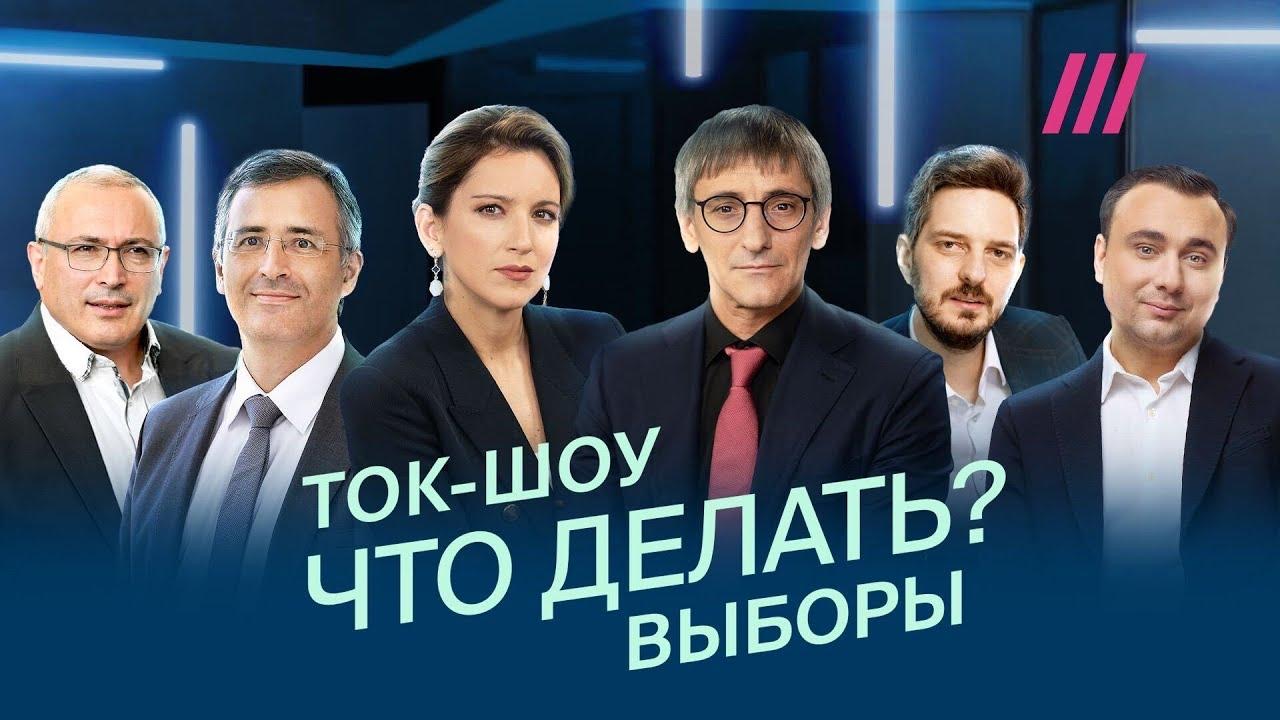 Picture1. Cover of the talk show "What to do? Elections" on TV Rain's YouTube channel. Left to right: Mikhail Khodorkovsky, Sergei Guriev, hosts Ekaterina Kotrikadze and Mikhail Fishman, Maxim Katz, Ivan Zhdanov
After that, the discussion could proceed constructively. Mikhail Khodorkovsky agreed with the opinion that the opposition forces needed to work together. However, there was no need to create a single political body, in his opinion, because Putin's opponents could meet on different platforms. At the same time, Khodorkovsky is convinced that the opposition forces abroad do not act separately and are looking for a solution to work as a unified team.
Economist Sergei Guriev, for his part, agreed with Khodorkovsky: there should be one goal for the upcoming elections – to launch a campaign for voting against Vladimir Putin.
“The elections are organized in such a way that the opposition has a single goal – to vote against Putin. It's clear who we need to fight, for a long time already. And every time we spend our energy fighting each other, we don't spend it fighting Putin”, Guriev said.
The strategy “for anyone but Putin”
All participants of the discussion broadcasted by TV Rain supported the idea that opposition-minded Russians should vote for any candidate other than Vladimir Putin in the upcoming elections. The ACF plans to give recommendations on whom exactly to vote for “a bit later”.
Mikhail Khodorkovsky considers an “anti-war candidate” on the ballot to be the best option for voting: “Any candidate who speaks from an anti-war position is great. Any open statement against the war is right and good. If people are willing to support that position, that is a good and courageous decision. The act of voting itself will play less of a role because of falsifications, I'm afraid. However, if a person votes and expresses this position, this is an active step that we very much need. [Boris] Nadezhdin is a good candidate in this respect”.
Maxim Katz is ready to support Boris Nadezhdin, who is running from the Civil Platform party. At the same time, he believes that Nadezhdin has little chance of being registered as a candidate, but is ready to urge Russians to sign in favor of his nomination.
“I think that it does matter how one votes. It’s important to express a position. There will be many polling stations without falsifications. There will be many ballot boxes where the votes will be counted fairly. And it is important that these ballot boxes do not contain 65 percent for Putin after a fair count. This is what we should try to avoid. And in this sense, everyone should vote”, said Katz.
Sergei Guriev shares the same opinion. At the same time, the economist believes that not a single polling station will count the voices fairly in March 2024. Guriev and Katz made a friendly wager on this subject, betting a case of wine.
“Any candidate other than Putin is not Putin. What [anti-war candidates] Duntsova and Nadezhdin are doing is a very brave act. We need to support people who oppose the war inside Russia. I agree that we need to appeal to our fellow citizens to agitate against Putin. However, we need to remember that even that is not safe. But voting itself is safe. Even if it's a vote for [Communist] Kharitonov or [New People representative] Davankov – it’s necessary to vote for anyone but Putin”, said Guriev.
During the live stream, a poll was conducted in the TV Rain Telegram channel, asking viewers to choose the most appropriate strategy for the upcoming elections. 17.1 thousand people took part in the poll. 72% of them consider the strategy to vote for any candidate but Vladimir Putin as a top priority. 14% voted for boycotting the elections, and another 14% are going to spoil their ballot.
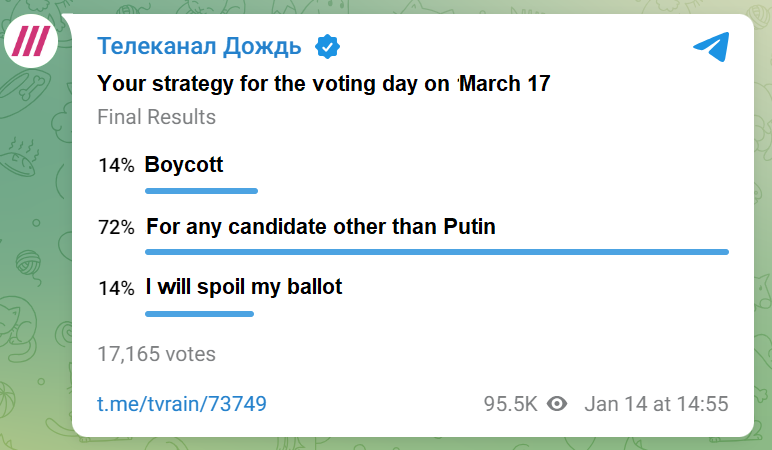 Picture 2. Viewers' replies. Source: Telegram
The “Noon against Putin”-strategy
According to the talk show guests, the Russians have also proposed a strategy for the upcoming elections: to come to the polling stations at noon on March 17, the final voting day. The authors of this strategy put up a list of 10 arguments explaining why such an action could be effective. Among them are simplicity, security and consolidation of the society.
Anastasia Shevchenko, a member of the Russian Anti-War Committee, believes that the opposition should support this initiative: “Regarding the “Noon against Putin” action. Let's listen to those who live in Russia now. We are seriously discussing the elections, as if the Central Electoral Commission would count everything fairly, honest commissions would be there, and Nadezhdin would collect the signatures [necessary to get on the ballot]. They [the election commissions] will still draw the numbers they want. But if people come to the polling station at the same time – they can't be just erased. Votes can be rewritten, but people can't. People will see each other and feel that they are not alone. I have decided to choose this strategy for myself”.
Mikhail Khodorkovsky has also supported this strategy. In his opinion, the action might suit all opposition-minded Russians: “Come out at noon on the last voting day to vote against Putin - at polling stations or on the streets, wherever it’s going to be possible. We will do everything to spread this idea among all Russians”.
Sergei Guriev also believes this strategy to become a mass action thus uniting the opposition forces – both those who support voting “for anyone but Putin” and those who intend to boycott the elections: “There are people consistently agitating for a boycott. But this “Noon against Putin” action allows them to go to the streets on the last day of voting. This looks like one of the best strategies so far”.
What shall be done after Putin’s victory?
None of the talk show guests has any doubts that Vladimir Putin is going to win the elections. However, they all agree that it is necessary to participate in the procedure. One of the arguments is that the 2024 elections are to be considered not as a chance to change the current government, but as an opportunity to protest against it. Here is Sergei Guriev’s opinion on this subject: “There are no better or worse candidates in these elections. There is one bad candidate. Any other candidate is better than Putin. A spoiled ballot is better than Putin. We need to say: we all know it will be better without Putin. If you want to save your children's lives, you will need to vote against Putin”.
Other speakers agreed with him: Ivan Zhdanov, for example, is convinced that during the whole campaign period it is important to agitate, not to quarrel and to keep on working. At the same time, Maxim Katz believes that the opposition has made great progress in developing a strategy for the upcoming elections. The next step for Vladimir Putin's opponents is to figure what is the most effective way to campaign.
In general, members of the opposition forces see their mission in making the voices of Russians who remain in the country visible.
“We have a special responsibility: we can speak freely. People in Russia are in a situation where it is difficult for them to speak out. And we have to remember what people care about. If you want to win elections, you need to know what people care about. But unfortunately, there are no elections – and there is no communication either. That’s exactly Putin's goal: he wants it to be as difficult as possible to find out what people care about. So after March 17, every effort should be made to tell people what is going on”, concluded Sergei Guriev.