No tolerance for dissent: the state of Russian media ahead of 2021 elections
15.07.2021





Author: Nikolai Klimeniouk
The years 2020 and 2021 in Russia were marked by fierce attacks on media, journalists, and bloggers, and the brutality of these attacks was unusual even by Russian standards.
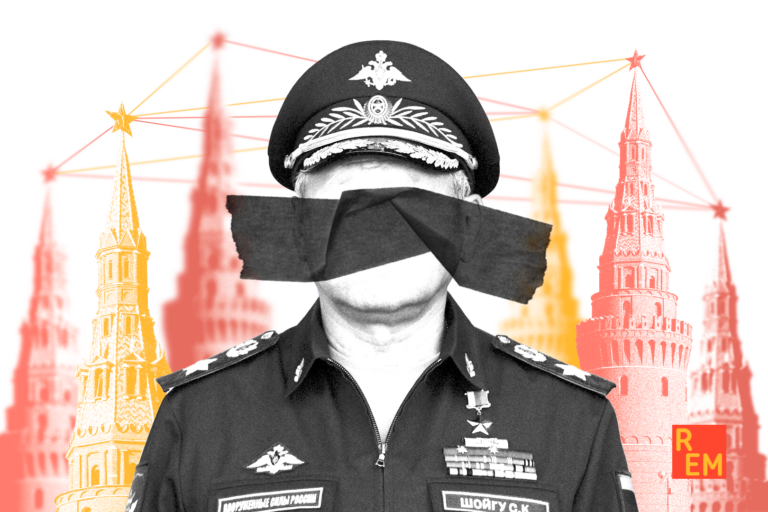
Evidently, the current wave is related to the upcoming elections to the State Duma and to the regime's fear of protests surrounding them. The regime needs to reassert its legitimacy by showing the ability to provide desirable election results without social upheaval and political turbulence. It is not so much a question of imitating democratic procedures as of demonstrating control. As it appears, two factors threaten this scenario the most. First, it is the "smart voting" tactic promoted by Alexey Navalny's team. It seeks to weaken the dominance of the ruling United Russia party by supporting any other candidate who has the best chances of winning. Second, the protests, be they in support of Navalny, opposition candidates, or against all sorts of electoral violations, undermine the illusion of stability. To gain control of the narrative, the Kremlin persecutes any media reporting on these topics and giving platform to electoral expertise. In a rather unusual move, the regime (technically the so-called "investigative committee") has arrested four editors of a student media DOXA and charged them with inciting protests and involving minors in dangerous activities1. They have now been placed under house arrest and are facing long-term prison sentences. Compared to the forms of censorship that have been employed so far, this demonstrates blatant escalation.
The pressure on the press and the subjugation or destruction of independent media have been the central element of Vladimir Putin's domestic policy since 2000, from the very outset of his first presidential term. This pressure has never diminished, but its increase has occurred by leaps and bounds and was often explicitly linked to the elections. By Putin's second presidential term, the then-existing independent television (except for a few regional channels, which were eventually quashed later) had been all but eliminated, followed by the print media and major online resources.
Implications of "foreign agent" law on independent media and journalists
A full-scale crackdown on remaining independent media and civil society institutions began in 2012 following mass protests against Putin's return to the office and the rigged parliamentary and presidential elections. It was then that the "foreign agent" law was adopted. Although at the beginning it only applied to NGOs, in 2017, it was extended to media outlets. According to this law, the Ministry of Justice may declare any foreign media outlet a "foreign agent" if it receives funding or property from foreign citizens or organizations. Affected institutions are obliged to establish a legal entity in Russia and report to the Ministry of Justice on the expenditure of funds and audits. The core of the law is utterly absurd: it targets media outside the Russian Federation's jurisdiction and demands that they set up offices in Russia that can be subjected to harassment, restrictions, and fines. Although the law does not explicitly state this, so far it has only been applied to the Russian-language media focused on Russia, effectively declaring the language a matter of Russian sovereignty.
The most conspicuous consequence of the "foreign agent" status is the obligation to label all content indicating that it was "created by the media performing the functions of a foreign agent." It is compulsory to mark not only those pieces of content or posts on social media that were published after the media outlet was added to the "register of foreign agents" but also those published much earlier. If there is a mention or reference to another "foreign agent", its status must also be indicated. This law has been tightened in several steps. For instance, in 2019, the lawmakers extended it to individuals. Today, a media outlet might face a fine of 500,000 to 5 million roubles (5,600 to 56,000 Euros) for failing to comply with the marking rules. The penalties for individuals are lower, but legal repercussions involve a two-year prison term for individuals and heads of institutions who fail to comply repeatedly.
The first media outlets to be declared "foreign agents" immediately after the law was passed were Voice of America and several Radio Liberty / Radio Free Europe (RL/RFE) projects. They were followed by the Russian legal entity of Radio Liberty and the Czech news agency Medium-Orient. In December 2020, five private citizens were added to the list for the first time: human rights activist Lev Ponomarev, civil activist Darya Apakhonchich and three journalists who cooperated with Radio Liberty's project SeverReal.org: Denis Kamalyagin, Lyudmila Savitskaya, and Sergei Markelov. Technically, the current legislation makes it possible to declare any private social media user a journalist and persecute them for spreading unlabelled content. It has not been done yet but is commonly feared as a genuine possibility.
So far, Radio Liberty has been the only media outlet on the list partly operating from Russia to refuse to label its publications. After a series of court decisions resulting in fines, Radio Liberty has closed its Moscow office and relocated its staff abroad to its headquarters in Prague and Kyiv.
The first media on the list were non-commercial, US-funded institutions. For them, being labeled "foreign agents" was a humiliation and an obstacle, hindering their operation, but not an existential threat. It is generally assumed that they were listed in retaliation for the US Department of Justice's demand that the Russian propaganda outlet RT America register as a foreign agent in the US. The difference between the two laws is striking: the US regulation applies only to lobbyists operating on behalf of foreign governments and not just to anyone receiving money from abroad.
The April 2021 listing of a Latvia-based website Meduza, an influential publication that is not openly funded by any foreign state and apparently depends on ads, promotions, and other commercial tools, was a real game-changer. By labeling it a "foreign agent", the Russian authorities have effectively severed it from sources of income in Russia and made it difficult, if not impossible, for Meduza to cooperate with governmental institutions and people who hold any public office.
The case of Meduza variously illustrates the gravity of the current media situation in Russia. The project itself was launched in the autumn of 2014 by a group of journalists ousted from the then-leading online publication Lenta.ru. The destruction of Lenta.ru was executed through a typical procedure established long before for private TV channels and was carried out by the owner's very hand: fire the uncomfortable editor-in-chief, hire a loyal one. The media outlet is then left to live a zombie life as part of the propaganda machine, keeping the appearance of its former self. The same fire-and-hire method was employed in June 2020 for the leading business daily Vedomosti. After a series of takeovers, the owner brought in a new editor-in-chief, whose sole function was to turn the influential paper into precisely this kind of zombie. The ousted editorial team started a new project, VTimes, which evidently became so popular that in May of 2021 it was pronounced "foreign agent." Unlike Meduza, the VTimes' team refused to bear the label and chose to shut down the publication instead.
The ultimate reason for the crackdown on Lenta.ru was its reporting on Ukraine, which did not adhere to the official narrative. In the following years, Meduza could establish itself as an important online resource. However, ironically, its coverage of the events in Ukraine remained inconsistent and mired with traces of official propaganda. Meduza is often criticized for its Russian nationalistic bias and for reinforcing the propaganda framing. Thus, it avoids calling the annexation of Crimea what it is, keeps using the terms "unification" and "reunification", and states that Crimea "joined" Russia following "the results of the referendum." 2 It is remarkable how inaccurately and misleadingly Meduza reports on matters specifically related to elections. When it comes to Belarus, it keeps referring to the presumed winner of the presidential election, Sviatlana Tsikhanouskaya as "a former presidential candidate" who "didn't recognize the results announced by the Central Election Commission"3 and often fails to mention the electoral fraud. It is hard to tell whether this framing is an expression of the editorial team's own views or an act of self-censorship in a misguided attempt not to antagonize the Russian authorities over the issues the Meduza editors do not consider important. If the latter is the case, it is evident that this strategy has not quite panned out. In any case, it exemplifies the difficulty of using the term "independent" in characterizing Russian media critical of the regime. The government may not have them fully under control, but it can still influence them through intimidation and manipulation. These media, in turn, refuse to call themselves "opposition" and insist on being independent, balanced, and unbiased.
A decade of crackdowns and pressure
It is not exactly clear why the Kremlin has chosen to put pressure on media outlets by targeting them through the "foreign agents"4 law instead of declaring them all "undesirable organizations"5. The latter legislation was specifically designed for foreign NGOs, and it effectively criminalizes any Russian citizen's cooperation with them. Extending it to the media would strip them of all their Russian staff and freeze almost all operations. Perhaps, the Kremlin prefers to strangle media slowly rather than kill them all at once, or it is interested in exerting at least partial control over the information received by critical audiences.
Yet another problem that needs to be mentioned is the noticeable decline in quality due to the lack of peer control. The media critical of the regime, gripped by the besieged fortress syndrome, mostly refrain from mutual criticism. Even the biggest faux pas remain unaddressed and forgiven by colleagues. The audience, on the other hand, is not bound by such corporate solidarity. When it sees failures and does not see criticism, it tends to lose trust. This resonates with and buttresses the concept promoted by the state propaganda: "Everybody lies, no one can be trusted."
After almost a decade of crackdowns on big players, the landscape of critical journalism is dominated by local or smaller niche projects specializing in more specific, narrower fields like investigative reporting (The Insider, The Project), social issues, and charity (Pravmir, Takiye dela), human rights violations by the justice and penitentiary systems and the police (Zona.media, OVD.info), feminism and gender issues (Wonderzine, DOXA), to name just a few. The pressure on them is constantly growing. The homes of three journalists of the investigative magazine The Project were recently searched, probably in retaliation for an investigation into the Interior Minister Vladimir Kolokoltsev's links to organized crime. What matters is not so much the reason but the pressure itself and that the target is not an individual journalist but the publication. If this trend continues (and there is no reason to believe otherwise), many of these small projects are not likely to survive into the autumn5. The regime makes it pretty clear that it no longer intends to tolerate any dissent.
References:
1 https://edition.cnn.com/2021/04/15/
2 See, for example https://meduza.io/news/2021/06/06/
3 See, for example https://meduza.io/news/2021/07/05
4 For differences between the two, see "What are "foreign agents" and "undesirable organizations"? – REM
5 Since the publication of this article, an independent investigative outlet The Project (Proekt) has been declared "undesirable". It is Russia's first news outlet to receive such designation, which forces labeled organizations to disband and puts its members and financial contributors at risk of being imprisoned – REM