"Something's been tweaked somewhere!": Participants in the war in Ukraine ran in Russian elections and failed
06.06.2024




This publication is a translation of an article by "Verstka". The original text in Russian is available here.
Only 19 out of almost 100 participants of the war in Ukraine who ran in the United Russia’s primaries secured "passable" seats in the upcoming September elections to the parliaments of 11 Russian regions. Among the winners, there were almost no ordinary soldiers, well-known fighters, or participants in the "Time of Heroes" personnel project launched at Vladimir Putin's initiative. The "SMO veterans" claim they went to the deputies to "address the accumulated problems" faced by war participants. They were unpleasantly surprised when they encountered administrative pressure and what they perceived as an obvious falsification of results.
WHAT ARE UNITED RUSSIA'S PRIMARIES AND WHY DOES IT NEED THEM?
United Russia has been conducting preliminary voting to select candidates for elections at all levels (except presidential) since 2007, and since 2009 it has been a mandatory procedure. The leadership of United Russia has been claiming all these years that they need primaries for the "open and honest" selection of the best party nominees. However, the voting almost always takes place before the official announcement of the elections and is used by United Russia as an early start to their election campaign. Having no official legal restrictions, party members get an opportunity to begin open campaigning for their candidates several weeks ahead of their competitors and actively prepare administrative resources for the elections.
The overwhelming majority of voters are public sector employees, employees of state-owned enterprises and those controlled by the candidates, who are expected to vote in the actual elections later on. Primaries are mainly held at so-called "counting stations", which coincide with polling stations in real elections geographically and even in terms of the organisers, and are outwardly designed to resemble real voting. However, they are not regulated by election legislation, but by United Russia’s charter and the party’s internal regulations on primaries. Unlike the procedure itself, the results are not binding. No matter who wins the primaries, the decision to nominate candidates is made by United Russia's official bodies, which must only "take note" of the results. The final lists of United Russia candidates and the primary results do not match before every major election.
'I WANT TO BECOME THE NEW ELITE'
United Russia's leadership did a lot to lure participants in the war in Ukraine to their voting. Two weeks after Vladimir Putin called them "a real genuine elite" in his address to the Federal Assembly, the party's general council amended the rules of the primaries. "SMO veterans" became formally the most privileged group of candidates - they were highlighted separately on the list of nominees. Their main advantage over competitors was an additional 25% boost to the number of votes they received. According to Verstka's calculations, a total of 96 "SMO participants" ran in the primaries across 11 regions in the end. They claimed to fight for 591 deputy mandates.
In another region, Khabarovsk Krai, the party postponed the primaries due to a change of the governor. Mikhail Degtyarev, a member of the LDPR who became the Minister of Sports of the Russian Federation, was replaced by Deputy Prosecutor General Dmitry Demyoshin, and the local United Russia members "did not have time to consult with him." The high-ranking law enforcement official only reached Khabarovsk on May 26, the day the primaries ended.
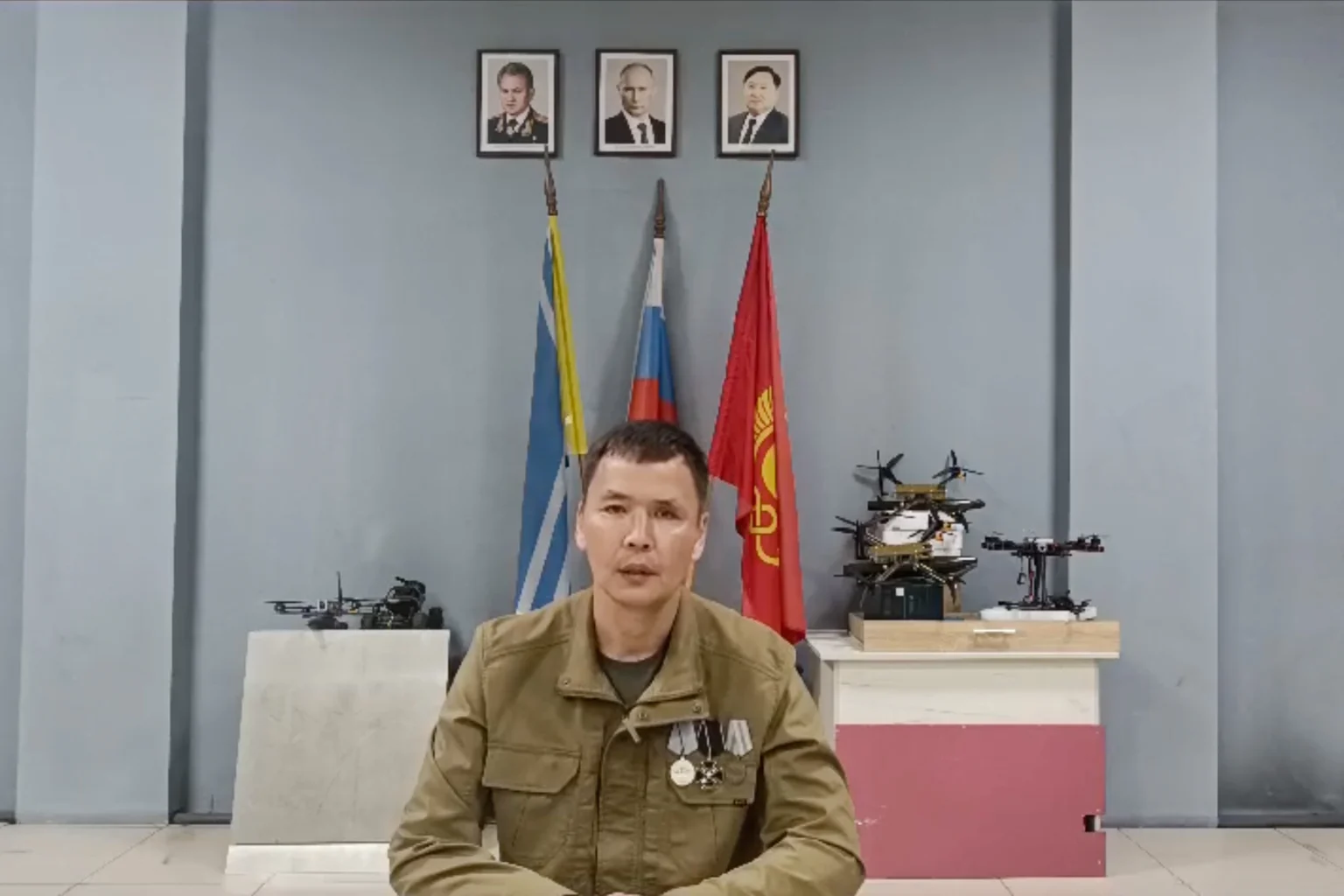
A still from the official video message of candidate Andrey Mongush. Source: United Russia party website. Copied from the original Verstka article.
Many war participants indeed believed Putin's words about the "genuine elite." At least a few of them expressed a desire to become this elite in their video messages or interviews. "Hearing the words of Vladimir Vladimirovich Putin, that the defenders of the Fatherland, who have proved their fealty to the Homeland with blood, should take over the country's leadership in the future, I decided to run as a candidate", said Andrey Mongush, a candidate for the Kurultai of Tuva, in a video message on the primaries' website. He was a fighter of the PMC "Wagner" who participated in the assault of Bakhmut. Mongush won in the primaries.
"As Vladimir Vladimirovich said, the military is the elite of society, whom we should look up to and who should be more involved in civilian life," explains Dmitry Popovnin, who is running in Crimea, in his candidacy video, standing in camouflage uniform against a white wall.
"Yes, I really want to become the new elite and I deserve it. We have gone through trials that others can't even imagine, what more proof do we need that we will serve the Motherland well in the rear?" told Verstka yet another "SMO veteran" candidate. Upon learning which media they were talking to, he and all his "colleagues" either refused to continue the conversation or insisted on anonymity.
But their plans to gain power sharply diverged from reality. After voting began, which took place from May 20 to 26, the "SMO veterans" found with surprise that administrative resources were being used against them. Perhaps the most striking story took place in Tuva. In the Ulug-Khem district, two war participants, Syldys Shivit and Aiyas Shaktar-ool, ran against the current Speaker of the Kurultai, Kan-ool Davaa. Shivit looks like the ideal Tuvan "SMO hero." He is not just an ordinary fighter but the younger brother of Andrian Shivit, the commander of republican volunteers who died in the war. He also led the Tuvan reconnaissance company "Black Panthers'' and an assault battalion. Shivit returned to Tuva when he lost a leg in the war, and now he "collects humanitarian aid for the front" and trains fighters in drone operation. But all of this was not enough against the Speaker Davaa.
Over the weekend, Shivit recorded a video in which he described how local state employees were lined up at "computers specially brought in from the ministry on the first two days of voting", where they had to vote in the primaries in a controlled manner. According to Shivit, district residents were threatened with reprisals for "incorrect voting" and even for participating in the primaries using their own devices. At the same time, he said things quite unusual for a public address by a primary participant and a "SMO veteran": "The will of the people must be free. People should not be forced to vote!"
The fighter managed to get publicity - the video was shared with an audience of over a million people by Z-blogger Anastasia Kashevarova and her numerous "colleagues" who reposted the clip. However, neither she nor even threats of punishment for abuse from the State Duma Deputy Speaker and former head of Tuva, Sholban Kara-ool, helped. Right at the session of the lower chamber, he declared pressure on the Tuvan electors. Still, according to United Russia's official results, Davaa won over 7000 votes compared to Shivit's slightly over 800, placing him second.
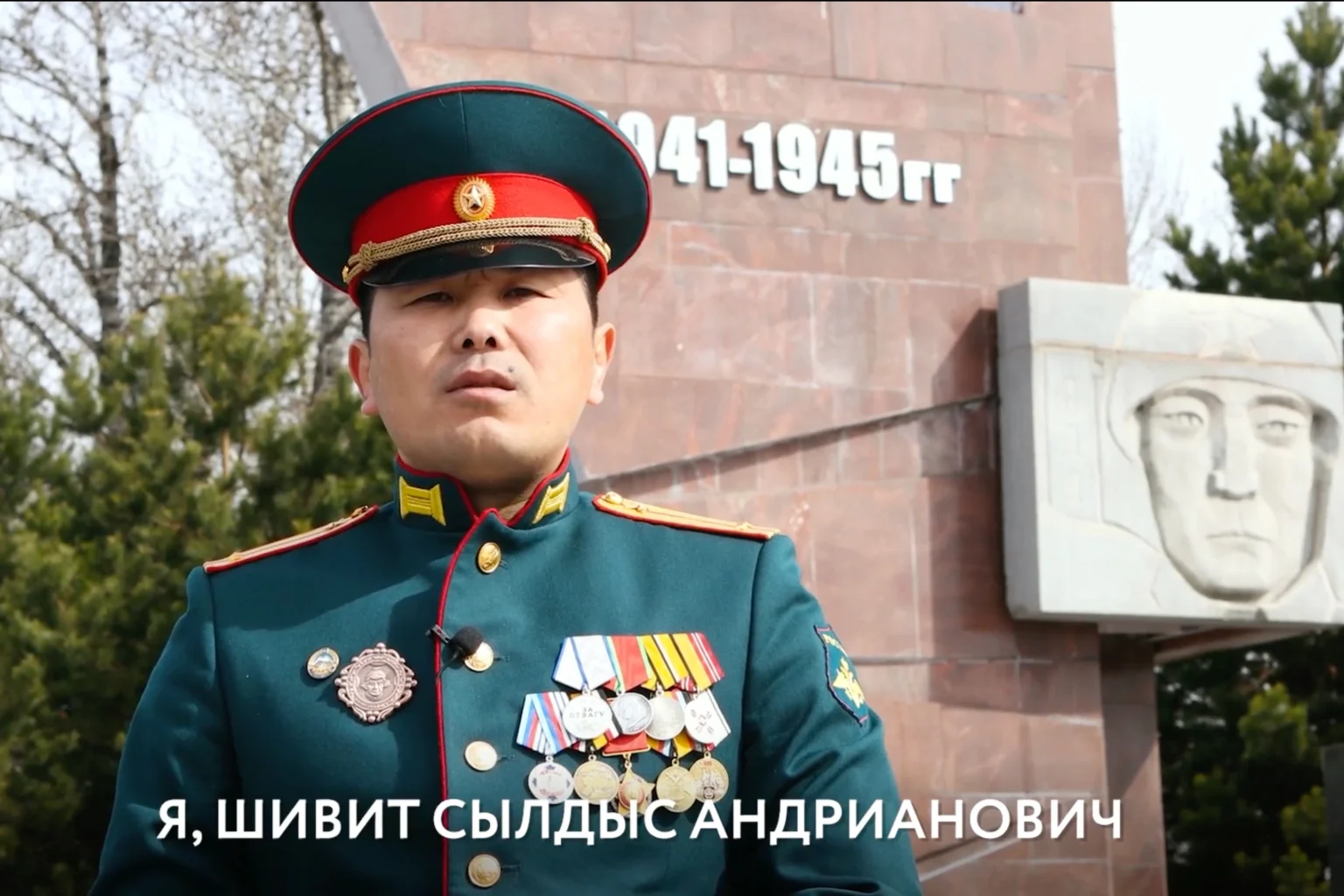
A still from the official video address of the candidate for deputy Syldys Shivit. Source: United Russia party website. Copied from the original Verstka article.
Disappointment among the war participants intensified on the morning of May 27, when United Russia published the results of the primaries. It turned out that only 19 candidates from them ended up in positions that would most likely allow them to run in the elections from United Russia and expect to win. Six of them were in Tuva, three each in Sevastopol and the Altai Republic, two in the Volgograd region, and one each in Tatarstan, Crimea, Mari El, Kabardino-Balkaria, and Tula. Unless the United Russia General Council radically revises the results of the primaries, the largest "military faction" may end up in the Supreme Khural of Tuva. But even there, six "SMO veterans" will be among 32 deputies in the parliament, which means they will be less than 20%.
The major disaster for the war participants in Ukraine was the primaries in Moscow, where all 15 candidates failed. None of them received even a thousand votes, while the winners received over 6,000. Even there where they were "piece goods," war veterans participated in the primaries with little success. The only veteran in Kabardino-Balkaria, German Shevchuk, ranked 34th, two out of three participants in Mari El and all five in Karachay-Cherkessia fell short.
The situation is similar in by-elections and voting at the municipal level, although there are exceptions here as well. For example, in the primaries for the Chelyabinsk city council, nine "SMO veterans" won at once: seven of them in single-mandate districts, while Duma deputy Oleg Golikov and first deputy chairman of the regional legislative assembly Denis Moiseev took second and third places respectively in the 'list' part. Among the winners of the primaries in the Chelyabinsk districts were also two women who had been in the war in Ukraine - paramedics Svetlana Gorelikova and Tatyana Sokolova. There are no women winners in other major primaries. But at the local level, the participation of "SMO veterans" was clearly not controlled as strictly as in the main elections to the legislative assemblies: in particular, not a single war veteran ran for the Murmansk city council.
Party officials believe that nothing terrible happened. There were no instructions from "above" to let the war veterans through. They simply turned out to be unprepared themselves. "In the truest sense of the word: they are ordinary labourers without political experience or education," said a source in the leadership of one of the Siberian branches of United Russia to Verstka. His colleague from the regional administration, where the preparations for the elections are on the way, was more straightforward: "Well, what did they expect? They came, showed their veterans' certificates, and everyone would run to vote for them? Primaries are painstaking work, first of all with municipal leaders and enterprises. The "old" politicians know this and they work, while the "new elite" still has much to learn."
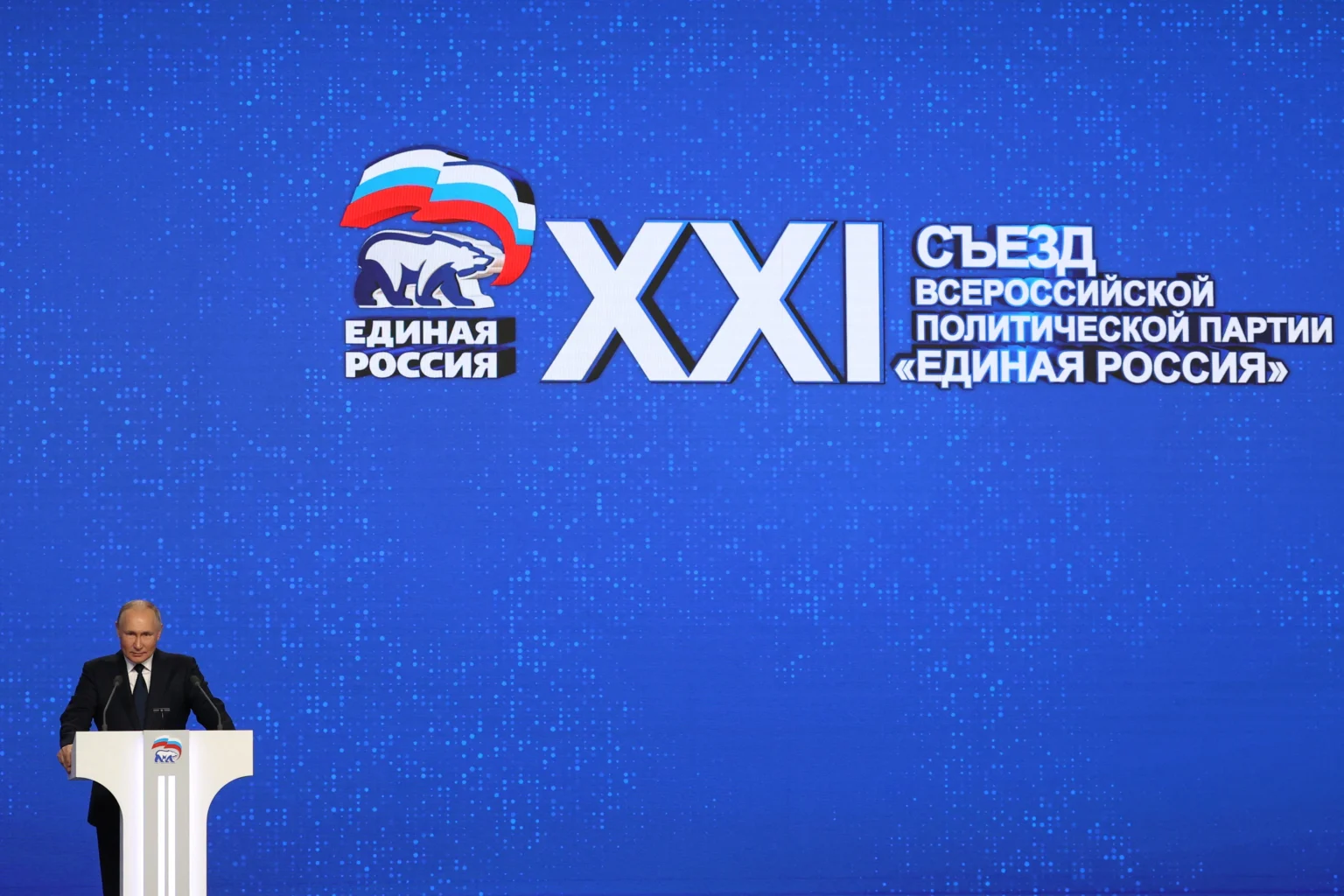
Vladimir Putin speaks at the congress of the United Russia party in December 2023, Moscow. Photo: Yekaterina Shtukina/Sputnik/Reuters. Copied from the original Verstka article.
The "SMO veterans" themselves disagreed with this interpretation. "They tell us, 'Who knows you?' Alright, Gazmanov Jr., but all these directors of zoos and kindergartens - who knows them?" - puzzled one of them. Another got into the statistics: "The winners got 6-7 thousand votes, while the second-place candidates got four times fewer. How can this be? Something’s been tweaked somewhere!"
WHO WON: 'POLITICALLY SAVVY' AND OFFICIAL HEROES
For the "politically savvy" candidates, participation in the war was more of an additional guarantee of victory rather than the defining condition. For instance, one of the two Altai winners of the primaries, Roman Gordeev, stood out from other candidates from the start: he had already spent half of his life building the career of an ideal United Russia member. While still a student, he attended youth forums organised by the Kremlin’s internal political block - such as "Tavrida" and "Territory of Meanings" - and in 2013 he joined the republican branch of the "Young Guard of United Russia". By 2016, Gordeyev had already become its leader.
In 2020, he was a member of the Youth Parliament at the State Duma, shortly after the war began he became a "volunteer in Donbass", and in September 2022 he was elected from "United Russia" as a deputy of the City Council of Gorno-Altaisk. Before the 2024 presidential election, he led the headquarters of Putin's support and became a member of United Russia's supreme council. At the same time, Gordeyev, judging by social networks, was making connections in Moscow. In February, he was seen hugging the director of the United Russia Higher Party School, Roman Romanov.
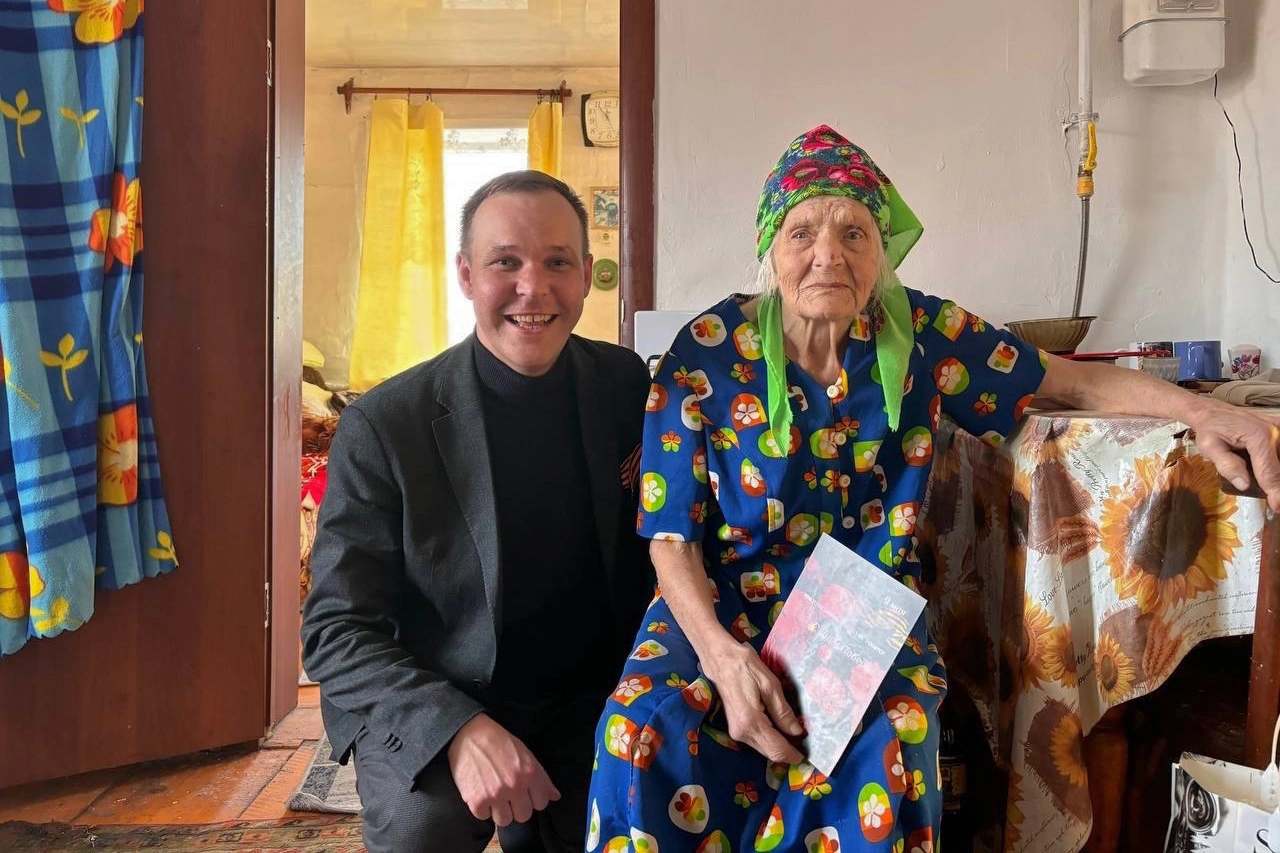
Roman Gordeev takes a photo with a resident of the Gardinka district in Gorno-Altaisk as part of his visits to war veterans and home front workers, May 8, 2024. Photo: Gordeev's personal page on VKontakte. Copied from the original Verstka article.
Several winning candidates with similar biographies can be found in other regions. Gordeev stands out with the "SMO veteran" badge he earned by serving in the "BARS-Kaskad" unit from November 2022 to early February 2023, where, according to some evidence, several high-ranking United Russia members served without approaching the front line. Gordeyev received the Medal "For Courage" on February 4, and on February 17, the "Young Guard" solemnly welcomed Gordeyev at the airport in Gorno-Altaisk.
Two veteran deputies won the primaries in single-mandate districts in Sevastopol. And both of them can hardly be called newcomers. Vasily Zubenko, in addition to his long career as an officer of the General Staff of the Russian Armed Forces and a rather high state award - the Order "For Merit to the Fatherland" of the second degree, heads the Sevastopol "Combat Brotherhood". This nationwide organisation is led by Boris Gromov, the former governor of the Moscow region and the last commander of Soviet Forces in Afghanistan, and his first deputy, Duma deputy Dmitry Sablin, who oversees Crimea on the party line. Another winning deputy, Pavel Kharlamov, is a member of the Putin Team and a winner of the "Leaders of Russia" personnel competition, which is personally supervised by the First Deputy Head of the Administration of the President Sergei Kiriyenko.
There are also more modest winners. For example, in Crimea, Kirill Chebyshev - like Gordeev, a Young Guard member and a municipal deputy in his hometown of Sudak - secured the 14th position, which is likely a passable spot. One of the dialogue partners of "Verstka" named among the "politically savvy" those who "we can use for publicity." This description fits candidates like Altai military doctor Alexey Lobanov, who "voluntarily went" to war after mobilisation was announced. Or Buyan Dongak, an associate professor at the economics department of Tuva University, who is one of the few veteran candidates in the republic with extensive public speaking experience.
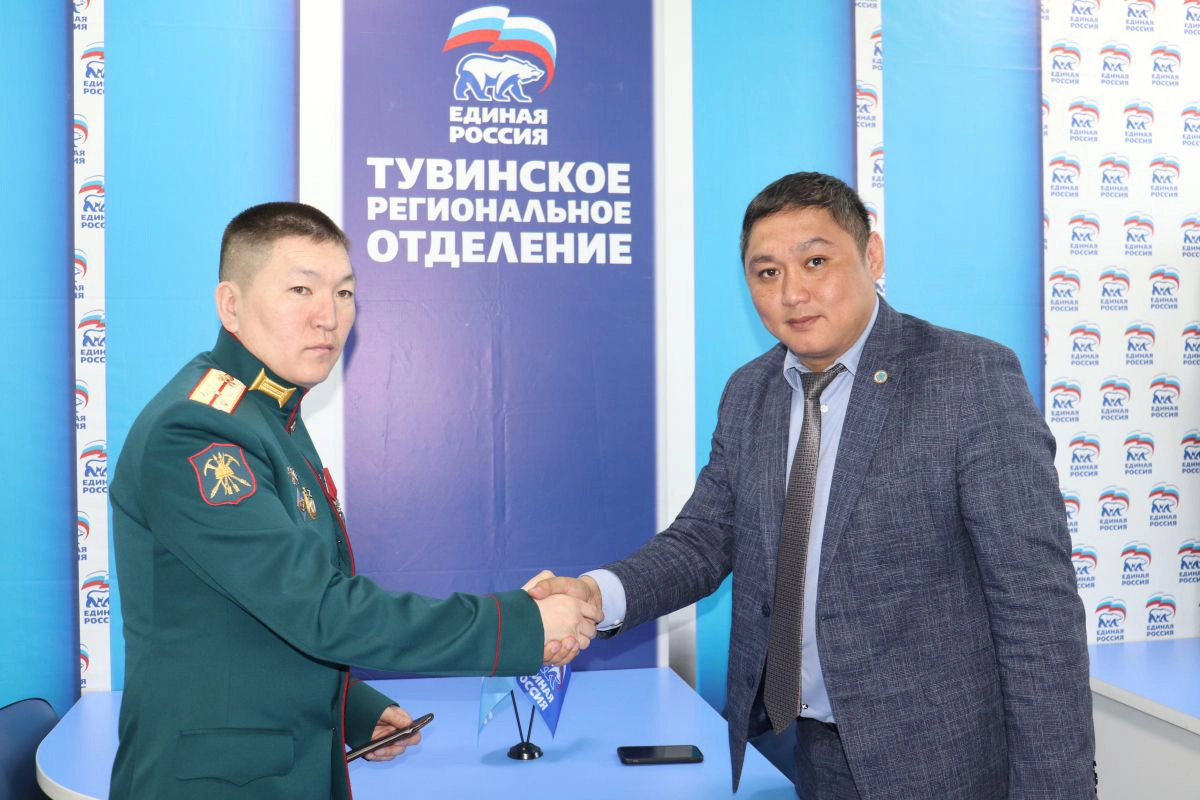
Aidys Oorzhak (right), head of the regional executive committee of the United Russia, personally accepted documents from Chalym Chuldum-ool (left) in April 2024. Photo: life.er.ru. Copied from the original Verstka article.
The second group of winners are war participants who have been officially recognized as heroes. For example, in one of Tuva's districts flamethrower Chalyam Chuldoom-ool, who was awarded the title Hero of Russia, won the primaries. The Tuva 24 TV channel said that Chuldum-ool destroyed a column of Ukrainian Armed Forces of five vehicles with a grenade launcher near Vodyanoye on December 15 last year and killed "about ten" Ukrainian soldiers "with his personal weapon." He did not discuss his plans as a deputy in the media, but only praised United Russia for its humanitarian aid to the front.
Another Hero of Russia got the third place in the primaries in Tatarstan. This is Rasim Baksikov, whom local media present as a member of the "Alyosha" tank crew. This is one of the episodes of the war in Ukraine most hyped by Russian propaganda. In July 2023, according to the version of the official Russian media, the soldiers of one Russian tank stopped the movement of an armoured column of the AFU consisting of eight tanks and armoured vehicles. The entire crew was awarded the title of heroes personally by Putin. Baksikov did not talk about the elections either, but shared stories about the war and Ukrainians with Kazan media. "They are all mobilised, ordinary guys, just like ours. I won't go into details how they were forced into this trench. I have heard a lot from the local population about how Ukrainians are forced to fight. This is not the most pleasant topic," he described the Ukrainian soldiers captured by his unit.
And Roman Kulakov, a Hero of Russia from Sevastopol, was the only one who spoke about his plans in the legislative assembly. "Comprehensive support for the participants of the SMO. They and their families have issues with payments, rehabilitation, all of these need to be addressed," he explained on local television. Kulakov was almost the only winner of the United Russia vote who openly discussed the problems faced by war participants. Those who lost talked about them much more often.
WHO LOST: TRENCH SOLDIERS, OLD 'SEPARATISTS' AND UNOFFICIAL HEROES
"There is a problem with rehabilitation and support for war veterans in Ukraine, and in reality, there is no progress in solving it. And if there is, it's very slow. We hope for significant changes," one of the "SMO veterans" who lost the primaries in Moscow told Verstka. He hardly spoke about this in public, focusing instead on "patriotic education of schoolchildren" through "courage lessons" and "exhibitions of trophy military equipment."
Another candidate hoped these issues would be resolved "when veterans and people who genuinely help the front are in the majority in power". "Now, before the election, all the candidates suddenly started volunteering. Thanks to them, of course, but it's amusing to watch. Especially when you know that there are many more people doing this without any publicity," he explained.
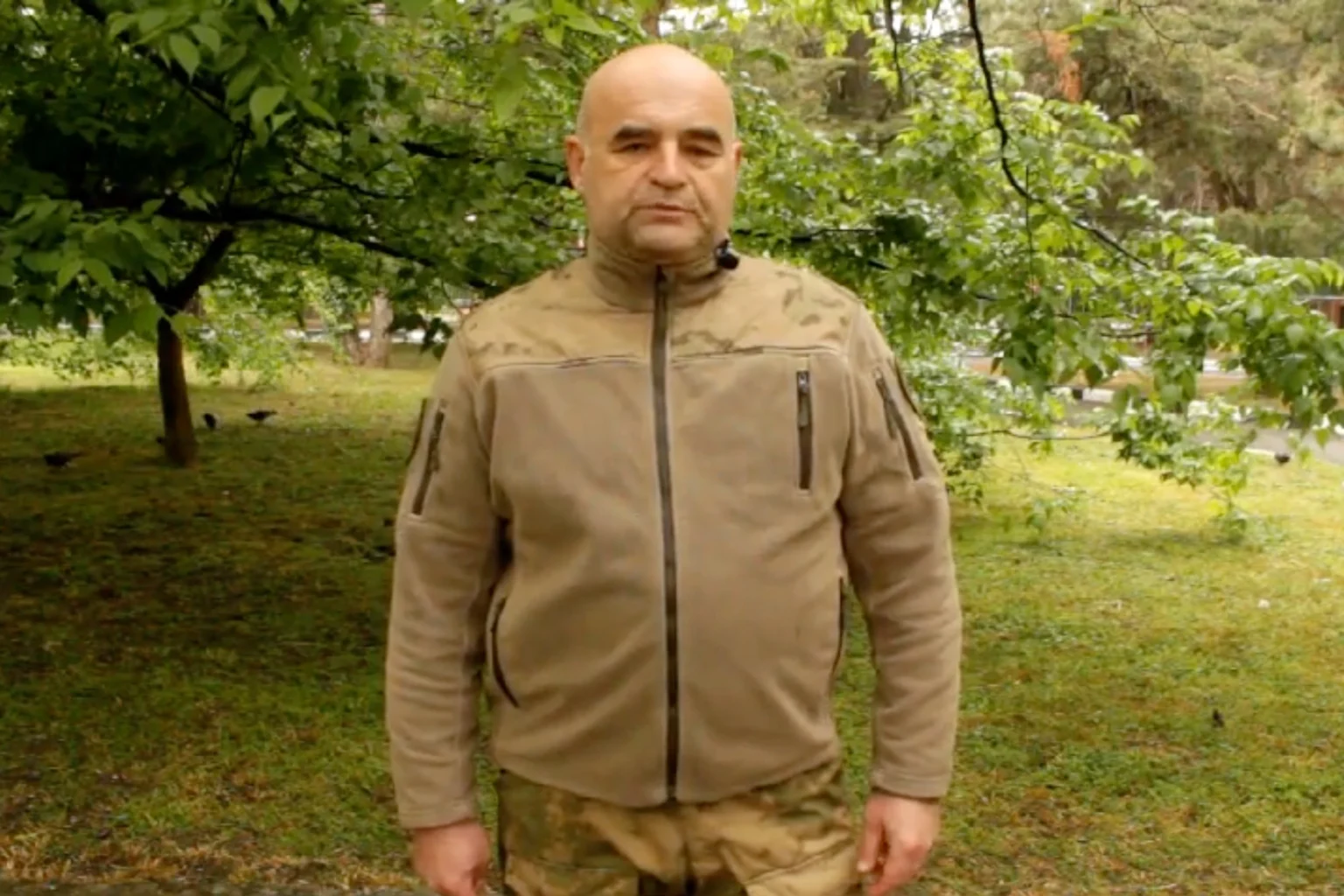
A still from the official campaign video of candidate Vladimir Mertsalov. Source: United Russia party website. Copied from the original Verstka article.
The head of the Crimean organisation of disabled veterans "Warrior" Vladimir Mertsalov talks about these problems from the first to the last second of his address on the website of the primaries. He promised to focus entirely on helping war veterans - from their primary rehabilitation to the construction of housing adapted for the disabled. Mertsalov's result: an obviously unpassable 50th place and a more than fivefold gap from the winner - Valery Aksyonov, the father of the "head of Crimea" Sergei Aksyonov. At the same time, Mertsalov fits the profile of the ideal Crimean United Russia candidate much more than Aksyonov Sr. In 1994, as a naval officer in Kronstadt, he was dismissed during mass layoffs in the military. In 2014, he led one of the territorial defence companies, which, according to Mertsalov, protected the Simferopol airport from sabotage by the "Right Sector."
Just like Mertsalov, there was no high place in the primaries for other more prominent former "separatists." Viktor Anosov, better known as a comrade of "Novorossiya Defense Minister" Igor Strelkov, took 31st place in Crimea. According to Radio Liberty, after the war in Donbass began in 2014, Anosov, who went by the nickname "Nos", together with Strelkov, seized Slavyansk and became the head of the "military tribunal" there. "Liberty" names at least one known victim of this "law court," shot exactly on Anosov's initiative. This was local resident Aleksey Pichko.
Another candidate who calls himself a comrade of Strelkov is Vadim Ilovchenko. In 2014, he was briefly the "commandant of Kramatorsk" and now he heads one of the Crimean Cossack organisations. In his speech for the primaries Ilovchenko talks in a soft voice about how, as a deputy, he will develop the Cossacks. His result: 33rd place.
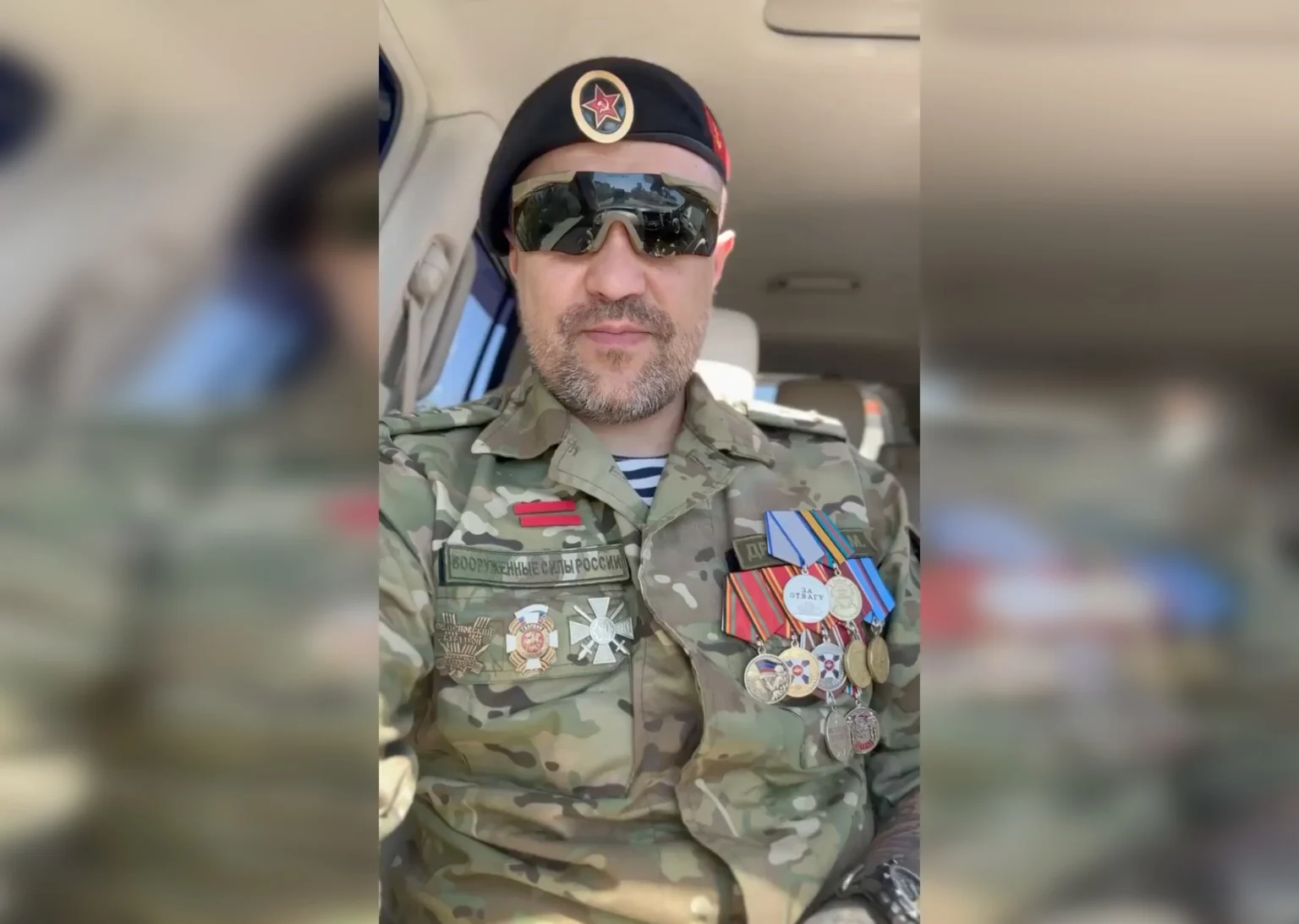
A frame from the official campaign video of candidate Maxim Drozdov. Source: United Russia party website. Copied from the original Verstka article.
Another loser from among the "old separatists" is Maxim Drozdov, nicknamed "Indus," took an unpassable 19th place in Sevastopol. He recorded his video for United Russia in an SUV salon, wearing a beret and sunglasses. From his story, it follows that Indus was engaged in the "hotel business" in Goa when the war in Donbass started. Since then, "with breaks for injuries," he has been fighting against Ukraine for nine years. He went to the primaries to "find out the real level of support." However, Indus is most famous not for fighting in Donbass, but for the program "Trench Truth" that aired on Rossiya-24 in August 2019. Back then, Drozdov was among three soldiers from the "people's republics" who met in the same studio with the Ukrainian military "to start a dialogue." Both sides blamed their politicians for "inciting" the conflict participants and urged each other, amidst mutual accusations of war crimes, to "get over old grievances so that no more blood is shed." At the end, the host Alexander Rogatkin even said that "arguing in the studio is better than shooting at each other." Indus, according to him, is still fighting in the Donetsk Region.
'AN ACTING HERO CANNOT LOSE'
On the eve of the vote, Verstka's dialogue partners in regional administrations and structures subordinate to the Kremlin administration described a variety of signs indicating the "future success of the candidates". These included participation in the "Time of Heroes" project. This is a personnel school for war veterans, which Kirienko is organising on Vladimir Putin's personal initiative. They also mentioned gaining success in the "Leaders of Russia" contest, and even just being in a war zone at the time of voting. After all, the "acting hero," they said, "cannot lose." In reality, none of this actually worked.
"Time of Heroes" participants from Tatarstan, Lenar Khalilov and Alexander Stolbov, took 93rd and 168th places, respectively. Evgeny Tarasenko from Chelyabinsk, who ran in Sevastopol, did not fare as well. He listed his job as a flamethrower operator in naval reconnaissance, and noted in the description that "due to being busy at his main job, he does not keep a blog." He became the 91st.
Being merely a media figure without an official recognition as a hero, was also not enough. Yuri Astafyev, a native of Mari El, who ran in Sevastopol, was a hero of one of the broadcasts of the talk show "Nashi" on VGTRK with Dmitry Kharatyan and Yuta together with his brother and mother. He told how he shot down a "Ukrainian drone 'Baba-Yaga'" and successfully covered for his scout brother who "stole a tank" from the AFU. It didn't help - Astafiev ended up on the "unpassable" 24th place. The only war participant in the primaries from Kabardino-Balkaria, German Shevchuk, was 34th despite a whole series of appearances in the local media and schools.
But the most glaring failure was Konstantin Ryzhak from Moscow. He tried to qualify for "United Russia" and "A Just Russia" at the same time. In both parties, he told essentially the same stories about his love for "native Troparevo" and "walks with the family in Ramenki." Ryzhak is the son of State Duma deputy from "A Just Russia", Nikolai Ryzhak, a former Soviet security officer who retired with the rank of general. Ryzhak Jr. ended up with 34 votes, compared to 5186 votes for the winner in his district, Rodion Gazmanov, son of singer Oleg Gazmanov.
Other parties planning to participate in the election have not yet officially named their candidates. Alexey Zhuravlyov, leader of the "Rodina" party and State Duma deputy, promised to "fill the lists" with war veterans, but has not done so yet. The chief propagandist of the CPRF, State Duma deputy Sergey Obukhov, told Verstka journalist that decisions on specific candidates are made by the party's personnel commission, and none have been made so far. A source in the central office of the LDPR told Verstka that "no veterans have been found in Moscow yet," but "in the regions, they will probably scrape some together."
"If the veterans are "non-passing" even with us, then they have even less chance of getting through the opposition. They will get few mandates, but campaign investors and party bosses have to be accommodated somehow," the head of one of the regional legislative assemblies sarcastically remarked in a conversation with Verstka.
Earlier Verstka wrote how Putin's record result in the elections froze the political system in Russia. We also wrote about how a political scientist and a professor of "Vyshka" recreate the Party of Beer Lovers.