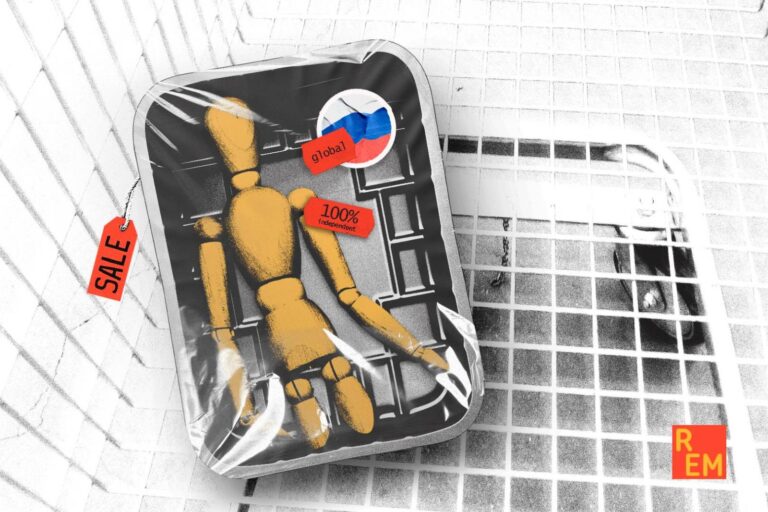
Statement of the Golos movement on the results of the regional elections of 6-8 September 2024
09.09.2024





The Movement in Defense of Voters' Rights Golos has published a final statement on the results of the regional elections in Russia in September 2024. REM presents an abridged English version of the statement.
Golos experts note that the current political and legal systems in Russia have led to the degradation of elections as an institution through which citizens take part in the governance of the state. Electoral legislation continues to deviate from constitutional principles. Due to the severe restriction of fundamental rights and freedoms and the increasingly repressive relationship between the state and individuals, opposition active and uncoordinated participation in elections requires courage. It not only jeopardizes political ambitions but can also lead to political and physical persecution. This became evident during both the pre-election campaign and the Unified election day (UED) from September 6-8.
Key features of the 2024 elections
1. RECORD DECLINE IN COMPETITION
Over the past year, amendments to the electoral law at the federal level further limited competition. These changes deprived individuals designated by the state as "foreign agents," "extremists," and "terrorists" of electoral rights. Among those affected were current deputies, scientists, public figures, journalists, and active citizens. They were stripped of passive electoral rights, banned from acting as proxies and authorized representatives of candidates and electoral associations, and prohibited from being election observers (a previous ban on foreign agents serving on election commissions already existed). The "foreign agent" lists were often expanded just before the setting of the election date or at the start of campaigns, preventing those targeted from contesting their status in time.
Due to this legalized discrimination and the frequent criminal cases brought against opposition figures, the 2024 UED elections saw record low numbers of candidates at almost all levels. Political parties became more cautious, effectively coordinating key candidate nominations with federal or regional administrations, refraining from political competition even in constituencies where government representatives held weak positions.
For example, the number of gubernatorial candidates in 2024 decreased by almost one and a half times compared to 2019, when elections were held in the same regions. On average, only 6.3 party lists were submitted per region for regional parliamentary elections, marking the lowest figure since the 2012 party reform (even lower than the 2018 record low of 8.7 lists). In single-member districts, political parties that can nominate candidates without collecting signatures nominated just 73 candidates, over four times fewer than the number of mandates in regional parliaments. The situation for independent candidates wasn't much better, with only 155 running, exactly half the number of available seats.
In some regions and cities, competition was nearly non-existent. In Salekhard (Yamalo-Nenets autonomous Region), the average number of candidates per district was just two; in Anadyr (Chukotka autonomous Region), it was 2.5; and in Bratsk (Irkutsk region), only one candidate appeared on the ballot for District 3. The election for the head of the Republic of Altai saw just three candidates.
Parliamentary parties were forced to skip many gubernatorial elections. The municipal filter remains an insurmountable barrier for candidates who could really compete with government-backed nominees. For example, the Communist Party (CPRF) lost five candidates during registration, the Just Russia party lost three, and New People chose not to field candidates in 11 out of 21 regions. Yabloko failed to register a single candidate.
The local government level still retains some elements of real political competition, although even here, competition is artificially and arbitrarily restricted. The municipal counter-reform, implemented in many regions and aimed to completely eliminate local governance, destroys opportunities for local politics and deprives many citizens of the chance to participate in self-government.
2. DELIBERATE DEVALUATION OF ELECTIONS IN THE MEDIA AND SOCIAL NETWORKS
Government bodies, local authorities, and media outlets under their control, along with social media groups, do everything possible to present elections to voters not as a way to publicly discuss issues and select their representatives, but merely as a fun event with online voting, lotteries, mascot performers, and snacks at polling stations. Candidates, their platforms, and campaign activities were almost non-existent in the public sphere, making them almost invisible to voters.
Campaigning and election information were extremely modest this year — the focus clearly was made on minimizing independent voter turnout and on the administrative mobilization of voters. Media outlets refused to publish campaign materials from candidates and parties, even at the cost of losing revenue from paid advertisements. As a result, candidates and parties had no opportunity to communicate their programs and ideas through the media. Instead, readers and viewers of traditional media received large amounts of information about the day-to-day activities of "administrative" candidates.
The situation in social media was similar. During the election period, the space of social networks was practically monopolized by government administrations, much like traditional media outlets.
3. VOTER COERCION
Reports of coercion to vote came both during the election days and in the preceding period. In several regions, there were cases of employers forcing employees to report on their voting through special geolocation services developed for this purpose.
Remote electronic voting (REV) is being actively implemented, allowing authorities to control voter turnout and voting process itself. Moscow authorities have been particularly active in promoting this electoral mobilization technology. In the 2024 Unified election days, Moscow effectively abandoned paper ballots in favor of electronic voting. Moscow's precinct election commissions (PECs) refused to issue paper ballots to voters under various pretexts, effectively forcing them to use electronic voting. As a result, during all the days of voting in Moscow there were constant conflicts at polling stations, which were not always resolved in favor of voters. This has led to the deliberate discrimination of those voters who, for whatever reason, do not wish to vote electronically and prefer the traditional paper method.
Overall, however, the scale of administrative mobilization of voters during the 2024 UED was significantly smaller and required less organizational effort compared to the presidential election earlier this year. Gubernatorial elections remain the most intense in terms of pressure on voters.
4. OBSTRUCTION OF ELECTION MONITORING
For many years, federal lawmakers and the election commission system have been working to curb election observation, aiming to free themselves from public oversight. In UED-2024, as before, observers faced unjustified restrictions on their activities: they were not allowed to inspect voter lists, were excluded from mobile voting (outside polling stations), limitated in their movement at polling stations and prevented from taking photos and videos, denied copies of official records and protocols, had their complaints ignored, and were subjected to physical intimidation, sometimes involving law enforcement.
Before the 2024 UED, lawmakers gave election commissions additional powers to restrict monitoring, granting them the right to reject observer lists submitted by opposition candidates and parties. Throughout the UED, reports came from various regions that election commissions rejected observers on technical grounds or even sometimes obstructed the submission of documents for their appointment. In some cases, higher-level commissions simply did not pass observer lists to precinct commissions. Excessive requirements for observer assignments to polling stations led to the collapse of parties’ monitoring campaigns sometimes in entire regions.
Live video feeds from polling stations, originally introduced to improve transparency, were practically inaccessible during the 2024 UED: only election commissions (whose work in general should have been evaluated by ordinary voters), candidates (in very limited cases), and visitors to special public monitoring centers had access to the footage. In practice, it was often impossible to enter these "centers."
Members of election commissions feel immune from consequences and increasingly openly violate procedures and rules, including with regard to observers, candidates, and even their own colleagues. Police officers, who are supposed to stop any violations of laws and citizens' rights, remain indifferent to blatant violations by commission members and third parties. A symbolic moment during these election days was a video from a polling station in Saint Petersburg, where the commission chairman proposed observers to file complaints to a higher commission, saying, "Write what you want, nothing will happen to us anyway".
5. LOW SECURITY OF VOTING RESULTS
Mass electoral fraud is an old problem that the current election commission system does not even attempt to address. Instead, it resists efforts by the public to improve the situation. Otherwise, all the above-mentioned initiatives to limit monitoring, create and spread hard-to-control voting methods — such as REV, multi-day voting, mobile voting, early voting in border regions, etc. — would not have existed.
Unfortunately, this time again, there were reports of possible electoral fraud, especially from Saint Petersburg and the Moscow region. Clear signs of falsifications can be detected by a simple statistical analysis in many regions, especially those with increased turnout (for example, Kemerovo and Bashkortostan).
Multi-day voting, in particular, provides ample opportunities for result fraud — after the first night, when used ballots remained in polling locations, doubts about their security began to arise (safe packages were damaged or not sealed at all, and evening and morning ballot counts did not match, etc.).
Remote electronic voting (REV) also deserves special mention. Observers of Moscow’s electronic voting on the first election day detected two cases of abnormal turnout, replacement of real voting data with test day data, and a 1.5-hour delay in receiving voting results.